
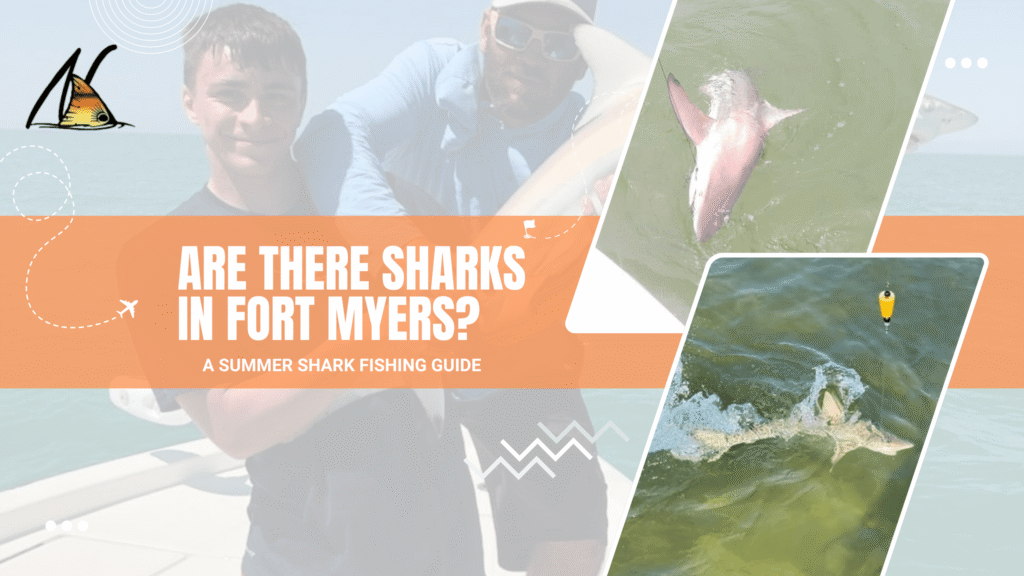
Yes, there are sharks in Fort Myers. Plenty of them. The warm Gulf waters, abundant baitfish, and diverse habitat around Fort Myers Beach, Sanibel Island, Pine Island Sound, and the Caloosahatchee River support a healthy and thriving shark population that includes at least eight regularly encountered species.
Are there sharks in Fort Myers is probably the most common question visitors ask, and the answer matters for two very different reasons. Swimmers and beachgoers want to know the risk (it is extremely low). Anglers want to know where to find them (everywhere, but especially in summer).
Summer is the peak window for shark fishing in Southwest Florida. Rising water temperatures push massive schools of baitfish toward the coast, and the sharks follow. From late May through September, you can find blacktip sharks spinning through the air 100 yards from the beach, bull sharks cruising the river mouth at dawn, bonnetheads tailing across shallow grass flats, and nurse sharks resting on nearshore reef structure. The variety is exceptional, and the fights are some of the most powerful and explosive action available anywhere on the Gulf coast. Local captains at operations like Sea N Red Charters target these species year-round across the Fort Myers, Sanibel, and Pine Island waters.
This guide covers every species you are likely to encounter, the exact locations where they concentrate, the tackle and bait that produce, the strict Florida regulations you must follow, and the safety information that swimmers and anglers both need to understand.
What Sharks Are in Southwest Florida?
Fort Myers waters hold a diverse population of shark species year-round, with the highest concentrations during the warmer months. Here is what you are likely to encounter on any given summer trip.
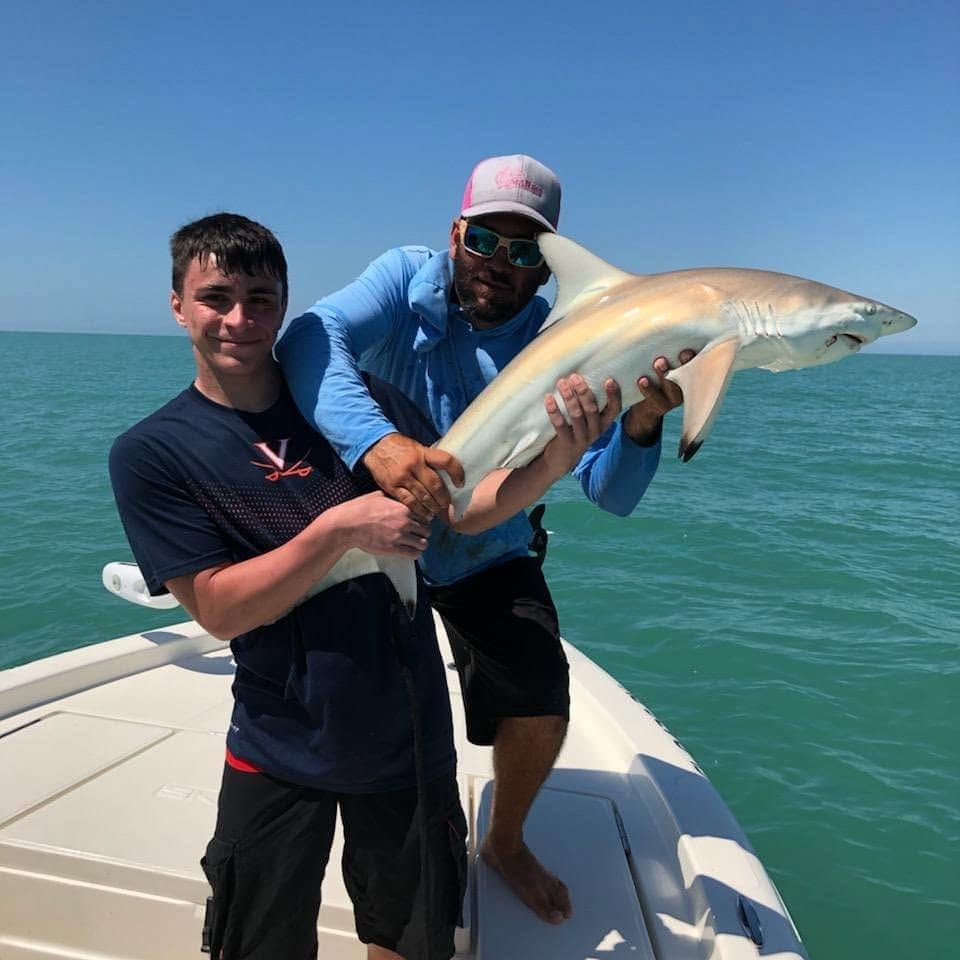
Blacktip Shark
Blacktip sharks are the most commonly caught species in Fort Myers waters. They are fast, aggressive, and famous for spectacular aerial spins when hooked. A 4-foot blacktip clearing the water and spinning three times before crashing back is one of the most exciting sights in inshore fishing.
Size: Average 3 to 5 feet, with larger specimens reaching 6 feet. Typically 30 to 80 pounds.
Where to find them: Nearshore passes, beach troughs behind the first sandbar, and around bait schools in the open flats. They patrol the surf zone aggressively during summer.
Season: Present year-round, with the strongest numbers from March through October. Summer is peak.
Fight characteristics: Fast initial runs and multiple jumps. The aerial display is their signature.
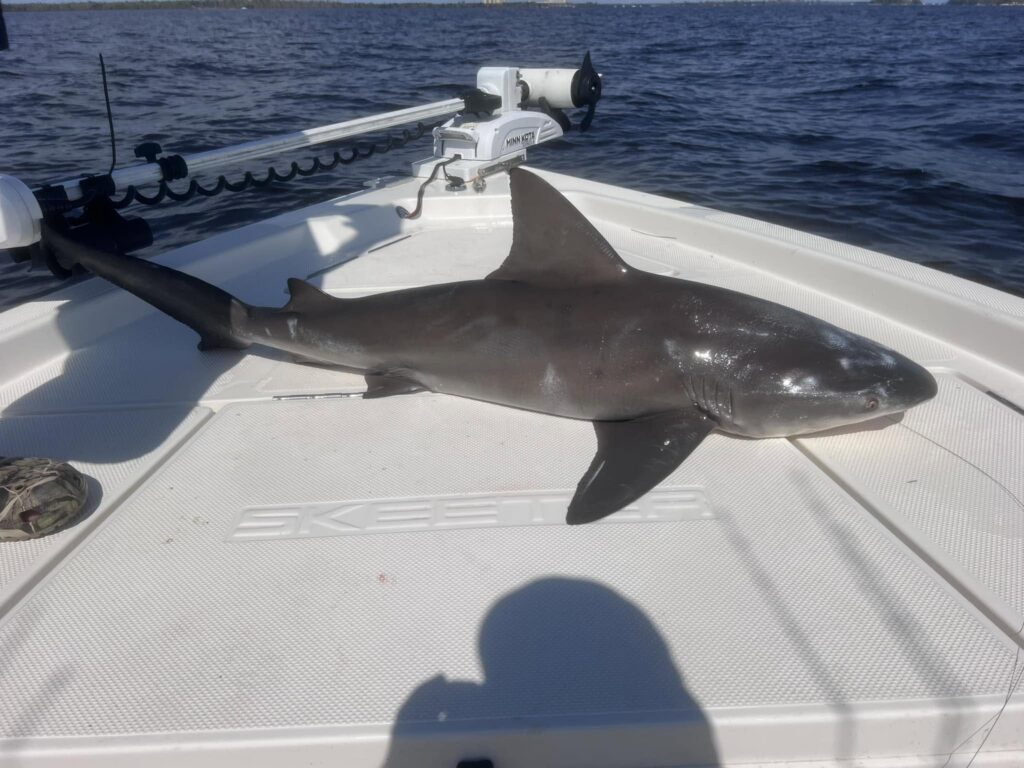
Bull Shark
Bull sharks are the heavyweights of the Fort Myers inshore shark fishery. Stocky, powerful, and genuinely aggressive, they are built for short, explosive bursts of speed. Bull sharks tolerate brackish and even freshwater, which means they push far upriver into the Caloosahatchee and residential canal systems.
Size: Average 6 to 8 feet, with large females exceeding 9 feet. Fish over 200 pounds are landed regularly in Fort Myers waters.
Where to find them: Shallow grass flats, estuaries, river mouths, canal systems, and nearshore passes. The Caloosahatchee River mouth and San Carlos Bay are prime bull shark territory.
Season: Late spring through early fall is peak. They are present year-round in some capacity.
Fight characteristics: Brute strength. No finesse, just raw power. The initial run is shorter than a blacktip but far more violent. Bull sharks do not jump; they pull.
Bonnethead Shark
Bonnetheads are the little cousins of the hammerhead family. They have a distinctive shovel-shaped head and typically weigh under 15 pounds, but they fight surprisingly hard for their size and are the most commonly encountered shark on shallow-water flats.
Size: Average 2 to 4 feet, with occasional specimens reaching 5 feet.
Where to find them: Shallow grass flats, mangrove shorelines, and oyster bar edges. They hunt crustaceans (crabs and shrimp) along the bottom, making them extremely common in the back bays around Sanibel, Pine Island Sound, and Estero Bay.
Season: Strong year-round, with the best inshore action from spring through fall.
Fight characteristics: Fast and zippy. They pull hard for their size and make quick runs. Kids love catching them because the fight is manageable and the shark’s unique head shape makes for great photos.
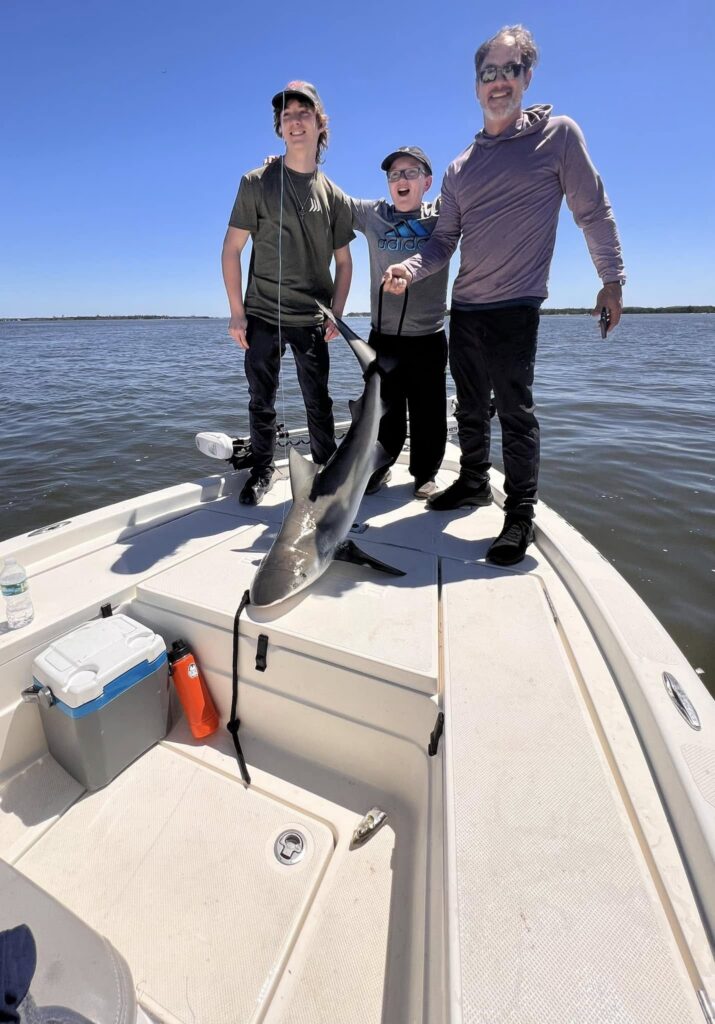
Spinner Shark
Spinner sharks are named for their tendency to launch out of the water and spin rapidly along their axis. They look similar to blacktips but are generally larger and even more acrobatic.
Size: Average 5 to 7 feet, with fish exceeding 150 pounds.
Where to find them: Nearshore waters, beach zones, and around bait schools. They often mix with blacktip schools during summer.
Season: Most common from spring through fall in Fort Myers waters.
Fight characteristics: Long, fast runs and extraordinary aerial displays. One of the most visually exciting sharks to catch.
Nurse Shark
Nurse sharks are bottom-dwelling, slow-moving sharks found around reef structure, bridge pilings, deep channels, and artificial reefs. They are docile compared to other species but immensely powerful once hooked.
Size: Average 5 to 8 feet, with large specimens exceeding 9 feet.
Where to find them: Resting on the bottom near bridges, deep channels, nearshore reefs, and artificial reef structures.
Season: Year-round. They do not migrate significantly.
Fight characteristics: No runs, no jumps. Pure deadweight pulling power. A large nurse shark on bottom structure can wear out experienced anglers through sheer stamina.
Lemon Shark
Lemon sharks are recognizable by their yellowish-brown coloring. They frequent shallow inshore waters and are commonly encountered around mangrove shorelines and sand flats.
Size: Average 5 to 8 feet, occasionally larger.
Where to find them: Inshore flats, mangrove edges, and nearshore reefs. Common around Sanibel and Pine Island Sound.
Season: Year-round, with stronger inshore presence in warmer months.
Important note: Lemon sharks are a prohibited species in Florida. They must be released immediately and cannot be removed from the water. If you hook one, cut the leader as close to the hook as possible and release without delay.
Hammerhead Sharks
Great hammerheads, scalloped hammerheads, and smooth hammerheads all patrol deeper passes and nearshore waters around Fort Myers. The great hammerhead is the trophy of the group, with fish commonly exceeding 10 feet and occasionally reaching 14+ feet.
Where to find them: Deeper passes (Boca Grande, Redfish Pass), nearshore structure, and along the beach during migration periods.
Important note: All hammerhead species are prohibited in Florida. They must be released immediately and cannot be removed from the water under any circumstances. Handle carefully, keep the fish submerged, and cut the leader quickly.
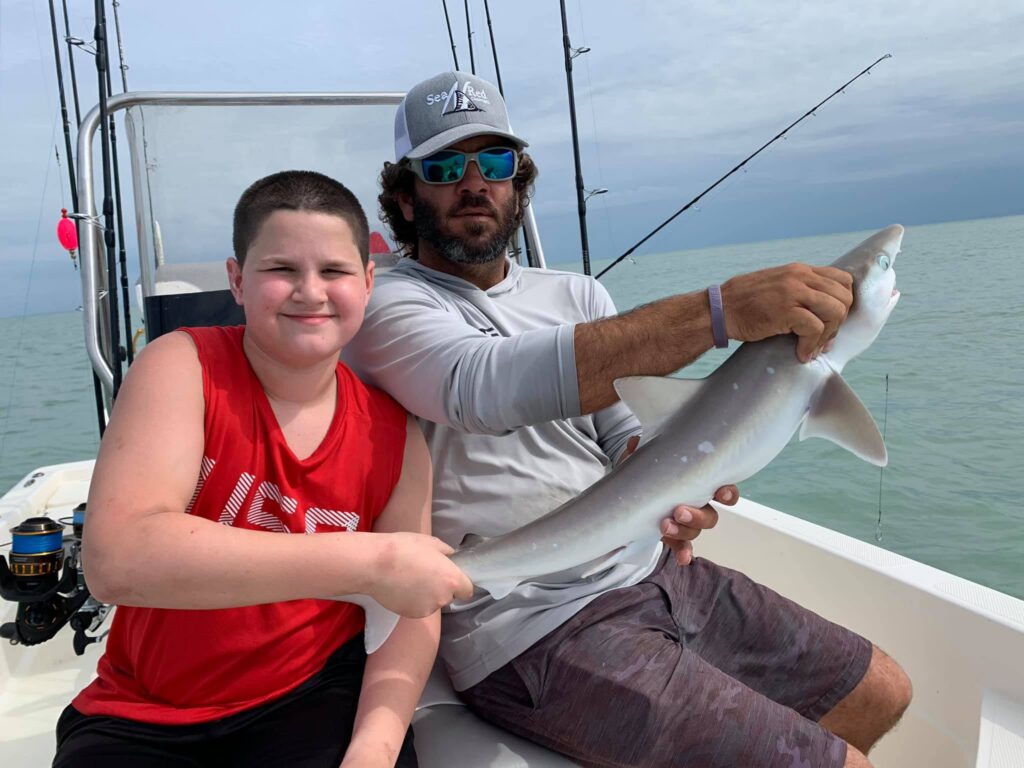
Atlantic Sharpnose Shark
Small, abundant, and commonly caught as bycatch on inshore trips. Sharpnose sharks rarely exceed 3 feet and are often caught by anglers targeting other species.
Where to find them: Virtually everywhere inshore and nearshore.
Notable: No minimum size limit. They are harvestable if you want them, though most anglers release them.
Shark Species Quick Reference
| Species | Average Size | Where to Find | Best Season | Harvest Status |
|---|---|---|---|---|
| Blacktip | 3 to 6 ft | Nearshore, beaches, passes | Mar through Oct | Legal (no min size) |
| Bull | 6 to 9 ft | Estuaries, river mouths, flats | May through Sept | Legal (54-inch fork length min) |
| Bonnethead | 2 to 4 ft | Shallow flats, mangroves | Year-round | Legal (no min size) |
| Spinner | 5 to 7 ft | Nearshore, beach zones | Spring through fall | Legal (54-inch fork length min) |
| Nurse | 5 to 9 ft | Bottom near structure, reefs | Year-round | Legal (54-inch fork length min) |
| Lemon | 5 to 8 ft | Inshore flats, mangroves | Year-round | PROHIBITED. Release immediately |
| Hammerhead (all) | 6 to 14+ ft | Passes, nearshore, beaches | Spring through fall | PROHIBITED. Release immediately |
| Atlantic Sharpnose | 2 to 3 ft | Everywhere inshore/nearshore | Year-round | Legal (no min size) |
Best Shark Fishing Locations Around Fort Myers
Sharks are everywhere in Fort Myers waters, but these specific zones consistently produce the best action during summer.
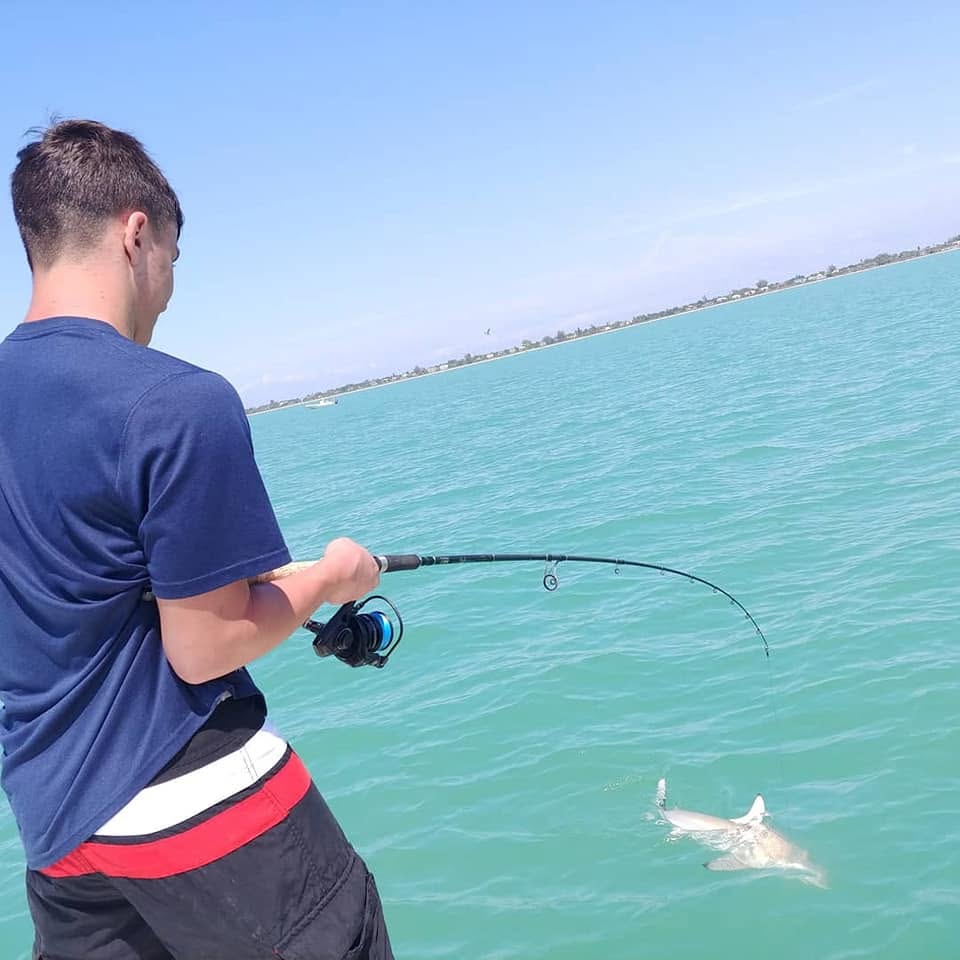
Fort Myers Beach (Nearshore Surf Zone)
Sharks cruise the deep troughs running parallel to the shoreline, just behind the first sandbar. During summer, blacktips, spinners, and occasional bulls patrol these troughs following schools of baitfish. Many fish are caught only 60 to 100 feet from the sand.
Beach shark fishing from shore is popular at Bowditch Point (north end of Fort Myers Beach), and along the broader beach stretches where casting distance can reach the deeper water.
Sanibel and Captiva Passes
Blind Pass, Redfish Pass, and the Sanibel Causeway channels create concentrated current flow that funnels bait through narrow corridors. Sharks stage at the edges of these passes, ambushing bait during tidal changes.
The Sanibel Causeway bridge pilings specifically hold bull sharks that hunt in the deep channels and shadow lines. Night fishing around the Causeway produces some of the biggest sharks caught inshore in the Fort Myers area.
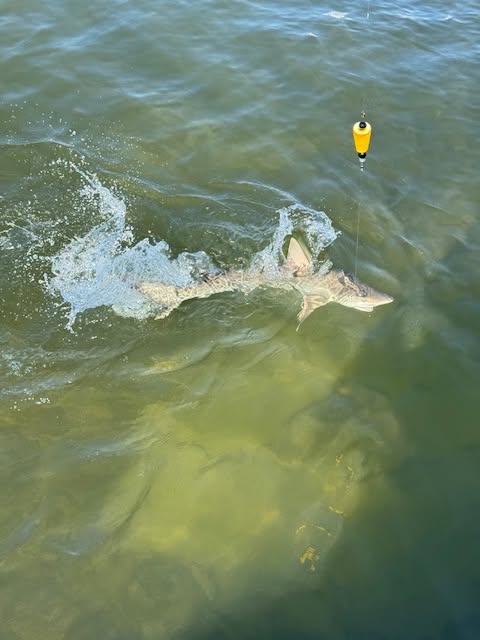
San Carlos Bay
The expansive bay between the mainland and the barrier islands holds an incredible volume of schooling baitfish, particularly during summer. Deep navigation channels, shallow shoals, and the mixing zone where the Caloosahatchee River meets the Gulf create prime shark habitat.
Charter captains set up drifts across the bay’s deeper drop-offs to intercept cruising bull and lemon sharks. The area where the murky river water meets the clearer Gulf water is particularly productive.
Pine Island Sound
The vast protected backwater system holds bonnetheads, smaller blacktips, and juvenile bull sharks on the shallow grass flats. The mangrove shorelines and oyster bar edges provide ambush points where sharks hunt crabs and small fish.
Pine Island Sound offers a calmer shark fishing environment than the open Gulf passes. Kayak anglers and light-tackle fishermen target bonnetheads and sharpnose sharks here with excellent results.
Caloosahatchee River
Bull sharks travel far upriver through the Caloosahatchee, tolerating the brackish and even near-fresh water. The river mouth and bridge structures (Midpoint Bridge, Edison Bridge) hold sharks year-round, with the best action from late spring through fall.
Estero Bay
The bay holds a diverse population of sharks, with bonnetheads, blacktips, and juvenile bulls all present during summer. The mangrove islands and deeper channels create productive habitat.
Boca Grande Pass
The world-famous tarpon migration corridor also holds significant shark populations. Hammerheads, bulls, and blacktips all use the pass as a feeding zone, particularly when tarpon are present in May and June. The deeper water and strong currents here produce some of the largest sharks in the region.
Nearshore Reefs and Wrecks
Artificial reef sites and natural rock structure within 3 to 15 miles of shore hold nurse sharks, bull sharks, and occasionally larger species like tiger sharks. Anchoring on structure and fishing cut bait on bottom rigs produces consistent nearshore shark action.
Summer Shark Fishing Tackle and Bait
Shark fishing requires heavier gear than standard inshore tackle. These fish hit hard, run fast, and have the power to destroy equipment that is not up to the task.
Rod and Reel
Inshore/nearshore shark setup: A 7 to 8-foot medium-heavy to heavy spinning rod paired with a 5500 to 8000 size spinning reel. Spool with 50 to 80-pound braided line with enough capacity for long runs (300+ yards minimum).
Surf/beach setup: A 10 to 13-foot heavy surf rod with a large spinning or conventional reel. The extra length allows casting heavy baits past the sandbar and into the deeper troughs where sharks patrol.
Drag system: The reel’s drag must be smooth and powerful. Sharks make explosive first runs that test drag systems to their limits. A reel with a weak or sticky drag will fail during the fight.
Leader
Wire leader: Stainless steel or titanium wire leader in the 60 to 90-pound range. Shark teeth and abrasive skin will cut through monofilament and fluorocarbon. Wire is non-negotiable for species with teeth (blacktips, bulls, spinners).
Heavy monofilament option: Some captains use 150 to 200-pound monofilament leader as an alternative to wire in clearer water where sharks may be leader-shy. This works for smaller species but risks bite-offs with larger bulls or hammerheads.
Leader length: 3 to 6 feet of wire leader connected to the main line with a quality barrel swivel.
Hooks
Circle hooks are required by Florida law when using natural bait for sharks. Non-offset, non-stainless steel circle hooks in 8/0 to 12/0 size are the standard. The non-stainless requirement ensures that if a shark breaks off with the hook, the hook will rust away quickly rather than remaining in the fish permanently.
J-hooks, treble hooks, and offset circle hooks are all prohibited when using natural bait.
Best Shark Baits
Sharks are drawn to fresh, oily cut bait that creates a strong scent trail in the water. The oilier and stinkier the bait, the better.
Top baits: Fresh cut mullet (chunks, not strips) is the local go-to. Fresh ladyfish, cut bonito, cut jack crevalle, and bluefish all produce well. The common thread is fresh, not frozen. Fresh bait releases oils and blood that sharks detect from hundreds of yards away. Frozen bait works but produces a significantly weaker scent trail.
For bonnetheads specifically: Live or halved blue crabs are irresistible. Bonnetheads are crustacean specialists, and a crab presented on the bottom near a grass flat edge is one of the most reliable bonnethead techniques.
Presentation: Cast beyond the sandbar (from shore) or into deeper channels (from a boat), then let the bait soak while monitoring the rod. Sharks often pick up bait slowly before committing to a run. Wait for the line to come tight before setting the hook.
Florida Shark Fishing Regulations
Florida takes shark conservation seriously. The regulations are strict, the fines are steep, and ignorance is not a defense. Know the rules before you fish.
Bag and Vessel Limits
Recreational bag limit: 1 shark per person per day.
Vessel limit: Maximum of 2 sharks per vessel per day, regardless of how many anglers are on board.
Prohibited Species (Must Release Immediately)
The following species cannot be harvested under any circumstances. If caught, they must remain in the water with gills submerged at all times. You cannot lift them out of the water, drag them onto the beach, or remove them for photos. Cut the leader as close to the hook as possible and release without delay.
Prohibited species include: All hammerhead species (great, scalloped, smooth), tiger shark, lemon shark, sandbar shark, dusky shark, whale shark, mako sharks (shortfin and longfin), white shark, and several others. The full list is available on MyFWC.com.
Size Limits for Harvestable Species
No minimum size: Atlantic sharpnose, blacknose, blacktip, bonnethead, finetooth, and smooth dogfish.
54-inch fork length minimum: Bull, spinner, nurse, blue, common thresher, and others. Fork length is measured from the snout to the fork of the tail.
Shore-Based Shark Fishing Permit
This is a big one. If you are fishing for sharks from the shore (beach, pier, bridge, or jetty), every angler 16 years and older must complete a free online educational course and obtain a Shore-Based Shark Fishing Permit before casting a line. The course covers safe handling, species identification, and release techniques.
The course is available at MyFWC.com/SharkCourse. The permit is free and must be renewed annually.
This requirement applies to anyone intentionally targeting sharks from shore. It does not apply to anglers fishing from a vessel.
Gear Requirements
Circle hooks only. Non-offset, non-stainless steel circle hooks are required when using live or dead natural bait.
No treble hooks. Prohibited when using natural bait for sharks.
Line-cutting device required. You must carry a tool capable of quickly cutting the leader or hook to release sharks without excessive handling. Bolt cutters, wire cutters, or heavy-duty line cutters.
No beach chumming. Throwing chunks of bait, pouring fish blood, or deploying chum into the surf from a public beach is illegal in Florida. Your hooked bait is the only attractant you can deploy from shore.
Charter Coverage
If you fish with a licensed charter captain, the captain’s fishing license covers all clients on the boat. The Shore-Based Shark Fishing Permit is not required for vessel-based fishing. The captain handles all regulatory compliance, species identification, and proper handling.
Booking a guided Fort Myers shark fishing charter ensures you have all the heavy-duty tackle, fresh bait, safety equipment, and regulatory knowledge handled for you. For anglers new to shark fishing, a guided trip is the safest and most productive way to start.
Best Time to Shark Fish in Fort Myers
Seasonal Timing
The best time to shark fish in Florida is late spring through early fall, with the absolute peak running from June through August. This is when water temperatures are highest, baitfish concentrations are strongest, and migratory species like spinners and larger bulls move into the nearshore zones.
Winter shark fishing is still possible, particularly for nurse sharks on bottom structure and blacktips in the nearshore waters, but the numbers and variety drop significantly compared to summer. If you are planning a trip outside of the summer peak, the seasonal calendar showing what bites each month in Fort Myers helps you match your travel dates to the best available action.
Daily Timing
Early morning (sunrise): One of the strongest feeding windows. Sharks are actively hunting after the night feeding period, and the cooler morning water keeps them aggressive.
Late afternoon and evening: The second prime window. As the sun drops and water begins to cool, feeding activity picks up again.
Night fishing: Extremely productive for sharks, particularly around lighted structure, bridges, and dock areas. Bull sharks and larger blacktips are more active after dark.
Midday: Generally the slowest period during summer, though sharks can be caught at any time.
Tide Timing
Moving tides produce. Incoming tides push bait across flats and into passes, drawing sharks into concentrated feeding zones. Outgoing tides flush bait out of estuaries and through choke points.
High incoming tide: Allows larger sharks to push incredibly close to shore and onto shallow flats where they normally cannot access. Some of the biggest bull sharks caught inshore are taken on high incoming tides during summer.
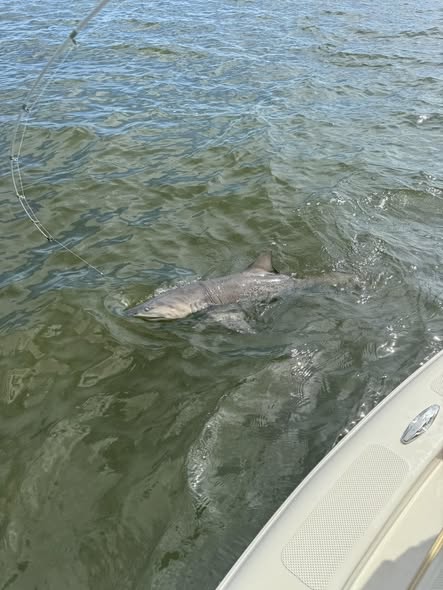
Are Sharks Dangerous to Swimmers?
This is the other side of the “are there sharks in Fort Myers” question, and the honest answer is: sharks are present, but the risk to swimmers is extremely low.
Florida leads the United States in total shark incidents, but that statistic reflects the sheer number of people in Florida’s water every day rather than any unusual danger. Millions of people swim in Fort Myers waters every year. Shark encounters that result in injury are exceptionally rare, and fatal attacks are virtually unheard of in the area.
Most shark species in Fort Myers waters are focused on feeding on fish, crabs, and other marine prey. They are not interested in humans. The vast majority of the rare incidents that do occur involve small sharks (blacktips, sharpnose) in murky water near bait schools, and the injuries are typically minor.
Swimming Safety Tips
Swim during daylight hours. Avoid swimming at dawn, dusk, and night, when sharks are most actively feeding and visibility is lowest.
Stay away from fishing activity. Bait, chum, and hooked fish attract sharks. Do not swim near piers, anglers on the beach, or areas where baitfish are visibly schooling.
Avoid murky water. Sharks in murky water cannot distinguish between your foot and a fish. If the water is clouded by runoff or surf, move to a clearer area.
Swim in groups. Sharks are more likely to investigate a solitary individual than a group.
Remove shiny jewelry. Reflective metal can mimic the flash of fish scales underwater.
Do not enter the water with open wounds. Sharks can detect blood in extremely small concentrations.
Heed beach warnings. Lifeguards and beach patrol post advisories when sharks are spotted near swimming areas. Take those warnings seriously.
Lightning, rip currents, and sun exposure are all significantly more dangerous to beachgoers in Fort Myers than sharks. Keep perspective.
Shark Fishing Safety for Anglers
Handling sharks requires knowledge, respect, and the right equipment. These are powerful wild animals with teeth, and treating them casually is how people get hurt.
On the Boat
Use a long-handled dehooking tool. Never reach into a shark’s mouth with your hands. A long pair of pliers or a purpose-built dehooker keeps your hands away from the teeth.
Carry bolt cutters or heavy wire cutters. If the hook is deep or the shark is large, cut the wire leader as close to the hook as possible and release the fish. A quick release is better than a prolonged, dangerous handling session.
Keep sharks in the water. Lifting a large shark onto the deck of a small boat creates a dangerous situation. Sharks thrash violently when out of water, and their skin is abrasive enough to cause serious friction burns. Work the hook while the fish is alongside the boat.
Control the tail. If you must temporarily restrain a shark, the tail is the control point. Grabbing the tail with a gloved hand and guiding the fish alongside the boat gives the captain control during dehooking.
From Shore
Never drag large sharks onto dry sand. A shark dragged up the beach for photos is a shark that may not survive release. If the fish is too large to handle safely in the surf, cut the leader and let it swim away with the hook (it will rust out).
Stay clear of the mouth. Even a small shark can inflict a serious bite. Use tools, not hands.
Be mindful of swimmers. Do not cast heavy shark tackle into crowded swim zones. Maintain separation between your fishing area and areas where people are in the water.
Ethical Catch and Release
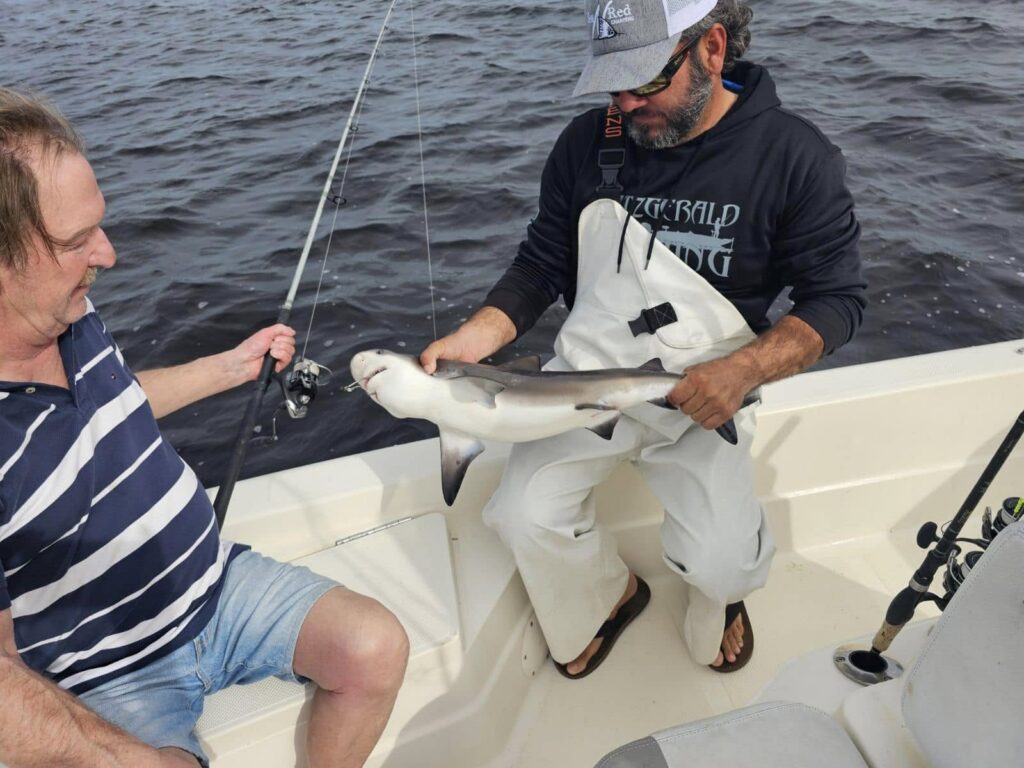
Most shark fishing in Fort Myers is catch and release. Proper release technique dramatically improves the fish’s survival rate.
Keep the shark in the water throughout the handling process. Support the body if possible. Remove the hook quickly or cut the leader. Point the shark into the current and hold until it swims away under its own power. If the fish is sluggish after a long fight, take extra time with revival.
Charter Options for Summer Shark Fishing
Hiring a charter captain for shark fishing is the smartest option for visiting anglers, especially those without their own heavy tackle or experience handling large fish.
Half-day shark trips (4 hours): $500 to $700. Targets inshore and nearshore sharks. Blacktips, bonnetheads, and smaller bulls are the primary targets. This format works well for families and groups that want exciting action without an all-day commitment.
3/4-day shark trips (6 hours): $700 to $950. More time to cover deeper water and target larger species. Bull sharks and spinners become more realistic targets with the extra range.
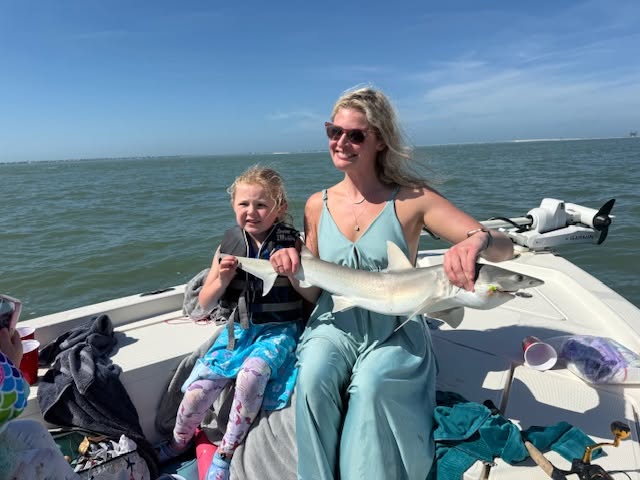
Full-day shark trips (8 hours): $900 to $1,200+. Maximum flexibility to run farther, wait for optimal tide windows, and target the biggest fish available.
Captains running nearshore reef trips out of Fort Myers often combine shark fishing with snapper and grouper for an outstanding mixed-species day that fills the cooler and the camera roll.
While you are waiting for a shark to take the bait, you will often hook into other local fish. The complete guide to Fort Myers fish species covers everything else that might grab your line.
Charters provide all rods, reels, tackle, bait, safety equipment, and fishing licenses. The captain handles species identification, regulatory compliance, proper handling, and safe release. For beginners, this eliminates the learning curve and safety concerns entirely.
Charters provide all rods, reels, tackle, bait, safety equipment, and fishing licenses. The captain handles species identification, regulatory compliance, proper handling, and safe release. Top-rated Fort Myers fishing charters like Sea N Red Charters offer family-friendly shark trips where the captain handles the heavy lifting and safety, letting you just enjoy the fight.
Frequently Asked Questions
Are there sharks in Fort Myers Beach?
Yes. Blacktip, bull, spinner, bonnethead, and nurse sharks all patrol the nearshore waters around Fort Myers Beach year-round. Summer brings the highest concentrations due to warmer water and abundant baitfish.
What is the most common shark in Fort Myers?
Blacktip sharks and bonnethead sharks are the most commonly encountered species. Blacktips dominate the nearshore and beach zones. Bonnetheads are the most frequently caught species on shallow inshore flats.
Is it safe to swim at Fort Myers Beach with sharks?
Yes. While sharks are present, unprovoked incidents are extremely rare. Swim during daylight, avoid murky water, stay away from fishing activity, and heed lifeguard warnings. Millions of people swim these waters every year without incident.
Do I need a permit to shark fish in Fort Myers?
If fishing from shore (beach, pier, bridge), all anglers 16 and older must complete a free online Shore-Based Shark Fishing course and obtain the permit at MyFWC.com. If fishing from a charter vessel, no additional permit is needed.
What is the best bait for shark fishing?
Fresh cut mullet, ladyfish, bonito, and jack crevalle are the top producers. For bonnetheads, live or halved blue crabs. The bait must be fresh, not frozen, for the strongest scent trail.
Can you keep sharks you catch in Fort Myers?
Some species are harvestable within strict bag limits (1 per person, 2 per vessel). Many species are prohibited and must be released immediately (hammerheads, lemon, tiger, and others). Circle hooks are required. Check current FWC regulations before fishing.
Are sharks dangerous to anglers?
Sharks are powerful fish that require respect and proper handling. Use dehooking tools, not hands. Keep sharks in the water during handling. Cut the leader rather than risking injury on a difficult hook removal. A charter captain with experience handles these situations safely.
When is the best time to shark fish in Fort Myers?
Summer (June through August) is peak season. Early morning, late afternoon, and night are the most productive daily windows. Moving tides with strong current produce the best feeding activity.
Sharks have been in Fort Myers waters for millions of years and they are not going anywhere. For swimmers, they are a natural part of the ecosystem that rarely poses a threat. For anglers, they provide some of the most explosive, powerful fishing action available anywhere on the Gulf coast. Fish responsibly, follow the regulations, handle every fish with respect, and the summer shark bite in Fort Myers will deliver memories that last a lifetime.


