
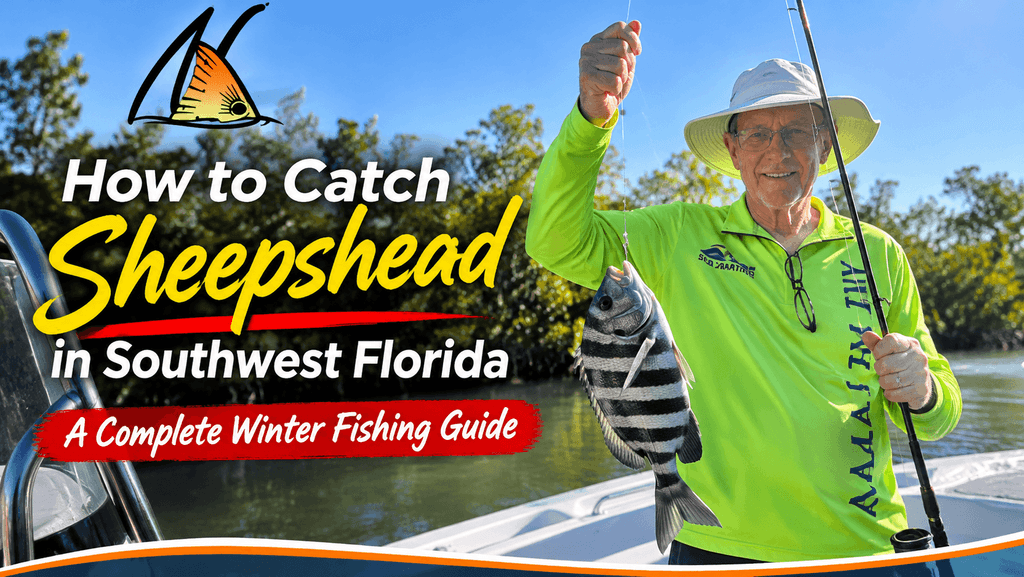
When the first cold fronts of the season roll across Southwest Florida, much of the inshore fishing changes character. Snook tuck into warmer backwaters, the tarpon are long gone, and the docks, bridges, and oyster-crusted pilings around Fort Myers and Sanibel fill up with one of the most rewarding fish on the coast. If you have ever wondered how to catch sheepshead, there is no better season to learn than a Southwest Florida winter.
With their black-and-white convict stripes and a mouthful of surprisingly human-looking teeth, sheepshead are easy to recognize and famously hard to hook. They pick at a bait so gently that many anglers never feel a thing until the hook comes back bare. Success with them is really about learning to read that light touch, and once it clicks, winter becomes one of the most enjoyable seasons to fish here.
This guide brings together what we see on the water while running Fort Myers fishing charters through the cooler months: where sheepshead hold, which baits and rigs work, how to tell a real bite from a nibble, and what changes from November through spring. Whether you plan to fish on your own or with a captain, you will finish with a clear picture of how sheepshead fishing in Southwest Florida actually works.
Understanding Sheepshead Behavior and Feeding Habits
Everything about how to catch sheepshead makes more sense once you understand how they eat. They are not ambush hunters like snook or cruising predators like redfish. They are grazers that make a living picking food off hard surfaces.
What Do Sheepshead Eat in Florida?
A sheepshead’s diet is built around anything with a shell. Barnacles, small crabs, mussels, oysters, shrimp, and tiny clams make up most of what they eat, along with the worms and crustaceans living among them. That is why they spend so much time around pilings, rocks, and oyster bars, where those foods grow.
Why Their Teeth Matter
The front teeth are flat and chisel-like, made for prying barnacles and crabs loose. Behind them sit rows of rounded crushing teeth that grind shells into pieces. A sheepshead does not inhale a bait the way many fish do. It nips, crushes, and picks, often without ever moving far.
Why They Are Known as Bait Stealers
That crushing style makes sheepshead expert bait stealers. A fish can crack a crab and strip the meat while barely moving the line, and its small mouth means an oversized hook never gets inside. The bite section further down explains how to beat both problems.
Do Sheepshead Travel in Schools?
Often, yes, especially in the cooler months. In winter they tend to gather in loose groups around good structure, and those groups can grow large as spring spawning approaches, so one fish is often a sign that others are close by. The bigger fish frequently hold slightly deeper or tighter to the heaviest structure, such as bridge footings, rock piles, and the thickest barnacle growth.
Why Winter Is a Great Time to Catch Sheepshead in Southwest Florida
Sheepshead live in Southwest Florida waters all year, but winter is when they become a reliable target. Cooler water pushes them onto inshore structure in bigger numbers, and many other species slow down at the same time, so sheepshead often become the most dependable bite on a chilly morning.
There is also a seasonal rhythm behind it. Through late winter, fish begin gathering ahead of their spring spawn, and the numbers around passes, bridges, and nearshore structure build steadily. That buildup is reflected in Florida’s own rules, which add a vessel limit during March and April when sheepshead group up most heavily.
Where Do Sheepshead Hold in Winter Around Southwest Florida?
The short answer is anywhere there is hard structure with food growing on it. Around Fort Myers, that covers a surprising range of water, from residential canals to bridges spanning open bays.
Bridges and Causeways
Bridge pilings are classic winter sheepshead territory. The pilings collect barnacles and oysters, the current running past them carries food, and the deeper water around the footings gives fish a comfortable place to hold when the air turns cold. The bridges and causeways around Sanibel, San Carlos Bay, and the Caloosahatchee are the kind of places worth checking first.
Docks and Seawalls
The canals and waterfront neighborhoods of Fort Myers, Cape Coral, and Pine Island are lined with docks and seawalls, and the older ones can hold sheepshead all winter. Structure that has been in the water for years tends to carry more growth than new construction.
Oyster Bars and Mangrove Edges
Oyster bars attract sheepshead because they are packed with the crabs and shellfish these fish eat. Mangrove shorelines can produce too, but only where the roots carry oysters or barnacles and there is enough water nearby. Not every stretch of mangroves is worth fishing for sheepshead, and that distinction saves a lot of wasted time.
Passes and Rock Structure
The passes between the barrier islands, and the rocks and jetties along them, gather fish as the season moves toward spring. Strong current makes these spots more demanding, but they can hold some of the largest sheepshead of the year.
Visitors staying on Estero Island will find that Fort Myers Beach fishing charters put the back bays and nearby passes within easy reach of the hotel, which makes a winter morning on the water simple to fit into a beach vacation.

What Our Winter Trips Around Sanibel and Pine Island Have Shown Us
Every season adds to what we know about these waters, and our winter trip reports tell a consistent story. Recent seasons have brought heavy sheepshead around the Sanibel bridges, a steady bite around structure on calm days, and reliable trout on the grass flats near Matlacha that pairs well with a sheepshead stop. On one recent outing, a group put together a limit of sheepshead with redfish and spotted sea trout mixed in throughout the day, a day you can read about in our February 2026 fishing report.
A couple of patterns keep repeating. Sheepshead hold up well in the colder water, which is why they share winter days with trout and black drum rather than snook. And sunny winter afternoons have been productive for both sheepshead and redfish, so a later start on a chilly morning rarely costs anything.
How to Spot Productive Sheepshead Structure
When we’re targeting sheepshead around Southwest Florida, we pay close attention to what is growing beneath the waterline, because two neighboring docks can fish completely differently.
Look for growth. Barnacles, oysters, and mussels below the surface are the clearest signal. If a piling looks crusted and rough where it meets the water, there is a good chance the same growth continues down to the bottom.
Favor older structure. New pilings and fresh seawalls take years to build up the kind of growth that feeds sheepshead. Weathered, well-established structure is usually more productive.
Find some depth. In winter, structure with a few extra feet of water around it gives fish a stable place to hold when the air temperature drops. A dock in two feet of water may be empty on a cold morning, while one sitting on a deeper edge holds fish.
Watch the current. Moving water carries scent and loose food past the structure. Pilings with a steady flow around them tend to produce better than structure sitting in dead water.
Look for the fish themselves. On clear, calm days, sheepshead are often visible as dark, striped shapes hovering beside pilings or nosing along a seawall. Polarized sunglasses make a real difference here.
What Is the Best Bait for Sheepshead?
Bait choice is one of the biggest parts of how to catch sheepshead consistently. The best bait for sheepshead is usually whatever looks most like the food already growing on the structure you are fishing. Small crabs and shrimp do most of the work in Southwest Florida, but no single bait wins every day. What the fish are feeding on, how many bait thieves are around, and the type of structure all change the answer.
Fiddler Crabs
Fiddler crabs closely match the natural diet, and their shells hold up against pinfish and other small thieves. The catch is availability, since some bait shops stock them only part of the season.
Live and Fresh Shrimp
Shrimp, live or fresh-dead, is the easiest bait to find and works best cut into small pieces. Everything else in the water likes it too, so expect to feed a few pinfish along the way.
Mud Crabs and Mangrove Crabs
Mud crabs live among oyster clusters and rocks, which makes them a natural fit for oyster bars, while mangrove crabs suit oyster-covered mangrove roots. Release any young stone crabs, which look a lot like mud crabs.
Barnacles
Barnacles are the main food around pilings, so they make excellent chum, though they are fragile on a hook. The regulations section explains the collection rules before you scrape any.
Clams, Oysters, and Sand Fleas
Shucked clams stay on the hook and put out plenty of scent. Oysters carry their own harvest rules in Florida, so clams are the simpler choice. Sand fleas shine near beaches and sandy passes but matter less far back in the bays.
Sheepshead Bait Comparison
| Bait | Easy to find? | Best around | Strengths | Limitations |
|---|---|---|---|---|
| Fiddler crabs | Seasonal at bait shops | Pilings, docks, mangrove edges | Matches natural diet; resists small bait stealers | Not always stocked; must be kept cool and damp |
| Live or fresh shrimp | Yes | Almost all structure | Easy to buy; draws quick bites | Pinfish and other species steal it fast |
| Mud crabs | Gathered by hand | Oyster bars, rocks | Tough and natural around oysters | Takes time to collect; release small stone crabs |
| Mangrove crabs | Gathered by hand | Oyster-covered mangrove roots | Natural fit along mangrove shorelines | Quick and hard to catch |
| Barnacles | Scraped from public pilings | Bridges and public pilings | Natural food; excellent chum | Fragile on a hook |
| Clams | Seafood counters, some bait shops | Docks, bridges | Stays on the hook; strong scent | Needs shucking and prep |
| Sand fleas | Dug from sandy beaches | Passes, beaches, jetties | Very effective near sand | Less useful in back bays |
Which Bait Should You Use?
| If this is happening | Try this |
|---|---|
| Pinfish keep stealing your shrimp | Switch to a fiddler or mud crab, or thread a smaller piece of shrimp tight on the hook |
| You are fishing barnacle-covered pilings | Fiddler crabs, with a few barnacles scraped loose as chum |
| You are fishing oyster bars | Mud crabs or small pieces of shrimp |
| You are near beaches or sandy passes | Sand fleas |
| You are getting bites but missing fish | Go smaller on bait and hook, and use less weight |
How to Prepare and Hook Sheepshead Bait

The right bait can still fail on the wrong hook placement. With sheepshead, the goal is always the same: keep the bait compact, keep the hook point exposed, and make it hard for the fish to crush the bait without finding the hook.
Fiddler crabs. Break off the large claw on a male so a sheepshead cannot grab it and pull the crab free. Push the hook in through one leg socket and out through the top of the shell, or in from the bottom and out the top. Keep the crab cool and damp rather than submerged.
Live shrimp. Hook it under the horn on top of the head, just in front of the dark spot, which keeps it lively and leaves the hook point clear. Pinching off the tail fan releases more scent into the water.
Fresh or frozen shrimp. Cut it into two or three pieces and thread a piece onto the hook so the shell covers most of the shank. Smaller pieces mean fewer free meals. Thaw frozen shrimp slowly in a cool bag rather than letting it turn soft in the sun.
Mud and mangrove crabs. Remove one claw, then pass the hook through the empty claw socket and out the side or top of the shell. The remaining claw gives the crab a natural defensive look.
Barnacles. Thread the hook carefully through the softer back of a barnacle cluster. Scrape a few loose barnacles into the water nearby to draw fish toward your bait.
Clams. Shuck them and fold a firm piece of meat onto the hook, burying the shank while leaving the point free.
Sand fleas. Insert the hook through the underside near the pointed end and bring it out through the top of the shell.
Best Sheepshead Rigs, Hooks, and Tackle
There is no single correct sheepshead setup, and experienced anglers disagree on the details. What they agree on is the principle: keep the hook small and strong, keep the bait on or near the bottom beside the structure, and use as little hardware as the current allows. The right version of that depends on depth, current, bait, and how big the fish are running.
The Knocker Rig
A knocker rig places a small egg sinker directly on top of the hook, so the weight and bait sit together on the bottom. With almost no gap between sinker and hook, there is very little slack, and you feel more of what happens at the bait. It is one of the most popular choices for pilings and bridges.
The Split-Shot Rig
A small split shot pinched onto the leader a few inches above the hook lets the bait fall naturally and drift slightly. It works well around docks, seawalls, and mangrove edges where the current is gentle and a light presentation helps.
The Carolina Rig
A sliding sinker above a swivel, followed by a short leader to the hook, lets a fish pick up the bait without feeling much weight. It suits slightly deeper water or open bottom near structure.
The Jig Head
A small jig head tipped with shrimp or crab combines the weight and hook into one piece. It keeps the setup compact and is a good choice in current, where a streamlined rig drops quickly and stays put.
Hook Size and Style
Sheepshead have small, hard mouths, so smaller hooks work better. Many anglers in Florida use short-shank J-hooks or octopus hooks somewhere between size 4 and 1/0, scaling up slightly for larger baits or bigger fish. Strength matters as much as size, because those crushing teeth can bend or snap thin wire.
Rod, Reel, and Line
A spinning rod of around seven feet with a medium-light to medium action and a sensitive tip is a common choice, paired with a small-to-mid-size spinning reel. Braided main line in the 10 to 20 pound range gives you the sensitivity to feel light bites. A fluorocarbon leader, usually somewhere around 15 to 25 pounds, adds abrasion resistance against barnacles while staying discreet in clear water. Go heavier when fishing tight to sharp, heavily encrusted structure.
How Much Weight Should You Use?
Use only enough to hold the bait where you want it. In slack water, that may mean almost no weight at all. In strong current around a bridge, you may need noticeably more to keep the bait down beside the piling instead of swinging away from it. Too much weight dulls your feel; too little lets the current drag the bait out of the strike zone.
How to Detect a Sheepshead Bite and Set the Hook
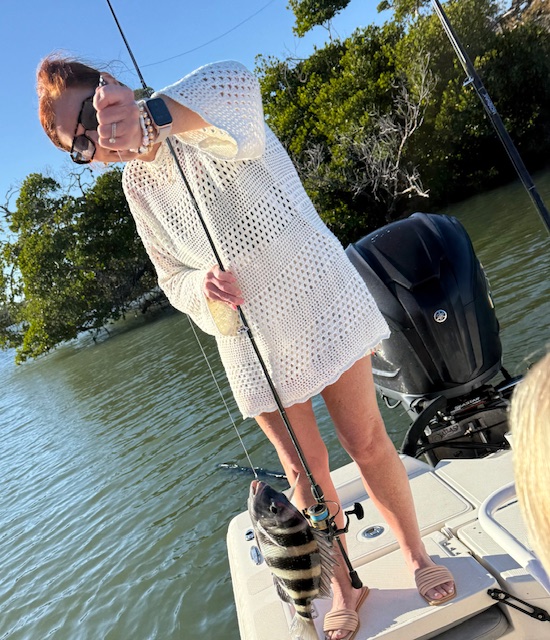
This is the part of learning how to catch sheepshead that separates a full cooler from a bucket of empty hooks. The fish are often right there. The challenge is noticing them in time.
Why the Bite Feels So Small
A sheepshead usually bites by crushing, not grabbing. It may close on the bait, crack it, and work the meat free while barely moving the line. What reaches your hands is often a faint tap, a slight tick, or simply a feeling that the line has become a little heavier. Some anglers describe it as a mushy weight rather than a pull.
Keep Contact With the Bait
Slack line is the biggest enemy here. Once the bait reaches the bottom, reel up just enough that you can feel the weight without dragging the bait away from the structure. A little tension lets small changes travel up the line to the rod tip.
When to Lift the Rod
When you feel a tap or a change in weight, lift the rod tip smoothly. If you feel the fish’s weight come tight against you, set the hook firmly with a short, sharp lift. If you feel nothing, let the bait settle and stay ready, because the fish is often still there.
Anglers argue about whether to strike on the first tap or wait for weight, and both camps catch fish. The reliable middle ground is the smooth lift: it tests for weight without yanking a bait away from a fish that has not committed yet.
Why Waiting for a Big Pull Costs Fish
Many anglers, especially those used to snook or redfish, wait for a hard run. With sheepshead, that run usually never comes. By the time the line moves noticeably, the fish has often eaten the bait and spit the hook.
How Beginners Can Learn the Bite
Start by watching the rod tip closely and holding the line lightly between your fingers. Every time a bait comes back missing, think about what you felt in the moments before, even if it seemed like nothing. Within an hour or so most people start recognizing the pattern. On our charters, this is where the captain’s coaching helps most, because a few words at the right moment can turn missed bites into hooked fish.
How to Catch Sheepshead Around Docks, Bridges, and Other Structure
Knowing where sheepshead live is half the job. The other half is presenting a bait the right way for each kind of structure.
Dock Pilings
Drop the bait straight down beside the piling rather than casting out toward open water. Sheepshead rarely chase food far from cover, so a bait even a few feet away can go untouched. Work several pilings on the same dock, since fish often favor one side or one corner, frequently the shaded side or the side facing the current.
Bridges
Around bridges, position the boat so the current carries your bait back toward the pilings rather than away from them. Fish the down-current side of the footings, where food and scent wash past, and use enough weight to stay on the bottom. Expect to lose some tackle to the structure; it is part of fishing where the fish live.
Mangrove Roots
Pick out mangrove edges where you can see oysters or barnacles on the roots, ideally with some depth nearby. Pitch the bait within a foot or two of the roots and let it settle. Light split-shot rigs and small crabs work well here.
Oyster Bars
On lower tides, sheepshead sometimes feed in the shallows over oyster bars, occasionally showing their tails as they tip down to root out crabs. Approach quietly and place a small crab or piece of shrimp just ahead of a feeding fish. As the tide rises, work the edges and deeper sides of the bar.
Seawalls and Rocks
Work along the base of the wall or rocks, dropping the bait close to the bottom and moving a few yards at a time until you find fish. Keep a firm grip on the line, because a hooked sheepshead will try to turn into the structure.
Nearshore Reefs and Wrecks
On calm late-winter days, a short run to nearshore structure can find large groups of spawning fish. A knocker rig or jig head dropped straight down to the structure is the usual approach. These trips depend on sea conditions, so the weather decides whether they make sense on a given day.
Best Tide and Time of Day for Sheepshead Fishing
Moving water is generally your friend. Current carries scent along the structure and dislodges small crabs and shrimp, which gets sheepshead feeding. Both incoming and outgoing tides can produce, and the better one often depends on the specific spot.
That said, very strong current can make it hard to keep a bait in place around bridges and passes. Many anglers find the most comfortable fishing comes as the tide begins to move or slows toward a change, when it is easier to hold the bait tight to the structure. No single tide stage works every day, so it pays to watch how the fish respond and adjust.
Time of day matters more in winter than many visitors expect. After a cold night, the water can take a while to warm, and the bite may improve as the day goes on. Our own winter trips have shown that afternoons can be productive for both sheepshead and redfish, particularly on sunny days.
Fishing Around Cold Fronts
The day a strong front passes is often windy and difficult. The first day or two after it can bring bright skies, cold mornings, and slower fish. As conditions settle and the water warms again, sheepshead usually return to normal feeding. If you have flexibility, the stable days between fronts tend to be the most comfortable and productive.
Month-by-Month Sheepshead Fishing in Southwest Florida
Sheepshead season in Florida is open year-round, but the fishing changes a great deal from month to month. The table below gives a general picture of how the year tends to unfold around Fort Myers. Every season runs a little differently, so treat it as a planning guide rather than a forecast.
| Period | What usually happens | Where to focus |
|---|---|---|
| November | Water cools and fish begin moving onto inshore structure | Docks, seawalls, bridges in the bays |
| December | Winter pattern settles in; sheepshead become a dependable target | Bridges, older docks, deeper pilings |
| January | Often a strong month; cold fronts can slow things for a day or two | Deeper structure on cold mornings, shallower spots on warm afternoons |
| February | Fish gather in larger groups ahead of spawning | Bridges, passes, rocks, nearshore structure on calm days |
| March | Spawning activity and large schools; vessel limit applies | Passes, jetties, nearshore reefs and wrecks |
| April | Spawning winds down and fish start to disperse; vessel limit still applies | Passes and inshore structure |
| May to October | Fish are still present but more scattered; bait stealers are more active | Scattered structure; sheepshead become a bonus rather than the main target |
For anyone planning a visit around this fish, December through February is the sweet spot to book, with March adding the chance of big spawning schools when the weather allows. The rest of the year belongs to the other fish species in Fort Myers, from snook and redfish to tarpon in early summer.
Common Mistakes When Fishing for Sheepshead
Most missed sheepshead come down to a handful of habits that are easy to fix once you know them.
- Fishing too far from the structure. A bait that settles a few feet into open water often goes unnoticed by fish feeding tight to the pilings.
- Going too big. Oversized hooks and whole shrimp invite nibbling around the edges. A small hook buried in a small bait forces the fish to commit.
- Fishing with slack line. Without a little tension, the light bite never reaches the rod, and the hook comes back bare.
- Using too much weight. A heavy sinker dulls the feel and can drag the bait away from the structure in current.
- Leaving too soon. Disappearing baits mean fish are present. Change hook size, bait size, or presentation before moving on.
- Keeping fish without measuring. Every sheepshead destined for the cooler should be measured first.
Is Sheepshead Fishing Good for Beginners and Families?
Yes, and winter is a particularly good time to try it. Sheepshead gather in good numbers on inshore structure, the water is often calm between fronts, and the fishing usually happens in protected bays and canals rather than open water. That combination makes it a comfortable first experience for new anglers and children.
Learning how to catch sheepshead also teaches real fishing skills. Feeling a light bite and setting the hook at the right moment is something every angler benefits from, and the satisfaction of finally connecting with one is hard to beat. The fight is short and strong rather than exhausting, which suits younger anglers well.
For families, the steady winter bite helps keep kids engaged, and the breaks between fish are rarely long. Children who can follow a few simple instructions can take a real turn on the rod, with an adult or the captain close by to help. Sheepshead also have sharp dorsal spines and strong teeth, so we handle the fish when they come aboard and show kids how to hold them safely for photos.
A guided trip removes most of the learning curve. On our inshore fishing charters, the captain chooses the spots, rigs the lines, and coaches each angler through the bite, while rods, reels, bait, tackle, and fish cleaning come standard with all of our saltwater fishing charters. Guests fishing aboard our licensed charter vessel are also covered under its charter fishing license, so there is nothing extra to buy before the trip.
If a winter trip with your family is on the calendar, a quick call to (239) 980-2630 is the easiest way to check December and January dates with Captain Erik.
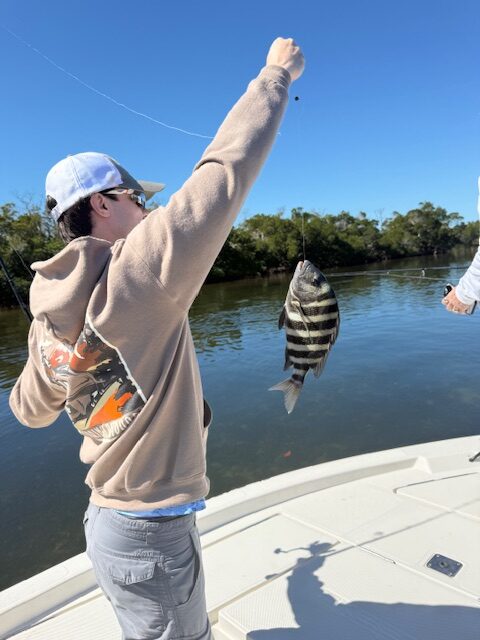
What to Expect on a Winter Inshore Trip With Captain Erik
A winter trip with Sea N Red Charters is private, so the boat, the pace, and the plan are built around your group. Among the fishing charters Fort Myers has to offer, that private setup is what makes a patient, finesse species like sheepshead so enjoyable to learn. Here is how a typical cool-season day comes together.
Planning around the weather. Winter fishing is shaped by fronts, wind, and water temperature. Captain Erik keeps an eye on the forecast and will suggest a start time and trip length that suit the conditions on your dates, which sometimes means a later start on a cold morning.
Choosing the water. Depending on wind and tide, the day might focus on bridges and docks around Sanibel, structure in San Carlos Bay, grass flats near Matlacha and Pine Island, or the canals and shorelines closer to Fort Myers. Sheltered water is the priority on breezy days.
Learning as you fish. Everything is supplied and rigged, and you will be shown how to catch sheepshead step by step: how to hold the rod, keep the line tight, and recognize the bite. First-time anglers usually pick it up quickly with a little coaching.
More than sheepshead. Winter inshore trips often mix in spotted sea trout, redfish, and black drum, and dolphin sightings are common on these waters. Sheepshead are a great target, but no captain can promise a particular catch on any single day.
Taking fish home. Sheepshead are excellent eating, and legal-sized fish within the limits can be kept. Cleaning is part of what’s included in a Fort Myers fishing charter with us, so your catch heads home ready for the kitchen.
Winter Sheepshead Trip Checklist
- Layers you can add or remove, including a windproof jacket for the boat ride
- A warm hat or cap and polarized sunglasses
- Non-spray sunscreen, because winter sun on the water still burns
- Non-slip, closed-toe shoes
- Water and snacks for your group
- A small cooler or bag for taking cleaned fish home
- A phone or camera in a waterproof case
- Motion sickness medication taken before departure, if needed
Florida Sheepshead Regulations and Responsible Fishing
The Florida Fish and Wildlife Conservation Commission’s sheepshead rules for Gulf state waters are straightforward:
| Rule | Current limit |
|---|---|
| Season | Open year-round |
| Minimum size | 12 inches total length |
| Daily bag limit | 8 per person |
| Vessel limit | 50 per trip during March and April |
The spring vessel limit does not raise anyone’s personal bag limit. It caps what a single boat can keep while sheepshead gather to spawn, and knowing the exact sheepshead size and bag limits before you head out keeps you compliant once those spring vessel limits take effect.
A few gear and collection rules matter too. FWC prohibits harvesting sheepshead with multiple hooks combined with live or dead natural bait, and snatching is not allowed, which is one more reason a single small hook is the standard setup. Barnacles for chum can be collected with a recreational saltwater fishing license, up to 100 pounds per person per day, and public bridge pilings are the usual source; FWC asks anglers never to scrape private docks or other private structures without the owner’s permission. Oysters are managed separately, with their own seasons and approved harvest areas. Guests fishing aboard a licensed charter are covered by the vessel’s license, while anglers fishing on their own need a saltwater fishing license unless exempt.
Regulations can change, so check the FWC page before every trip. Keeping only what you plan to eat and releasing undersized fish quickly helps keep this winter fishery strong for years to come.
Frequently Asked Questions About Catching Sheepshead
What is the best bait for sheepshead?
Small crabs and shrimp are the most dependable choices. Fiddler crabs and mud crabs closely match what sheepshead eat and resist bait stealers, while shrimp is easy to find and works almost everywhere. Barnacles, clams, and sand fleas are useful in the right places.
What time of year is best for sheepshead in Southwest Florida?
Late fall through early spring, roughly November through April, with December through March usually the most reliable stretch. Fish are present year-round but are more scattered in the warmer months.
What size sheepshead can you keep in Florida?
A sheepshead must measure at least 12 inches in total length, and each angler can keep up to 8 per day. During March and April, a boat can keep no more than 50 per trip, whatever the number of anglers aboard.
What size hook should I use for sheepshead?
Small, strong hooks work best. Many anglers use short-shank J-hooks or octopus hooks between about size 4 and 1/0, matched to the size of the bait.
How do you set the hook on a sheepshead?
Keep light tension on the line, and when you feel a tap or added weight, lift the rod smoothly. If the fish’s weight comes tight, set the hook firmly with a short, sharp lift. Waiting for a hard pull usually means a lost bait.
Do sheepshead hit artificial lures?
Sometimes, but much less reliably than natural bait. A small jig tipped with shrimp or crab is the most practical compromise.
Can you catch sheepshead from shore in Fort Myers?
Yes. Public piers, seawalls, and bridges with fishing access can all hold sheepshead in winter, and the same small hooks and baits apply. Shore anglers need a Florida saltwater fishing license unless exempt.
Can beginners catch sheepshead?
Yes. Figuring out how to catch sheepshead takes a little practice with that light bite, but most beginners start recognizing it within an hour or so, especially with a captain coaching them.
Can kids go sheepshead fishing on a charter?
Absolutely. Calm winter waters and steady action make sheepshead a good target for families. Let us know your children’s ages when you book so the trip can be planned around them.
What else can you catch in Fort Myers in winter?
Spotted sea trout, redfish, and black drum are common winter companions on inshore trips, with other species possible depending on the conditions.
Are sheepshead good to eat?
Yes. The meat is white, mild, and flaky, which makes sheepshead a winter favorite on the dinner table. They are bony with tough skin, so cleaning takes a sharp knife and a little patience.
Plan Your Winter Fishing Trip in Fort Myers
Once you understand how to catch sheepshead, the rest comes down to time on the water. Small hooks, the right bait, a bait placed tight to good structure, and a patient hand on the rod will put fish in the boat far more often than luck alone.
If you would rather learn it on the water, Captain Erik runs private winter inshore trips around Fort Myers, Sanibel, and Pine Island, with rods, bait, tackle, and hands-on instruction supplied, so all your group needs to bring is warm layers and a camera. December and January dates go quickly once holiday visitors arrive. A look at our fishing charter pricing will help you choose a trip length, and from there you can contact Captain Erik to check availability for your dates or call (239) 980-2630 to plan the day directly.


