
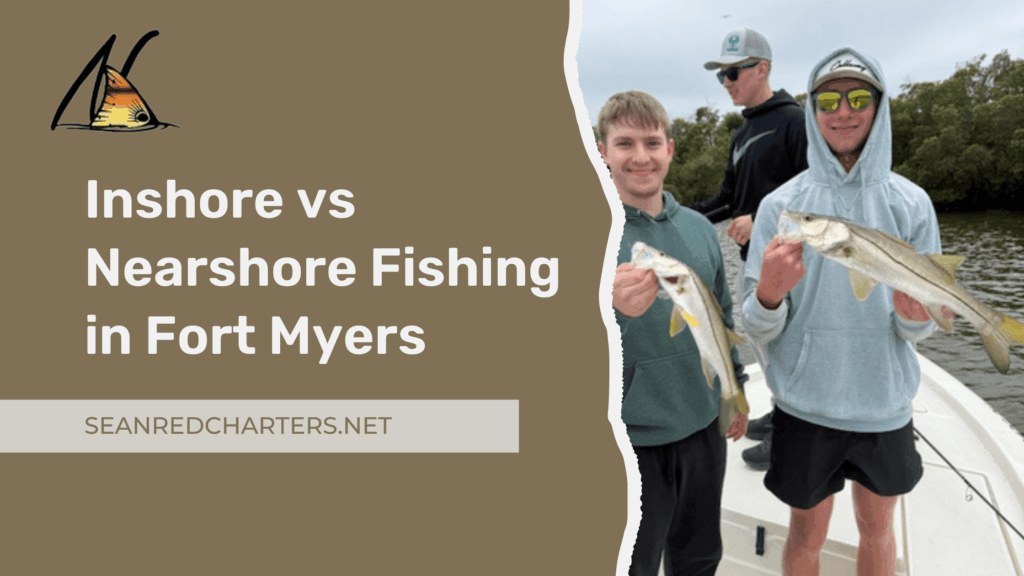
Understanding the difference between inshore and nearshore fishing is the single most important decision you will make when booking a Fort Myers charter. Both put fish on the line. Both create memories. But the experience, the species, the water conditions, and the physical demands are completely different. Picking the wrong one for your group means a frustrating day instead of an unforgettable one.
Inshore vs nearshore fishing comes down to a simple question: do you want calm, protected backwater fishing for snook, redfish, and trout, or do you want to push out a few miles into the Gulf to battle bigger fish like grouper, snapper, and king mackerel over reefs and wrecks?
This guide breaks it all down from a captain’s perspective so you can book the right trip the first time.
What Is Inshore Fishing?
Inshore fishing takes place in protected shallow waters close to land. In Fort Myers, that means the back bays, mangrove shorelines, grass flats, oyster bars, residential canals, passes, and estuaries that make up the vast network of sheltered waterways surrounding the coast.
You are rarely more than a few hundred yards from land. The water is typically one to six feet deep, often clear enough to see the bottom, and almost always calm. Pine Island Sound, Estero Bay, the Caloosahatchee River, Matlacha Pass, and the backwaters around Sanibel and Captiva are the primary inshore territories that Fort Myers captains fish.
The boat ride from the marina to your first fishing spot usually takes 5 to 15 minutes. That means more of your charter time is spent actually fishing instead of running to distant spots. On a 4-hour trip, you might fish three or four different locations without spending more than a few minutes transitioning between them.
Inshore fishing is fundamentally a sight-fishing and structure-fishing game. You are casting to visible fish tailing on flats, working live bait alongside mangrove roots, dropping shrimp next to dock pilings, or throwing topwater plugs across grass flat potholes. The fishing is visual, interactive, and hands-on from the first cast.
Fort Myers inshore fishing charters typically run on shallow-draft flats boats or bay boats that can access water as thin as 10 inches. These smaller, more nimble vessels are designed specifically for the tight quarters and shallow environments where inshore species live.

What Is Nearshore Fishing?
Nearshore fishing moves beyond the protected bays and into the open Gulf of Mexico, typically 3 to 10 miles from shore. You are fishing over structure: artificial reefs, natural rock ledges, wrecks, hard bottom, and sand patches where bottom-dwelling and pelagic species congregate.
Water depth ranges from 15 to 50 feet or more. The bottom structure is where the action happens. Grouper, snapper, sheepshead, and other reef species hold tight to rocks, ledges, and wrecks, while pelagic species like king mackerel, Spanish mackerel, and cobia cruise the water column above.
The boat ride to nearshore spots runs 20 to 45 minutes depending on your departure point and the specific reefs your captain targets. Nearshore fishing charters near Fort Myers run center console boats or larger bay boats with the range, hull design, and horsepower to handle open Gulf conditions comfortably.
Nearshore fishing involves a mix of techniques: bottom fishing with live or cut bait for grouper and snapper, slow-trolling live baits for king mackerel, sight-casting to cobia near buoys and rays, and jigging over structure for a mixed bag. The pace varies, but when the fish are on the bite, nearshore action can be fast and furious.
For a detailed look at exactly how far out these trips run, How Far Out Is Nearshore Fishing in Fort Myers covers the distances, depths, and logistics.
Inshore vs Nearshore: The Complete Comparison
Here is the side-by-side breakdown that helps you decide which trip fits your group.
| Feature | Inshore Fishing | Nearshore Fishing |
|---|---|---|
| Location | Bays, flats, mangroves, canals, passes | Gulf reefs, wrecks, hard bottom (3 to 10 miles out) |
| Water Depth | 1 to 6 feet | 15 to 50+ feet |
| Water Conditions | Calm, protected, minimal waves | Open water, light to moderate swells possible |
| Travel Time to Fish | 5 to 15 minutes | 20 to 45 minutes |
| Seasickness Risk | Extremely low | Low to moderate |
| Trip Length | 4 to 6 hours typical | 4 to 8 hours typical |
| Boat Type | Shallow-draft flats boat or bay boat | Center console or larger bay boat |
| Tackle | Light to medium spinning (8 to 20 lb) | Medium to heavy spinning or conventional (15 to 50 lb) |
| Fishing Style | Sight fishing, casting to structure, topwater | Bottom fishing, trolling, jigging, structure fishing |
| Scenery | Mangroves, islands, dolphins, manatees, birds | Open Gulf water, horizon views, occasional dolphins |
| Typical Cost | $500 to $800 per half day | $700 to $1,200 per half day |
| Best For | Families, beginners, short trips, calm conditions | Bigger fish, table fare, more adventure, experienced anglers |
What Can You Catch Inshore vs Nearshore?
The species lists are mostly different, with some overlap around the passes and transitional zones. Here is what each environment produces.
Inshore Species (Bays, Flats, Mangroves)
Snook are the premier inshore gamefish in Fort Myers. Sleek, silver fighters with a distinctive black lateral line, they hang around docks, mangroves, bridge pilings, and seawalls. The strike is explosive, and the fight features acrobatic jumps and hard runs toward structure. Snook are active year-round, with peak action from March through November. Live pilchards and whitebait fished tight to structure are the top presentations.
Redfish are the workhorse of the inshore fishery. Bronze-colored with a signature black spot near the tail, they feed on flats, around oyster bars, and along mangrove edges. Redfish are famous for “tailing” in shallow water while feeding on crabs and shrimp, making them a favorite sight-fishing target. Strong fighters that make powerful runs, they are excellent for all skill levels. Peak months are September through November when they school on flats in massive numbers.
Spotted seatrout are abundant and cooperative, making them one of the most reliable inshore species for consistent action. Found on grass flats and sandy potholes, they strike aggressively on live shrimp under popping corks or soft plastic jigs. The largest “gator trout” (5+ pounds) show up during cooler months from October through February.
Tarpon are seasonal visitors to inshore waters from April through August. These massive fish (80 to 200 pounds) stage in passes, roll on flats, and cruise beach lines. While primarily targeted on dedicated tarpon trips, they show up as bonus catches on general inshore charters during the spring and summer migration.
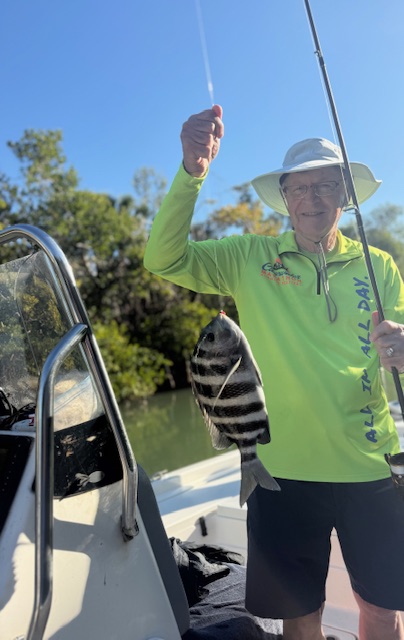
Sheepshead stack around docks, bridges, and pilings from December through March. Their human-like teeth crush barnacles and crabs. Excellent table fare when you can get them to the hook without them stealing the bait first.
Other inshore species: Black drum, ladyfish (fast and jumpy, excellent for kids), pompano, jack crevalle (brutally hard fighters), flounder, and mangrove snapper around structure.
Nearshore Species (Reefs, Wrecks, Hard Bottom)
Grouper (gag, red, and black) are the heavy hitters of nearshore fishing. These powerful bottom fish live in holes, ledges, and wrecks, and the fight is a tug-of-war to keep them from diving back into structure. Grouper are excellent table fare and a top target for “hook and cook” trips. Best months are typically October through April, though availability varies with seasonal closures. Check current FWC regulations before targeting them.
Snapper (mangrove, lane, yellowtail, and occasionally red) school around reefs and wrecks and provide fast, steady action. Mangrove snapper are available year-round and are one of the best eating fish in the Gulf. Red snapper have a strictly regulated federal season, typically a short summer window. Lane and yellowtail snapper fill coolers on good reef trips.
King mackerel are fast, aggressive predators that migrate through Fort Myers nearshore waters in spring and fall. Fish in the 15 to 30-pound range are common, with occasional smoker kings exceeding 40 pounds. Slow-trolling live bait along the beach or over nearshore structure is the standard technique. The screaming drag runs are addictive.
Spanish mackerel show up in massive schools during spring and fall, providing light-tackle action that is fast-paced and fun for all ages. They hit small spoons, jigs, and live bait aggressively.
Cobia are curious, powerful fish often found near buoys, channel markers, floating debris, and rays. Sight-casting to cruising cobia with live crabs or jigs is one of the most exciting nearshore techniques. Spring through summer is prime time.
Sharks (blacktip, bonnethead, bull, spinner, nurse) populate the nearshore waters year-round, with summer producing the best action. Cut bait fished on the bottom or in the water column around reefs and passes draws sharks from a wide area.
Tripletail hover under crab trap buoys and floating debris, particularly from spring through fall. They look deceptively slow, but they fight hard and taste outstanding. A true “bonus” species that nearshore captains keep an eye out for.

Which Option Is Better for Families or First-Time Anglers?
Inshore fishing is the clear choice for families with young children, first-time anglers, and anyone concerned about seasickness.
The calm, protected waters mean virtually zero chance of motion sickness. The short boat ride gets kids to the fish quickly before boredom or restlessness sets in. The action is consistent, with species like ladyfish, small jack crevalle, and trout providing steady bites that keep young anglers engaged. The scenery helps too. Dolphins, manatees, ospreys, and pelicans are regular companions on inshore trips, turning the outing into a nature experience alongside the fishing.
Most captains who specialize in inshore trips are accustomed to working with beginners and kids. They handle the bait, rig the rods, coach the hook set, and manage the landing. All you need to do is hold the rod and enjoy the fight. That family-focused approach is one of the reasons Fort Myers fishing charters have become one of the most popular vacation activities in Southwest Florida.
For families looking to add fishing to their Fort Myers vacation, family-friendly fishing trips are one of the most popular activities and create memories that last far beyond the trip itself.
Nearshore is still accessible for families and beginners, but it works best when everyone in the group is comfortable on a boat in open water. The slightly rougher conditions and longer run time mean it is better suited for groups with older kids (10+) or adults who have some boat experience.
How Do Weather and Conditions Affect the Choice?
Weather is the great equalizer in Fort Myers fishing. It determines which option runs and which one gets cancelled.
Wind is the primary factor. When Gulf winds blow 15+ knots, nearshore trips can become uncomfortable or unsafe. Inshore trips, protected by mangroves and islands, usually run without issue in the same conditions. This is a major advantage during the windy season (December through March) and during afternoon summer thunderstorms.
Afternoon storms (June through September) are a daily reality. Most captains schedule early departures for both inshore and nearshore to beat the weather. If a storm rolls in, inshore boats can duck behind a mangrove island in minutes. Nearshore boats have a longer run back to port.
Hurricane season (June through November) can disrupt plans. Nearshore trips are often cancelled first due to high seas, while inshore trips can frequently still run because the mangroves provide a natural windbreak.
Water clarity matters more for inshore fishing, where sight-fishing is a core technique. Heavy rain or strong tidal flows can muddy the backwaters. When inshore clarity drops, nearshore reefs (where fish rely on scent and vibration rather than sight) often fish better.
The bottom line: if you are visiting Fort Myers and weather is uncertain, book an inshore trip. You are far more likely to fish regardless of conditions.
Gear and Tackle: What Each Trip Requires
Inshore Tackle
Light to medium spinning gear dominates inshore fishing. A 7-foot rod rated for 8 to 20-pound braided line, paired with a 2500 to 3000 size spinning reel, covers virtually every inshore species from trout to snook. Add a 20 to 30-pound fluorocarbon leader for abrasion resistance around oyster bars and mangrove roots.
Live bait is king inshore. Live shrimp is the universal bait that nearly every inshore species will eat. Pilchards and whitebait are premium snook and tarpon baits. Pinfish work well for larger predators. Fiddler crabs are the top sheepshead bait.
For artificial anglers, soft plastic jigs (3 to 4-inch paddle tails on 1/4-ounce jig heads), topwater plugs, and weedless spoons cover most situations.
Nearshore Tackle
Medium to heavy spinning or conventional gear is the standard for nearshore. Bottom fishing for grouper and snapper requires rods rated for 30 to 50-pound line with enough backbone to haul fish away from structure before they rock you. Trolling setups for king mackerel use medium-heavy rods with wire or heavy fluorocarbon leaders to prevent bite-offs.
Live bait is also preferred nearshore. Live pinfish, grunts, and large shrimp are standard bottom-fishing baits. Live bait for trolling includes threadfin herring, pilchards, and cigar minnows. Cut bait (squid, bonito, mullet) produces well on the bottom.
Jigs, spoons, and diving plugs round out the nearshore artificial arsenal.
If you are fishing with a charter, all tackle and bait are provided. You do not need to bring gear unless you specifically want to fish with your own rods. To get a complete picture of what’s included in a Fort Myers fishing charter, check that breakdown before your trip.

Cost Comparison: Inshore vs Nearshore Charters
Charter pricing in Fort Myers varies by captain, boat, and trip length, but general ranges hold consistent across the market.
Inshore charters typically run $500 to $800 for a half-day (4-hour) trip for up to 3 to 4 anglers. Full-day inshore trips (6 to 8 hours) run $800 to $1,200. The lower cost reflects the shorter boat runs and reduced fuel consumption.
Nearshore charters range from $700 to $1,200 for a half-day trip. Full-day nearshore trips run $1,000 to $1,600 or more. The higher price reflects longer runs, more fuel, heavier tackle, and the larger boats required for open Gulf conditions.
Both trip types include all rods, reels, tackle, live bait, and fishing licenses. You just show up. For the complete pricing breakdown, Fort Myers fishing charter prices are listed with trip lengths and group sizes.
The value calculation is not just about price per hour. Inshore trips deliver more actual fishing time per dollar because less time is spent running. Nearshore trips deliver bigger fish on average and the potential for premium table fare (grouper, snapper) that can offset the cost if you bring your catch to a local restaurant for a “hook and cook” dinner.
When Is the Best Time to Book Each Trip?
Best Seasons for Inshore Fishing
Inshore fishing in Fort Myers produces year-round, but the prime windows are:
Spring (March through May) fires up snook, redfish, and tarpon. Water temperatures climb past 70°F, bait moves inshore, and feeding activity accelerates across the board. April is arguably the single best inshore month.
Fall (September through November) delivers schooling redfish on flats, aggressive snook during the mullet run, and excellent spotted seatrout as water cools. October is the hidden gem of the inshore calendar.
Winter (December through February) brings sheepshead, black drum, and trout on structure. Lower tides expose flats for exceptional sight fishing. Cold fronts create short feeding windows that experienced captains exploit.
Summer (June through August) keeps snook, tarpon, and redfish active, but heat pushes the best action to early morning and late evening. Night fishing under dock lights is outstanding during summer.
Best Seasons for Nearshore Fishing
Nearshore fishing has its own seasonal rhythm:
Spring (March through May) brings cobia, Spanish mackerel, and tripletail as water warms. Snapper and grouper are active on nearshore structure.
Fall (September through November) delivers the king mackerel migration, strong reef fishing, and some of the calmest Gulf conditions of the year.
Winter (November through March) produces excellent grouper and snapper fishing on nearshore reefs as cooler water pushes these species closer to shore.
Summer (June through August) offers mangrove snapper, sharks, and pelagic action, though afternoon storms can cut trips short.
For a complete month-by-month breakdown across both inshore and nearshore, the seasonal fishing guide Fort Myers calendar covers every species and timeframe.

The “Best of Both Worlds” Strategy: Combo Trips
Many Fort Myers captains offer combo trips that blend inshore and nearshore fishing into a single outing. The typical format starts with a few hours on the flats or in the mangroves targeting snook and redfish, then runs out to nearshore reefs for grouper, snapper, or mackerel.
Combo trips usually require a minimum of 6 hours to be worthwhile, giving enough time for both environments without feeling rushed. They work particularly well for groups with mixed experience levels. Beginners gain confidence inshore before stepping up to the bigger nearshore action.
Operations like Sea n Red Charters offer saltwater fishing charters that can be customized to include both inshore and nearshore targets depending on conditions, tides, and your group’s preferences. Communicate your goals when booking, and the captain can plan a trip that covers both worlds.
Questions to Ask Your Captain Before Booking
Regardless of whether you choose inshore or nearshore, asking the right questions before booking ensures you get the trip that matches your expectations.
“Where exactly will we fish?” A good captain should be able to tell you the general areas: back bays and mangroves for inshore, specific reef systems or wrecks for nearshore. Vague answers are a red flag.
“What species are we targeting?” This should align with the season and your preferences. If you want snook, make sure the captain targets snook. If you want table fare, nearshore grouper and snapper should be on the plan.
“What bait and tackle do you provide?” Quality charters provide premium gear and fresh live bait. Ask about bait specifically. The difference between a charter running frozen shrimp and one casting live pilchards is enormous.
“What is your cancellation and weather policy?” This is critical during hurricane season and winter cold fronts. Know the refund terms before you put down a deposit.
“How many anglers do you take?” Private charters (your group only) deliver a far better experience than shared trips. Most Fort Myers inshore boats accommodate 2 to 4 anglers comfortably. Nearshore boats handle 4 to 6.
For more on choosing the right charter, The Ultimate Guide to Fort Myers Fishing Charters covers everything from boat selection to captain vetting.
Frequently Asked Questions
What is the difference between inshore and nearshore fishing?
Inshore vs nearshore fishing comes down to location and species. Inshore fishing takes place in calm, protected bays and mangroves targeting snook, redfish, and trout. Nearshore fishing heads 3 to 10 miles into the Gulf targeting grouper, snapper, mackerel, and other reef species over structure.
Which is better for beginners?
Inshore fishing is better for beginners. The calm water, short boat rides, consistent action, and lighter tackle make it more comfortable and accessible. Nearshore is still doable for beginners but works best for those comfortable on a boat in open water.
Can you keep fish from both trips?
Yes, within FWC regulations. Inshore species like seatrout, sheepshead, and redfish (within slot) are excellent table fare. Nearshore produces snapper, grouper, and mackerel that are premium eating fish. Many Fort Myers restaurants will prepare your fresh catch for a “hook and cook” meal.
Is nearshore fishing rough water?
Not necessarily. On calm days, the Gulf is flat and the ride is smooth. On windy days, expect light to moderate chop. It is rarely severe enough to cancel, but it can be uncomfortable for those prone to seasickness. Your captain monitors conditions and will adjust plans if necessary.
How far out is nearshore fishing?
Nearshore trips from Fort Myers typically run 3 to 10 miles from shore, though some structure lies closer. You are often still within sight of land. Offshore (deep sea) is a different category entirely, running 20 to 60+ miles out.
Which trip catches more fish?
It depends on the species and the day. Inshore trips tend to produce higher catch numbers with smaller average fish size. Nearshore trips may produce fewer total fish but with larger individual specimens. Both can produce excellent days when conditions cooperate.
Pick based on your group, your comfort level, and your goals. Inshore for calm, consistent, scenic fishing. Nearshore for bigger fish, table fare, and a taste of the open Gulf. Either way, Fort Myers delivers. Book the right trip, trust your captain, and enjoy the ride.


