
Fort Myers, Florida, is home to one of the most diverse fisheries in the entire United States. The fish species Fort Myers Florida produces range from hard-fighting inshore gamefish like snook and redfish to heavyweight reef dwellers like grouper and snapper, seasonal migrants like tarpon and cobia, and everything in between. Over 50 catchable species swim these waters at any given time.
That variety exists because Southwest Florida sits at the intersection of multiple ecosystems: the freshwater Caloosahatchee River, the brackish estuaries of Pine Island Sound and Estero Bay, the shallow grass flats and mangrove shorelines of the back bays, the nearshore reefs and wrecks of the Gulf of Mexico, and the deeper offshore waters beyond. Each habitat supports a different community of fish, and the warm subtropical climate keeps them active twelve months a year.
Whether you are chasing a bucket-list tarpon, filling a cooler with snapper for dinner, or putting a kid on their first redfish, this complete species guide covers every major fish you can catch in Fort Myers, organized by habitat, with the season, size, bait, technique, and regulation details you need to plan a productive trip.
Most Fort Myers fishing charters target a combination of these species depending on the season, tides, and their clients’ goals.
The Inshore “Big Three”: Snook, Redfish, and Spotted Seatrout

These three species are the foundation of Fort Myers inshore fishing. They live year-round in the back bays, flats, and mangrove systems, and they are the primary targets on the majority of inshore fishing charters running out of Fort Myers.
Snook
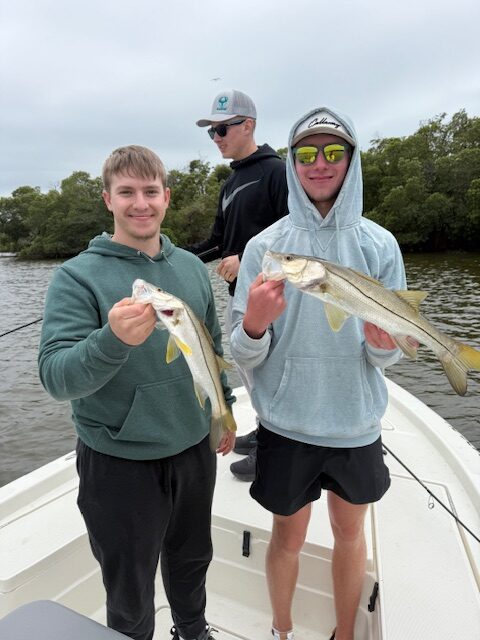
Snook are the most sought-after inshore fish in all of Florida, and Fort Myers sits in the heart of their range. Sleek, silver, and built for speed, they have a distinctive black lateral line running from gill to tail. Anglers often compare them to largemouth bass on steroids because of their similar ambush-style feeding and explosive topwater strikes.
Where to find them: Mangrove shorelines, dock pilings, bridge shadow lines, seawalls, residential canals, and passes. Snook are structure-oriented fish. They sit in ambush positions and wait for bait to wash past on the tide.
When they bite: Year-round, with peak action from March through November. Summer produces the most aggressive surface feeding, especially at dawn and dusk. Winter pushes snook into deeper canals and warm-water refuges, where they become more sluggish but still catchable on slower presentations.
Size: Average inshore snook run 5 to 15 pounds. Fish in the 20 to 30-pound range are common enough to keep things exciting. The state record exceeds 44 pounds.
Best bait and techniques: Live pilchards and whitebait free-lined along mangrove edges are the top presentation. Live shrimp works well around docks and bridges. Topwater plugs at first light produce explosive strikes. Soft plastic jigs bounced along bottom structure are effective year-round.
Regulations: Snook have specific slot limits and closed seasons that vary by region in Southwest Florida. Always check current FWC regulations before targeting them. In most years, the Gulf coast season has closed periods in winter and summer to protect spawning and cold-weather vulnerability.
Snook fishing in Fort Myers is productive from January through December, though tactics shift dramatically between seasons. The same fish that smashes a topwater plug in July will barely nose a slowly drifted shrimp in January.
Redfish (Red Drum)
Redfish are the workhorse of the Southwest Florida inshore fishery. Bronze-bodied with one or more signature black spots near the tail, they are strong, stubborn fighters that make powerful runs and rarely give up easily. They are also one of the most accessible species for anglers of all skill levels.
Where to find them: Oyster bars, grass flats, mangrove edges, dock shade, and sandy potholes. Redfish are famous for “tailing” in extremely shallow water while they root for crabs and shrimp on the bottom. Sight-casting to tailing reds on a low tide is one of the most exciting experiences in inshore fishing.
When they bite: Year-round, with the absolute peak from September through November when they school on flats in pods of 20 to 100+ fish. Spring produces strong action around oyster bars and mangrove edges. Winter fish hold deeper around structure.
Size: Average fish run 5 to 15 pounds. Slot-size reds (18 to 27 inches in Florida’s Gulf waters) are common. Bull reds exceeding 30 pounds show up in passes and along beaches during fall and winter.
Best bait and techniques: Gold spoons and soft plastic jigs (3-inch paddle tails on 1/4-ounce jig heads) are the standard artificials. Live shrimp fished under a popping cork is deadly on grass flats. Cut mullet or crab works well around structure. For sight fishing, a well-placed gold spoon landing 3 feet ahead of a tailing red is as good as it gets.
Regulations: Florida has a slot limit for redfish (currently 18 to 27 inches, one per person per day in most Gulf waters). Over-slot and under-slot fish must be released. Check current FWC regulations for the most up-to-date limits.
Redfish fishing charters are among the most popular trips in Fort Myers because the fish are cooperative, fight hard, and deliver consistently regardless of experience level.
Spotted Seatrout
Spotted seatrout are the most abundant and consistently catchable inshore species in Fort Myers. Silver with dark spots across the upper body and a pair of prominent canine teeth, they are aggressive feeders that strike hard and provide steady action on light tackle.
Where to find them: Grass flats, sandy potholes, and deeper cuts adjacent to shallow water. Trout orient to bottom structure where they ambush shrimp and small baitfish. They are found in nearly every bay and estuary in the Fort Myers area.
When they bite: Year-round, with the strongest action from October through April. The largest “gator trout” (5 to 10 pounds) typically appear during cooler months when they concentrate in deeper potholes and channels. The May-through-July window also produces excellent numbers.
Size: Average trout run 1 to 3 pounds. Fish over 5 pounds are considered quality. Gator trout exceeding 7 pounds are a legitimate trophy.
Best bait and techniques: Live shrimp under a popping cork is the classic Fort Myers trout setup. Soft plastic jigs (DOA shrimp or paddle-tail grubs) on 1/8 to 1/4-ounce jig heads are extremely effective. Topwater plugs during low-light conditions produce exciting surface strikes.
Regulations: Trout have a slot limit and bag limit in Florida Gulf waters. Check current FWC regulations.
Seasonal Legends: Tarpon, Cobia, and Tripletail

These species visit Fort Myers waters during specific migration windows. Timing your trip to match their arrival is everything.
Tarpon (The Silver King)
Tarpon are the most prestigious gamefish in Florida and the single biggest reason many anglers travel to Fort Myers. These massive, prehistoric fish migrate through Southwest Florida’s passes, beaches, and estuaries from April through July, with the absolute peak in May and June.
Where to find them: Boca Grande Pass (the “Tarpon Capital of the World”), Sanibel and Captiva beaches, Pine Island Sound, the Caloosahatchee River, Big Carlos Pass, and Matlacha Pass. Tarpon roll on the surface, which makes them one of the most visual gamefish to target.
Size: Adult migratory tarpon commonly range 80 to 150 pounds. Fish exceeding 200 pounds are caught every season at Boca Grande. Juvenile tarpon (5 to 60 pounds) live in back bays and canals year-round.
Best bait and techniques: Live pass crabs are considered the top bait, particularly in passes. Threadfin herring and live mullet are standard for beach and bridge fishing. Circle hooks (5/0 to 8/0) are required when using natural bait. Heavy spinning or conventional gear with 50 to 80-pound braid and 60 to 100-pound fluorocarbon leaders.
The fight: Tarpon are famous for explosive jumps (sometimes four to five feet out of the water) and long, drag-screaming runs. When a tarpon jumps, drop your rod tip toward the fish (“bow to the king”) to prevent break-offs. Fights can last 20 to 45 minutes for larger fish.
Regulations: Virtually all tarpon are catch-and-release. Fish over 40 inches must remain in the water at all times. Non-offset circle hooks required with natural bait. A $50 tarpon tag is required to harvest (75-inch minimum, one per year).
Tarpon fishing charters during the spring migration are the most popular and most expensive bookings of the year. Reserve 6 to 8 weeks in advance for peak May and June dates.
For the complete seasonal breakdown, tidal strategies, and hotspot details, the tarpon fishing season Fort Myers guide covers everything from bait rigging to proper release technique.
Cobia
Cobia are one of the most exciting sight-fishing targets in nearshore Fort Myers waters. Large, brown, torpedo-shaped fish that cruise near the surface around channel markers, crab trap buoys, rays, and floating debris. They are curious by nature and will often swim directly toward a boat to investigate.
Where to find them: Nearshore waters 1 to 10 miles out, around buoys, wrecks, rays, and floating structure. Also found around bridges and passes.
When they bite: March through October, with the strongest activity in spring (April through June) when they migrate through Southwest Florida.
Size: Average fish run 15 to 40 pounds. Fish exceeding 50 pounds are caught regularly. The Florida state record is over 100 pounds.
Best bait and techniques: Live crabs, live eels, and large jigs sight-cast to cruising fish. When you spot a cobia near a buoy or following a ray, drop a live crab or pitch a heavy jig right in front of its face. The eat is usually immediate and violent.
Regulations: Cobia have a minimum size limit and bag limit. Check current FWC regulations.
Tripletail
Tripletail are one of Fort Myers’ most underrated gamefish. They hover sideways under crab trap buoys, floating debris, and channel markers, looking remarkably like a dead leaf. Do not be fooled. They fight hard, pull drag, and rank among the best-tasting fish in the Gulf.
Where to find them: Near any floating structure, particularly crab trap buoys and channel markers in nearshore waters.
When they bite: Spring through fall, with October through May being the strongest window locally. Nearshore captains keep a sharp eye on every buoy they pass.
Size: Average 3 to 8 pounds. Fish over 10 pounds are trophy-class.
Best bait and techniques: Live shrimp free-lined near the buoy or debris where the fish is hovering. Small jigs also work. The key is a quiet approach and precise bait placement.
Nearshore and Reef Species: The “Table Fare” Fish

These species live on the reefs, wrecks, and hard bottom structure found 3 to 15 miles offshore. They are the primary targets for anglers looking to bring home dinner.
Grouper (Gag, Red, and Black)
Grouper are the heavyweight champions of nearshore bottom fishing. Powerful, structure-oriented fish that live in holes, ledges, and wrecks, they pull hard toward the bottom the instant they feel the hook. The fight is a tug-of-war, and if you give them even a second of slack, they will rock you (dive into structure and wedge themselves in).
Where to find them: Nearshore reefs, artificial structures, wrecks, and ledges in 20 to 80+ feet of water.
When they bite: Year-round, with the strongest nearshore action from October through April when cooler water pushes them closer to shore. Gag grouper have specific seasonal closures in state and federal waters. Check FWC regulations before targeting them.
Size: Gag grouper commonly run 5 to 25 pounds. Red grouper average smaller (3 to 15 pounds). Black grouper can exceed 50 pounds. Goliath grouper (formerly jewfish) are massive (100 to 500+ pounds) and strictly catch-and-release only.
Best bait and techniques: Live pinfish, grunts, and large shrimp fished on heavy bottom rigs with 50 to 80-pound fluorocarbon leaders. When the fish bites, set the hook immediately and crank hard to get it off the bottom before it reaches structure.
Snapper (Mangrove, Lane, Yellowtail, and Red)
Snapper are the most reliable “numbers” fish on nearshore structure. Schools congregate around reefs, wrecks, docks, and pilings, providing fast action and premium table fare.
Mangrove snapper are available year-round on virtually any structure. They are plentiful, cooperative, and absolutely delicious. Smaller fish (1 to 3 pounds) are common, with quality fish reaching 5 to 8 pounds.
Lane snapper are abundant on nearshore reefs and provide fast action on cut bait and small jigs. Excellent eating fish that come in large numbers.
Yellowtail snapper are more common on deeper reefs and during warmer months. Light tackle and chumming with cut bait produce the best results.
Red snapper are found on deeper offshore structure and have a strictly regulated federal season (typically a short summer window). When the season opens, they are one of the most popular targets in the Gulf.
Best bait and techniques: Live shrimp, cut squid, cut bait, and small live baitfish fished near bottom around structure. Chum helps concentrate snapper in the area.
Sheepshead
Sheepshead are the “convict fish,” named for their black and white vertical stripes and their uncanny ability to steal bait without getting hooked. They have human-like teeth built for crushing barnacles, crabs, and shellfish off pilings and rocks.
Where to find them: Docks, bridges, piers, seawalls, jetties, and any concrete or rock structure with barnacle growth.
When they bite: December through March is prime time, with January and February producing the densest concentrations around structure.
Size: Average 2 to 5 pounds. Fish over 7 pounds are quality. They are compact, muscular fish that fight harder than their size suggests.
Best bait and techniques: Fiddler crabs and live shrimp fished tight against pilings. The bait must be right next to the structure. Sheepshead feed by picking barnacles off pilings, so your presentation needs to mimic that proximity. Use a small, sharp hook (1/0 to 2/0) and set at the first tap. They are notorious bait thieves.
Table fare: Outstanding. Sheepshead are one of the best-eating fish in Fort Myers waters.
King Mackerel (Kingfish)
King mackerel are fast, aggressive pelagics that migrate through Fort Myers nearshore waters in spring and fall. They are one of the hardest-pulling fish pound-for-pound in the area, with initial runs that peel 100 yards of drag in seconds.
Where to find them: Nearshore beaches, reefs, and artificial structures in 20 to 60 feet of water.
When they bite: Spring (April and May) and fall (September through November) migrations produce the best action.
Size: Average fish run 10 to 25 pounds. Smoker kings exceeding 40 pounds are the trophy every mackerel angler chases.
Best bait and techniques: Slow-trolling live threadfin herring, pilchards, or blue runners along the beach or over nearshore structure. Wire leaders or heavy fluorocarbon are necessary because kings have razor-sharp teeth.
Spanish Mackerel
Spanish mackerel arrive in massive schools during spring and fall, providing light-tackle action that is fast, furious, and fun for all ages.
Where to find them: Near baitfish schools along beaches and around nearshore structure. When you see birds working the surface, Spanish mackerel are usually underneath.
When they bite: March through May and September through November.
Size: Average 1 to 4 pounds. Fish over 5 pounds are excellent.
Best bait and techniques: Small silver spoons, fast-retrieved jigs, and live bait. They hit anything shiny and moving fast.
Shark Species in Fort Myers Waters
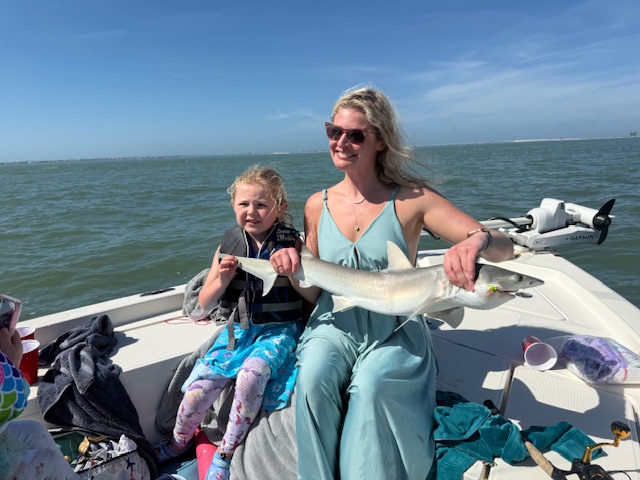
Fort Myers has a healthy and diverse shark population that provides some of the most powerful fights available inshore and nearshore.
Blacktip sharks are the most common species encountered, particularly in nearshore waters during winter and spring. Fast, acrobatic, and aggressive, they average 30 to 80 pounds and regularly clear the water when hooked.
Bull sharks are the heavy-hitters. Stocky, powerful, and aggressive, bull sharks inhabit both nearshore waters and the brackish river systems. Fish exceeding 200 pounds are not uncommon.
Bonnethead sharks are smaller (3 to 15 pounds) and more common in shallow inshore waters. They are often the first shark species that kids catch, and they provide surprisingly spirited fights on light tackle.
Spinner sharks are fast, acrobatic, and named for their tendency to spin through the air when hooked. Common in nearshore waters during warmer months.
Nurse sharks are bottom-dwellers found around reefs and structure. They are slow-moving but immensely powerful once hooked, turning fights into a war of attrition.
Hammerhead sharks occasionally appear in deeper nearshore waters and are a trophy catch. They are powerful fighters and require heavy gear.
Best bait: Cut bait (bonito, mullet, ladyfish) fished on the bottom or suspended in the water column near structure. Chunk baits and chum attract sharks from a wide area.
Shark fishing charters Fort Myers are popular during summer months when warm water concentrations bring multiple species within reach of half-day trips.
Offshore and Deep-Water Species
Anglers running farther into the Gulf (20 to 60+ miles) encounter a different class of fish.
Mahi-mahi (dolphinfish) are brilliantly colored, fast-growing pelagics found around weed lines, floating debris, and current edges. Best from May through August. Fish average 5 to 20 pounds, with bulls exceeding 40.
Blackfin tuna are hard-fighting, excellent-eating fish found on deeper structure and in chum slicks. Best during fall and winter.
Amberjack are bruisers found on offshore wrecks and reefs. Powerful fish in the 20 to 60-pound range that test tackle and endurance. Fall is prime time.
Wahoo are one of the fastest fish in the ocean. High-speed trolling in deeper Gulf waters produces these prized fighters, particularly during winter.
Sailfish are rare but possible in Gulf waters, primarily during winter. They are one of the fastest fish in the ocean and a true trophy catch.
Permit are found around wrecks, channel edges, and flats from May through August. Crab baits are the top presentation. They are notoriously selective feeders and considered one of the most challenging species to catch on the flats.
Freshwater and Brackish Species
The Caloosahatchee River and the canal systems around Cape Coral and Fort Myers hold productive freshwater fisheries that offer a completely different fishing experience.
Peacock bass are exotic transplants from South America that thrive in the warm canal systems around Cape Coral. Brilliantly colored, aggressively territorial, and explosive on topwater plugs, they are active year-round and provide fast action even during the hottest months. Freshwater fishing charters targeting peacock bass are an excellent half-day option for anglers looking for something different.
Largemouth bass are abundant in freshwater systems like Lakes Park, the canal networks, and retention ponds throughout the Fort Myers metro area. Standard bass tackle and techniques apply.
Panfish (bluegill, shellcrackers, and sunfish) are common in ponds and canals. Excellent for kids and recreational anglers using simple bobber-and-worm setups.
Catfish (channel catfish and bullhead) inhabit many freshwater canals and provide reliable bottom-fishing action.
Seasonal Quick Reference: What Fish Are in Fort Myers Florida by Month
| Season | Months | Top Inshore Species | Top Nearshore Species | Top Freshwater |
|---|---|---|---|---|
| Winter | Dec through Feb | Sheepshead, black drum, spotted seatrout, redfish | Grouper, snapper, pompano, kingfish | Largemouth bass, panfish |
| Spring | Mar through May | Snook, redfish, tarpon, cobia, spotted seatrout | Snapper, Spanish mackerel, cobia, tripletail | Peacock bass, largemouth bass |
| Summer | Jun through Aug | Tarpon (peak), snook, redfish, mangrove snapper, sharks | Mangrove snapper, sharks, grouper (deeper), permit | Peacock bass (peak), catfish |
| Fall | Sep through Nov | Redfish (schooling), snook, seatrout, jack crevalle | King mackerel, grouper, snapper, tripletail, amberjack | Largemouth bass, peacock bass |
Best Fishing Spots in Fort Myers by Species
San Carlos Bay and Matlacha Pass: Famous for shallow-water inshore fishing. Prime redfish and snook territory with strong tidal flows that concentrate bait.
Pine Island Sound: The premier habitat for spotted seatrout and redfish. Expansive grass flats, deeper channels, and mangrove edges hold fish year-round.
Caloosahatchee River: Holds snook, tarpon, jack crevalle, and snapper around bridge structures. The brackish mix also produces peacock bass in the upper reaches.
Boca Grande Pass: World-class tarpon fishing during the spring migration. Also produces snook, goliath grouper, and sharks.
Estero Bay: Redfish, snook, trout, and juvenile tarpon in protected back bay waters. Bridge structures hold sheepshead and drum during winter.
Nearshore reefs and wrecks: Grouper, snapper, cobia, and mackerel on artificial and natural structure 3 to 15 miles offshore.
Tarpon Street Pier: Accessible public fishing near the Caloosahatchee River. Produces tarpon, snook, and jack crevalle from shore.
Sanibel Causeway: Bridge structure and flats fishing for snook, redfish, sheepshead, and tarpon. One of the best shore-access fishing spots in the area.


Tackle, Bait, and Technique Guide by Species
| Species | Best Bait | Best Artificial | Tackle Weight | Leader |
|---|---|---|---|---|
| Snook | Live pilchards, whitebait | Topwater plugs, soft plastics | 10 to 20 lb | 25 to 40 lb fluoro |
| Redfish | Live shrimp, cut crab | Gold spoons, soft plastics | 8 to 20 lb | 20 to 30 lb fluoro |
| Spotted Seatrout | Live shrimp | Soft plastic jigs, topwater | 6 to 12 lb | 15 to 20 lb fluoro |
| Tarpon | Live crabs, threadfin herring | Swimbaits, topwater plugs | 30 to 50 lb | 60 to 100 lb fluoro |
| Sheepshead | Fiddler crabs, live shrimp | Small jigs | 10 to 15 lb | 20 to 25 lb fluoro |
| Grouper | Live pinfish, cut bait | Jigs, diving plugs | 30 to 50 lb | 50 to 80 lb fluoro |
| Snapper | Live shrimp, cut bait | Small jigs | 15 to 30 lb | 25 to 40 lb fluoro |
| King Mackerel | Live threadfin, blue runners | Spoons, trolling plugs | 20 to 30 lb | Wire or 60 lb fluoro |
| Cobia | Live crabs, live eels | Heavy jigs | 20 to 40 lb | 40 to 60 lb fluoro |
| Sharks | Cut bait (bonito, mullet) | None (live/cut bait only) | 30 to 80 lb | Wire or 100 lb mono |
Pro tip from the captain: When fishing inshore in Fort Myers, live shrimp is the universal bait. Nearly every species on this list will eat a well-presented shrimp, making it the safest bet for a productive day on the water. If you are unsure what to use, start with live shrimp and adjust from there.
Florida Fishing Regulations: What You Need to Know
Southwest Florida fishing regulations are managed by the Florida Fish and Wildlife Conservation Commission (FWC), and the rules are strictly enforced.
Fishing license: A valid Florida saltwater fishing license is required for anyone fishing from shore, a pier, or a private boat. Non-resident options include 3-day, 7-day, and annual licenses available through the FWC website, the Fish Rules app, or local tackle shops. If you fish with a licensed charter captain, the captain’s license covers everyone on the boat.
Slot limits and bag limits: Many popular species (snook, redfish, seatrout, grouper) have minimum sizes, maximum sizes (slots), and daily bag limits. These rules change periodically. Always verify current regulations before fishing.
Seasonal closures: Snook, gag grouper, and red snapper all have seasonal closures that vary by region and by state vs. federal waters. Your charter captain will know the current rules, but double-checking through the FWC website or Fish Rules app is always smart.
Catch-and-release species: Tarpon (over 40 inches must stay in water), goliath grouper (catch-and-release only), and several shark species have specific handling requirements.
Circle hooks: Non-offset circle hooks are required when using natural bait for tarpon. They are also recommended for snook and redfish to improve release survival.
Choosing the Right Charter for Your Target Species
Matching your charter type to your target species is the fastest way to a successful trip.
For snook, redfish, and trout: Book an inshore charter. Calm waters, light tackle, consistent action. Half-day trips are productive.
For grouper, snapper, and mackerel: Book a nearshore charter. You will run to reef structure in the Gulf and fish heavier tackle. Half-day or full-day trips depending on distance.
For tarpon: Book a dedicated tarpon charter during the April through July migration window. These are specialized trips with heavy gear and specific tide timing.
For sharks: Nearshore or inshore shark-specific trips during summer months produce the most consistent action.
For mixed species (best variety): Book a full-day charter that allows the captain flexibility to fish multiple environments based on conditions. Captain Erik Johnson at Best Fishing Charters runs these types of adaptable trips, targeting whatever is biting strongest that day across inshore and nearshore waters.
For a complete overview of how Fort Myers charters work, what they cost, and how to pick the right captain, The Ultimate Guide to Fort Myers Fishing Charters covers everything.
Frequently Asked Questions
What fish are in Fort Myers, Florida?
Fort Myers produces over 50 catchable species across inshore, nearshore, offshore, and freshwater environments. The most popular targets include snook, redfish, spotted seatrout, tarpon, sheepshead, grouper, snapper, king mackerel, cobia, sharks, and peacock bass. The fish species Fort Myers Florida anglers encounter depend on the season, habitat, and technique.
What is the best fish to catch in Fort Myers?
Snook is the most popular inshore target. Tarpon is the ultimate bucket-list fish. Grouper and snapper are the best for eating. Redfish offers the most consistent action for all skill levels. The “best” fish depends on whether you prioritize the fight, the dinner plate, or the bragging rights.
What bait works best in Fort Myers?
Live shrimp is the universal inshore bait that catches nearly everything. Live pilchards and whitebait are premium baits for snook and tarpon. Fiddler crabs are the top sheepshead bait. Live pinfish target grouper and larger predators. For nearshore trolling, threadfin herring and blue runners are standard.
Do I need a fishing license in Fort Myers?
Yes, if you fish independently from shore, a pier, or your own boat. Non-resident Florida saltwater licenses are available for 3-day, 7-day, or annual terms. Charter clients are covered under the captain’s license.
What fish can you catch from shore in Fort Myers?
The Sanibel Causeway, Fort Myers Beach piers, and Caloosahatchee River access points produce snook, redfish, sheepshead, black drum, jack crevalle, pompano, and seasonal tarpon from shore. No boat required.
When is the best time to fish in Fort Myers?
Fort Myers produces year-round. Spring (March through May) offers the best overall variety. Fall (September through November) delivers schooling redfish and mackerel runs. Winter excels for sheepshead and grouper. Summer is prime for tarpon and sharks. For the detailed month-by-month breakdown, the seasonal fishing guide Fort Myers calendar covers every species.
Fort Myers’ fishery delivers over 50 species across every habitat type, every season, and every skill level. Pick your target, match it to the right bait and the right water, and get on the water. From the mangroves to the reefs to the open Gulf, something is always biting.


