
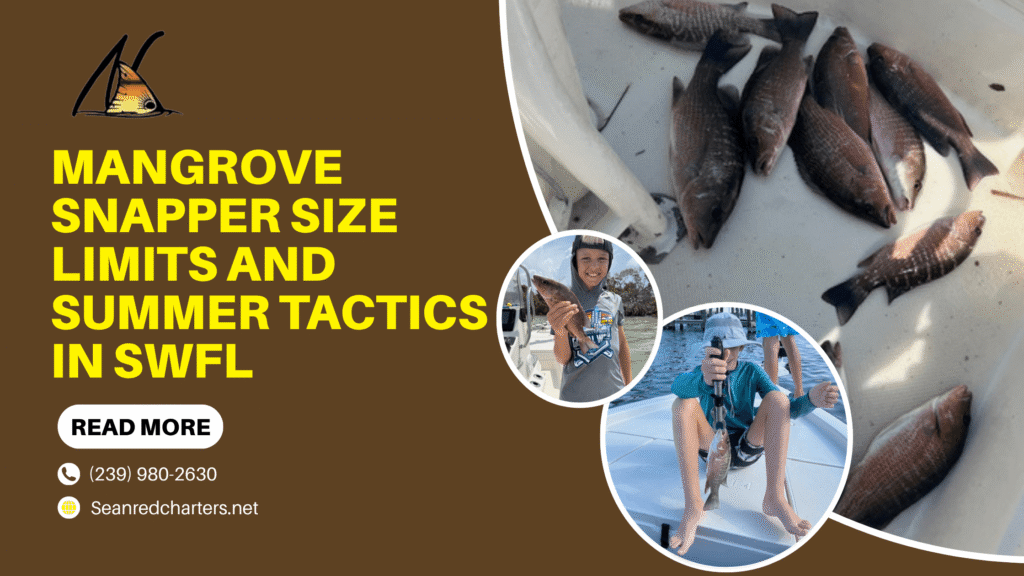
The mangrove snapper size limit in Florida state Gulf waters is 10 inches total length, measured from the tip of the snout to the tip of the tail with the tail fins pinched together. The daily bag limit is 5 fish per person. There is no closed season. Mangrove snapper are open year-round in Southwest Florida.
That is the short answer. But catching keeper-sized mangrove snapper consistently in SWFL requires more than knowing the minimum size. These fish are smart, leader-shy, structure-oriented, and notoriously good at stealing your bait without ever touching the hook. The anglers who fill coolers with legal mangos are the ones who understand light tackle presentation, chumming strategy, tide timing, and the specific structure that holds fish worth measuring.
Summer is the prime window for mangrove snapper in Fort Myers, Sanibel, and the broader Southwest Florida region. Warm water pushes spawning aggregations onto nearshore reefs and inshore structure, and the fish feed aggressively around new and full moon phases from June through August. This is when the biggest concentrations of keeper-sized fish show up in the most accessible water.
This guide covers the current Florida regulations in detail, the summer tactics that consistently produce legal fish, the gear and bait that work, and the specific hotspots around Fort Myers and Sanibel where mangrove snapper stack up during the warm months.
Florida Mangrove Snapper Regulations: The Complete Breakdown

Mangrove snapper (also called gray snapper) are regulated by the Florida Fish and Wildlife Conservation Commission. The rules differ depending on whether you are fishing in state waters or federal waters, and knowing which zone you are in matters.
State Waters (Shore to 9 Nautical Miles)
This is where the vast majority of SWFL inshore and nearshore fishing takes place. If you are fishing from shore, from a bridge, from a dock, or on a charter running within 9 miles of the coast, state rules apply.
Minimum size: 10 inches total length. Measured from the snout tip to the tail tip with fins pinched together. If the fish is borderline, let it go. Marine patrol checks coolers at boat ramps, and the fine for an undersized fish is steep.
Daily bag limit: 5 mangrove snapper per person per day. This count is part of a 10-fish snapper aggregate limit, meaning your 5 mangrove snapper plus any other snapper species (lane, yellowtail, mutton) cannot exceed 10 total snapper for the day.
Season: Open year-round. No closed season for mangrove snapper anywhere in Florida.
Gear requirements: Non-offset, non-stainless steel circle hooks are required when fishing with natural bait in state waters for reef fish. You must also carry a dehooking device and a venting tool or descending device on the boat.
Possession on vessel: Fish must be kept whole (head and tail intact) until you reach shore. You cannot fillet mangrove snapper on the water. This rule exists so enforcement officers can verify the size of your catch.
Federal Waters (Beyond 9 Nautical Miles)
If your charter runs farther offshore into federal waters, a different set of rules applies.
Minimum size: 12 inches total length. Two inches larger than the state minimum.
Daily bag limit: 10 mangrove snapper per person per day (within the snapper aggregate).
Important legal detail: If you catch and keep fish in federal waters under federal rules, you must return directly to port without stopping to fish again in state waters on the way in. Mixing fish from different jurisdictions creates a compliance problem.
Private Boat Registration
If you fish from a private recreational vessel in the Gulf (not a charter), you are required to register in Florida’s free State Reef Fish Survey program before targeting reef fish species including mangrove snapper. This is separate from your fishing license.
Licensing
Charter clients are covered under the captain’s license. Independent anglers fishing from their own boat need a valid Florida saltwater fishing license. Shore-based anglers who are Florida residents may be exempt depending on age and location. Non-residents always need a license.
Always verify the latest regulations at MyFWC.com or through the Fish Rules app before your trip. Rules can change with annual reviews.
Why Summer Is Prime Time for Mangrove Snapper in SWFL
Mangrove snapper are catchable year-round in Southwest Florida, but summer transforms the fishery. Three factors converge to make June through August the peak window.
Spawning aggregations. Mangrove snapper spawn in large groups on nearshore structure during the summer months, primarily from May through September. These spawning aggregates concentrate fish in predictable locations, and the feeding activity around spawning periods is intense. The fish are not just present; they are actively competing for food.
Moon phase feeding. The 3 days before and after a new or full moon produce the most aggressive feeding behavior. Stronger tidal flows during these moon phases push more bait through choke points and across structure, triggering the schooling snapper into a feeding frenzy. Planning trips around the lunar calendar during summer is one of the most reliable ways to find keeper-sized fish stacked up and willing to eat.
Inshore movement. As water temperatures climb into the 80s, adult mangrove snapper that spent the cooler months on deeper offshore structure move inshore and onto nearshore reefs. This brings bigger fish into accessible water. The summer “mango” bite on nearshore reefs within a few miles of Fort Myers Beach produces some of the best table-fare fishing of the entire year.
Where to Catch Mangrove Snapper in Fort Myers

Mangrove snapper are structure fish. They do not cruise open water. If there is no structure, there are no snapper. Every productive spot shares the same characteristics: hard structure, current flow, and proximity to bait.
Inshore Hotspots
Sanibel Causeway bridges. The pilings and deep channels beneath the Sanibel Causeway hold mangrove snapper year-round, with the summer months producing the densest concentrations. The combination of concrete structure, strong tidal flow, and abundant bait makes this one of the most reliable snapper spots in the entire region. Fish tight to the pilings on a moving tide.
Matanzas Pass Bridge. Located at Fort Myers Beach, this bridge is a top land-based snapper spot. Tidal changes through the pass concentrate bait and trigger aggressive feeding. Focus your efforts right against the pilings during the strongest part of the tide.
Estero Bay. The mangrove islands, oyster bars, and deeper channel edges throughout the bay act as nurseries and holding areas for schooling snapper. Thousands of fish use this system, and a quiet approach with live shrimp produces consistent action.
Residential docks and seawalls. In Cape Coral and along the Caloosahatchee, dock pilings and seawall corners hold snapper in surprising numbers. Live shrimp dropped tight to the structure produces.
Mangrove shorelines. Pine Island Sound and Tarpon Bay are lined with mangrove roots that hold snapper, especially during higher tides when water pushes into the root systems. Free-lining live shrimp or small pilchards into the shaded areas under mangrove overhangs is deadly.
Nearshore and Offshore Hotspots
Edison Reef. Created from the rubble of the old Edison Bridge, this artificial reef sits roughly 15 miles off Fort Myers Beach. During summer, massive schools of keeper-sized snapper stack on the structure. This is one of the best nearshore snapper destinations in SWFL.
Nearshore artificial reefs. Several artificial reef sites within 3 to 9 miles of shore hold mangrove snapper concentrations during summer. Your captain will know the GPS waypoints. If you are curious about how far out these nearshore trips actually run, the distances are shorter than most visitors expect.
Gulf ledges and hard bottom. Limestone ledges in 20 to 70 feet of water hold the largest mangrove snapper in the region. Offshore fish commonly reach 15 to 20 inches, significantly larger than the inshore average. Captains running nearshore reef trips out of Fort Myers target these deeper structures when conditions allow.
Blind Pass and Redfish Pass. The passes between Sanibel, Captiva, and North Captiva concentrate bait and current in narrow corridors. Mangrove snapper stack along the rocky structure at the edges of these passes, especially during tidal changes.
Shore and Kayak Access
Matanzas Pass Preserve. Nearly 60 acres of mangrove shoreline accessible by kayak or small skiff. Excellent for anglers without a powerboat who want to fish productive mangrove root structure.
Lovers Key State Park. Shore access and kayak launch with mangrove-lined waterways that hold snapper.
Sanibel Lighthouse pier. Strong tidal flows around the pier structure hold snapper, particularly during summer evenings.
Summer Tackle and Rigging
Mangrove snapper have excellent eyesight and will spot a clunky rig in clear SWFL water. Finesse is the name of the game. The anglers who catch the most keepers are the ones running the lightest tackle they can get away with.
Rod, Reel, and Line
Inshore setup: A 6.5 to 7-foot medium-light or medium spinning rod with a 2500 to 3500 size reel. Spool with 10 to 20-pound braided main line. The braid provides sensitivity for detecting the subtle bites that snapper are famous for.
Nearshore/reef setup: Step up to a 7 to 8-foot medium rod with a 3000 to 4000 size reel. Use 15 to 30-pound braid. The heavier gear handles the stronger current and larger fish found on deeper structure.
Leader: Fluorocarbon is mandatory. Mangrove snapper are notorious for being leader-shy in clear water. Use 15 to 20-pound fluorocarbon for inshore fishing and 20 to 30-pound for nearshore reef work. If the fish are being extremely picky, drop to 12-pound test and accept a few break-offs in exchange for dramatically more bites.
Hooks and Terminal Tackle
Hook size: Small, sharp hooks in #1 to 2/0 size. Match the hook to the bait size. A 1/0 circle hook threaded with a live shrimp is the standard inshore snapper rig.
Circle hooks: Non-offset, non-stainless steel circle hooks are legally required when using natural bait for reef fish in state waters. They also improve hookup ratios because snapper tend to inhale baits quickly, and the circle hook finds the corner of the mouth.
Weight: Use the absolute minimum weight necessary. A small split shot, a 1/4-ounce jig head, or a sliding egg sinker on a fish-finder rig. The less hardware between your bait and the fish, the more natural the presentation, and the more bites you get.
Rigs That Produce
Free-line rig: No weight at all. Cast a live shrimp or pilchard upcurrent of structure and let the current carry it naturally past the pilings, roots, or reef. This is the single most effective rig for mangrove snapper in clear, shallow water.
Split-shot rig: A single small split shot 12 to 18 inches above the hook. Just enough weight to sink the bait into the strike zone without making it look unnatural.
Knocker rig: A small egg sinker slides directly to the hook eye. Keeps the bait on the bottom near structure in deeper water or stronger current.
Popping cork rig: Suspends live bait at a set depth, usually 2 to 4 feet below the surface. Effective around mangrove shorelines and over grass flats where snapper are suspended in the water column.

Best Summer Baits for Mangrove Snapper
Live Bait
Live shrimp: The gold standard. Thread the shrimp onto a circle hook so it looks natural and can still kick. A live, frantic shrimp is irresistible to a mangrove snapper holding near structure.
Pilchards (whitebait): During summer, the bays are loaded with pilchards. A live, frantic pilchard is one of the best baits for targeting larger keeper-sized snapper. Free-line them into current seams near structure.
Small pinfish: Hardy bait that stays alive on the hook and targets the bigger snapper that ignore shrimp. Excellent on nearshore reefs and around bridge pilings.
Live crabs: Small mud crabs and fiddler crabs produce well for larger snapper around rock structure and bridge pilings.
Cut Bait
Cut threadfin herring: Small chunks of fresh threadfin create an oily scent trail that draws snapper out of structure. Very effective when combined with a chum slick.
Cut ladyfish or pinfish: Fresh chunks (not strips) of ladyfish or pinfish target keeper-sized fish and avoid some of the smaller bait stealers.
Cut squid: A reliable standby for reef fishing. The scent disperses well in current, and the tougher texture keeps it on the hook longer than softer baits.
Artificial Options
Mangrove snapper can be caught on artificials, though natural bait almost always outproduces in a direct comparison.
Small soft plastic shrimp: DOA shrimp or similar patterns in natural colors, fished on a light jig head near bottom structure.
Small paddle-tail grubs: 2 to 3-inch grubs on 1/8-ounce jig heads, bounced along reef edges or worked through dock shade.
The Chumming Game: How to Stack the Odds
Chumming is what separates a 3-fish day from a 15-fish day for mangrove snapper. These fish respond to chum better than almost any other species in SWFL.
The Basic Setup
Anchor upcurrent of your target structure (bridge pilings, reef, dock, mangrove edge). Deploy a frozen chum block in a mesh bag tied to the stern of the boat. The tide carries the chum slick across the structure and downstream, pulling snapper out of hiding and into the water column behind your boat.
The “Thump and Chum” Method
Local Fort Myers guides use a technique called “thump and chum” around mangrove shorelines. Anchor upcurrent from a mangrove edge, then toss handfuls of diced pilchards or cut shrimp directly into the overhanging branches. The bait pieces fall through the water column, and the snapper rush out of the roots to feed. Once the fish are fired up and competing for food, free-line your hooked bait directly into the frenzy. Hookups are nearly instant.
Chumming on Reefs
On nearshore and offshore structure, set up upcurrent and create a steady chum line with small pieces of cut sardine, threadfin, or squid. The goal is to pull snapper up off the bottom and into the water column where they are easier to hook. Once the snapper are elevated and actively feeding in the chum slick, drift your unweighted bait back into the flow for the most natural presentation.
The Moon Phase Connection
Chumming is most effective during the 3 days before and after a new or full moon, when tidal currents are strongest. The combination of strong current, concentrated bait movement, and chum creates a feeding intensity that produces the best keeper-snapper numbers of the summer.
When to Fish: Time and Tide
Best Time of Day
Mangrove snapper feed hardest during low-light periods. Dawn and dusk are consistently the most productive windows, especially during the hotter summer months when midday heat suppresses activity.
Night fishing is outstanding for mangrove snapper. The fish become bolder after dark, moving out of tight structure and feeding more openly in the water column. Night trips around lighted docks, bridge pilings, and nearshore reefs produce some of the largest “mangos” of the year.
Tide Strategy
Moving water is the trigger. Incoming or outgoing tides push bait through choke points and across structure, activating the snapper bite. Slack tide slows things considerably.
Many SWFL anglers report strong snapper action during the first two hours of an incoming tide, when fresh bait gets pushed across reef and bridge structure. The outgoing tide produces well around mangrove shorelines and creek mouths as bait flushes out of the back bays.
The “Summer Moon Bite”
In July and August, Fort Myers mangrove snapper spawn in large groups on nearshore structures. Planning trips 3 days before through 3 days after a full or new moon puts you in the middle of the most aggressive daytime and nighttime bites of the entire summer.
Charter Options for Mangrove Snapper in Fort Myers

Mangrove snapper trips are some of the best value charters available in Southwest Florida because the fish are abundant, the action is steady, and the table fare is exceptional.
Inshore/back-bay half-day (4 hours): $450 to $650. Stays in calm waters like Estero Bay, Pine Island Sound, or the Sanibel Causeway. Perfect for families. Targets snapper around docks, mangroves, and bridge pilings.
Nearshore reef trip (6 to 8 hours): $800 to $1,200+. Runs to artificial reefs and hard-bottom structure in the Gulf. Produces larger snapper, with grouper and sharks as bonus species. Requires a bigger boat for open water.
A mixed inshore-nearshore saltwater trip is an excellent format for targeting mangrove snapper alongside other species like redfish, trout, and sheepshead depending on the season.
If you want to know what else swims alongside mangrove snapper in these waters, the complete guide to Fort Myers fish species breaks down every major target by habitat and season.
Handling, Conservation, and Table Fare
Proper Handling
Measure every fish immediately. Keep a measuring board on the boat at all times. If a fish is borderline at 10 inches, release it. Marine patrol officers measure with precision, and a 9.75-inch fish in your cooler will cost you.
Use wet hands or a rubberized glove when handling snapper. Minimize air exposure. Mangrove snapper have sharp dorsal spines that can puncture skin, so handle them carefully and use long-nose pliers or a dehooking tool to remove hooks quickly.
Barotrauma
Mangrove snapper caught in deeper water (20+ feet) may suffer from barotrauma, where rapid pressure change causes internal swelling. Florida law requires anglers targeting reef fish to carry a descending device or venting tool. Use a venting needle for shallow catches or a descending device to return deep-caught snapper to depth quickly. The Return ‘Em Right program (returnemright.org) provides free descending devices and educational resources.
Table Fare
Mangrove snapper are one of the best-eating fish in Southwest Florida. The flesh is white, mild, firm, and versatile. Blackened, grilled, pan-seared, or fried, they produce outstanding meals.
A single limit of 5 legal-sized mangrove snapper provides enough fillets for a quality dinner for two to three people. Many Fort Myers restaurants will prepare your fresh catch (“hook and cook”) if you bring the cleaned fillets.
Keep only what you will eat. Mangrove snapper reproduce in summer, and releasing the extra fish promptly supports the long-term health of the fishery. Every reputable Southwest Florida fishing charter emphasizes sustainable harvest practices that keep this fishery productive for future seasons.
Frequently Asked Questions

How big does a mangrove snapper have to be to keep?
The minimum size is 10 inches total length in Florida state Gulf waters (shore to 9 nautical miles). In federal waters (beyond 9 nautical miles), the minimum is 12 inches. Measure from the snout tip to the tail tip with fins pinched together.
What is the bag limit for mangrove snapper in Florida?
5 fish per person per day in state waters. This counts toward a 10-fish snapper aggregate limit across all snapper species. In federal waters, the bag limit is 10 per person.
Is there a closed season for mangrove snapper?
No. Mangrove snapper are open year-round in Florida with no closed season.
What is the best bait for mangrove snapper?
Live shrimp is the top producer inshore. Live pilchards and small pinfish are excellent around structure and on nearshore reefs. Cut threadfin herring and cut squid work well when combined with a chum slick on deeper structure.
When is the best time to catch mangrove snapper in Fort Myers?
Summer (June through August) is the peak season, with the strongest bites occurring around new and full moon phases. Dawn, dusk, and night fishing produce the best results. Moving tides are essential.
Where can I catch mangrove snapper from shore?
The Sanibel Causeway bridges, Matanzas Pass Bridge at Fort Myers Beach, the Sanibel Lighthouse pier, and residential dock structures throughout Cape Coral and the Caloosahatchee all produce mangrove snapper from shore.
Do I need circle hooks for mangrove snapper?
Yes. Non-offset, non-stainless steel circle hooks are required when using natural bait for reef fish (including mangrove snapper) in Florida state waters. You must also carry a dehooking device and a venting tool or descending device.
Are mangrove snapper good to eat?
Outstanding. They are one of the best-tasting fish in Southwest Florida. White, mild, firm flesh that works beautifully grilled, blackened, pan-seared, or fried.
Mangrove snapper are the summer workhorse of SWFL fishing. They are abundant, they fight well on light tackle, they taste incredible on the plate, and the regulations give you a generous year-round season to target them. Fish tight to structure, lighten your leader, chum when conditions allow, and measure every fish before it goes in the cooler. The 10-inch line is strict, and a good local Fort Myers captain will keep you on the right side of it.


