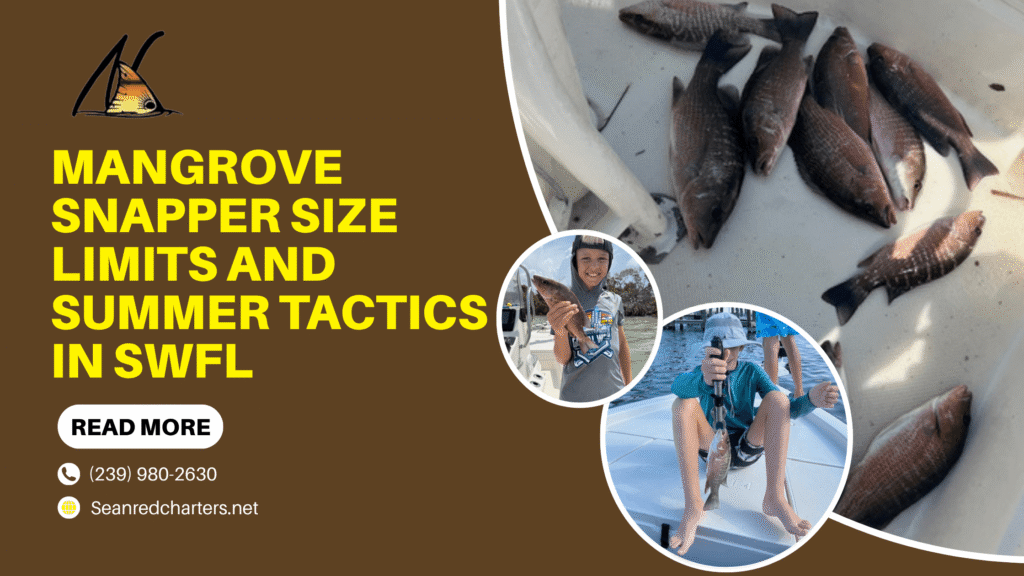
Mangrove Snapper Size Limits and Summer Tactics in SWFL
The mangrove snapper size limit in Florida state Gulf waters is 10 inches total length, measured from the tip of the snout to the tip of the tail with the tail fins pinched together. The daily bag limit is 5 fish per person. There is no closed season. Mangrove snapper are open year-round in Southwest Florida. That is the short answer. But catching keeper-sized mangrove snapper consistently in SWFL requires more than knowing the minimum size. These fish are smart, leader-shy, structure-oriented, and notoriously good at stealing your bait without ever touching the hook. The anglers who fill coolers with legal mangos are the ones who understand light tackle presentation, chumming strategy, tide timing, and the specific structure that holds fish worth measuring. Summer is the prime window for mangrove snapper in Fort Myers, Sanibel, and the broader Southwest Florida region. Warm water pushes spawning aggregations onto nearshore reefs and inshore structure, and the fish feed aggressively around new and full moon phases from June through August. This is when the biggest concentrations of keeper-sized fish show up in the most accessible water. This guide covers the current Florida regulations in detail, the summer tactics that consistently produce legal fish, the gear and bait that work, and the specific hotspots around Fort Myers and Sanibel where mangrove snapper stack up during the warm months. Florida Mangrove Snapper Regulations: The Complete Breakdown Mangrove snapper (also called gray snapper) are regulated by the Florida Fish and Wildlife Conservation Commission. The rules differ depending on whether you are fishing in state waters or federal waters, and knowing which zone you are in matters. State Waters (Shore to 9 Nautical Miles) This is where the vast majority of SWFL inshore and nearshore fishing takes place. If you are fishing from shore, from a bridge, from a dock, or on a charter running within 9 miles of the coast, state rules apply. Minimum size: 10 inches total length. Measured from the snout tip to the tail tip with fins pinched together. If the fish is borderline, let it go. Marine patrol checks coolers at boat ramps, and the fine for an undersized fish is steep. Daily bag limit: 5 mangrove snapper per person per day. This count is part of a 10-fish snapper aggregate limit, meaning your 5 mangrove snapper plus any other snapper species (lane, yellowtail, mutton) cannot exceed 10 total snapper for the day. Season: Open year-round. No closed season for mangrove snapper anywhere in Florida. Gear requirements: Non-offset, non-stainless steel circle hooks are required when fishing with natural bait in state waters for reef fish. You must also carry a dehooking device and a venting tool or descending device on the boat. Possession on vessel: Fish must be kept whole (head and tail intact) until you reach shore. You cannot fillet mangrove snapper on the water. This rule exists so enforcement officers can verify the size of your catch. Federal Waters (Beyond 9 Nautical Miles) If your charter runs farther offshore into federal waters, a different set of rules applies. Minimum size: 12 inches total length. Two inches larger than the state minimum. Daily bag limit: 10 mangrove snapper per person per day (within the snapper aggregate). Important legal detail: If you catch and keep fish in federal waters under federal rules, you must return directly to port without stopping to fish again in state waters on the way in. Mixing fish from different jurisdictions creates a compliance problem. Private Boat Registration If you fish from a private recreational vessel in the Gulf (not a charter), you are required to register in Florida’s free State Reef Fish Survey program before targeting reef fish species including mangrove snapper. This is separate from your fishing license. Licensing Charter clients are covered under the captain’s license. Independent anglers fishing from their own boat need a valid Florida saltwater fishing license. Shore-based anglers who are Florida residents may be exempt depending on age and location. Non-residents always need a license. Always verify the latest regulations at MyFWC.com or through the Fish Rules app before your trip. Rules can change with annual reviews. Why Summer Is Prime Time for Mangrove Snapper in SWFL Mangrove snapper are catchable year-round in Southwest Florida, but summer transforms the fishery. Three factors converge to make June through August the peak window. Spawning aggregations. Mangrove snapper spawn in large groups on nearshore structure during the summer months, primarily from May through September. These spawning aggregates concentrate fish in predictable locations, and the feeding activity around spawning periods is intense. The fish are not just present; they are actively competing for food. Moon phase feeding. The 3 days before and after a new or full moon produce the most aggressive feeding behavior. Stronger tidal flows during these moon phases push more bait through choke points and across structure, triggering the schooling snapper into a feeding frenzy. Planning trips around the lunar calendar during summer is one of the most reliable ways to find keeper-sized fish stacked up and willing to eat. Inshore movement. As water temperatures climb into the 80s, adult mangrove snapper that spent the cooler months on deeper offshore structure move inshore and onto nearshore reefs. This brings bigger fish into accessible water. The summer “mango” bite on nearshore reefs within a few miles of Fort Myers Beach produces some of the best table-fare fishing of the entire year. Where to Catch Mangrove Snapper in Fort Myers Mangrove snapper are structure fish. They do not cruise open water. If there is no structure, there are no snapper. Every productive spot shares the same characteristics: hard structure, current flow, and proximity to bait. Inshore Hotspots Sanibel Causeway bridges. The pilings and deep channels beneath the Sanibel Causeway hold mangrove snapper year-round, with the summer months producing the densest concentrations. The combination of concrete structure, strong tidal flow, and abundant bait makes this one of the most reliable snapper spots in the entire region. Fish tight to the pilings on a moving