Fishing Charters in Fort Myers

Fishing Guides & Tips, Fishing Charters in Fort Myers

Mangrove Snapper Size Limits and Summer Tactics in SWFL

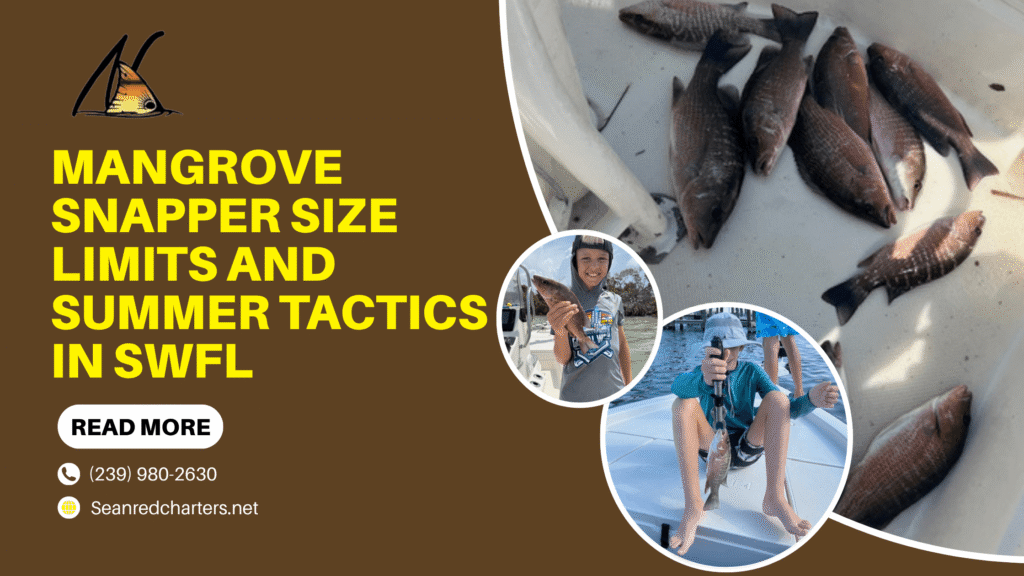
The mangrove snapper size limit in Florida state Gulf waters is 10 inches total length, measured from the tip of the snout to the tip of the tail with the tail fins pinched together. The daily bag limit is 5 fish per person. There is no closed season. Mangrove snapper are open year-round in Southwest Florida. That is the short answer. But catching keeper-sized mangrove snapper consistently in SWFL requires more than knowing the minimum size. These fish are smart, leader-shy, structure-oriented, and notoriously good at stealing your bait without ever touching the hook. The anglers who fill coolers with legal mangos are the ones who understand light tackle presentation, chumming strategy, tide timing, and the specific structure that holds fish worth measuring. Summer is the prime window for mangrove snapper in Fort Myers, Sanibel, and the broader Southwest Florida region. Warm water pushes spawning aggregations onto nearshore reefs and inshore structure, and the fish feed aggressively around new and full moon phases from June through August. This is when the biggest concentrations of keeper-sized fish show up in the most accessible water. This guide covers the current Florida regulations in detail, the summer tactics that consistently produce legal fish, the gear and bait that work, and the specific hotspots around Fort Myers and Sanibel where mangrove snapper stack up during the warm months. Florida Mangrove Snapper Regulations: The Complete Breakdown Mangrove snapper (also called gray snapper) are regulated by the Florida Fish and Wildlife Conservation Commission. The rules differ depending on whether you are fishing in state waters or federal waters, and knowing which zone you are in matters. State Waters (Shore to 9 Nautical Miles) This is where the vast majority of SWFL inshore and nearshore fishing takes place. If you are fishing from shore, from a bridge, from a dock, or on a charter running within 9 miles of the coast, state rules apply. Minimum size: 10 inches total length. Measured from the snout tip to the tail tip with fins pinched together. If the fish is borderline, let it go. Marine patrol checks coolers at boat ramps, and the fine for an undersized fish is steep. Daily bag limit: 5 mangrove snapper per person per day. This count is part of a 10-fish snapper aggregate limit, meaning your 5 mangrove snapper plus any other snapper species (lane, yellowtail, mutton) cannot exceed 10 total snapper for the day. Season: Open year-round. No closed season for mangrove snapper anywhere in Florida. Gear requirements: Non-offset, non-stainless steel circle hooks are required when fishing with natural bait in state waters for reef fish. You must also carry a dehooking device and a venting tool or descending device on the boat. Possession on vessel: Fish must be kept whole (head and tail intact) until you reach shore. You cannot fillet mangrove snapper on the water. This rule exists so enforcement officers can verify the size of your catch. Federal Waters (Beyond 9 Nautical Miles) If your charter runs farther offshore into federal waters, a different set of rules applies. Minimum size: 12 inches total length. Two inches larger than the state minimum. Daily bag limit: 10 mangrove snapper per person per day (within the snapper aggregate). Important legal detail: If you catch and keep fish in federal waters under federal rules, you must return directly to port without stopping to fish again in state waters on the way in. Mixing fish from different jurisdictions creates a compliance problem. Private Boat Registration If you fish from a private recreational vessel in the Gulf (not a charter), you are required to register in Florida’s free State Reef Fish Survey program before targeting reef fish species including mangrove snapper. This is separate from your fishing license. Licensing Charter clients are covered under the captain’s license. Independent anglers fishing from their own boat need a valid Florida saltwater fishing license. Shore-based anglers who are Florida residents may be exempt depending on age and location. Non-residents always need a license. Always verify the latest regulations at MyFWC.com or through the Fish Rules app before your trip. Rules can change with annual reviews. Why Summer Is Prime Time for Mangrove Snapper in SWFL Mangrove snapper are catchable year-round in Southwest Florida, but summer transforms the fishery. Three factors converge to make June through August the peak window. Spawning aggregations. Mangrove snapper spawn in large groups on nearshore structure during the summer months, primarily from May through September. These spawning aggregates concentrate fish in predictable locations, and the feeding activity around spawning periods is intense. The fish are not just present; they are actively competing for food. Moon phase feeding. The 3 days before and after a new or full moon produce the most aggressive feeding behavior. Stronger tidal flows during these moon phases push more bait through choke points and across structure, triggering the schooling snapper into a feeding frenzy. Planning trips around the lunar calendar during summer is one of the most reliable ways to find keeper-sized fish stacked up and willing to eat. Inshore movement. As water temperatures climb into the 80s, adult mangrove snapper that spent the cooler months on deeper offshore structure move inshore and onto nearshore reefs. This brings bigger fish into accessible water. The summer “mango” bite on nearshore reefs within a few miles of Fort Myers Beach produces some of the best table-fare fishing of the entire year. Where to Catch Mangrove Snapper in Fort Myers Mangrove snapper are structure fish. They do not cruise open water. If there is no structure, there are no snapper. Every productive spot shares the same characteristics: hard structure, current flow, and proximity to bait. Inshore Hotspots Sanibel Causeway bridges. The pilings and deep channels beneath the Sanibel Causeway hold mangrove snapper year-round, with the summer months producing the densest concentrations. The combination of concrete structure, strong tidal flow, and abundant bait makes this one of the most reliable snapper spots in the entire region. Fish tight to the pilings on a moving
are there sharks in fort myers
Fishing Charters in Fort Myers, Sharks Fishing Charters

Are There Sharks in Fort Myers? A Summer Shark Fishing Guide

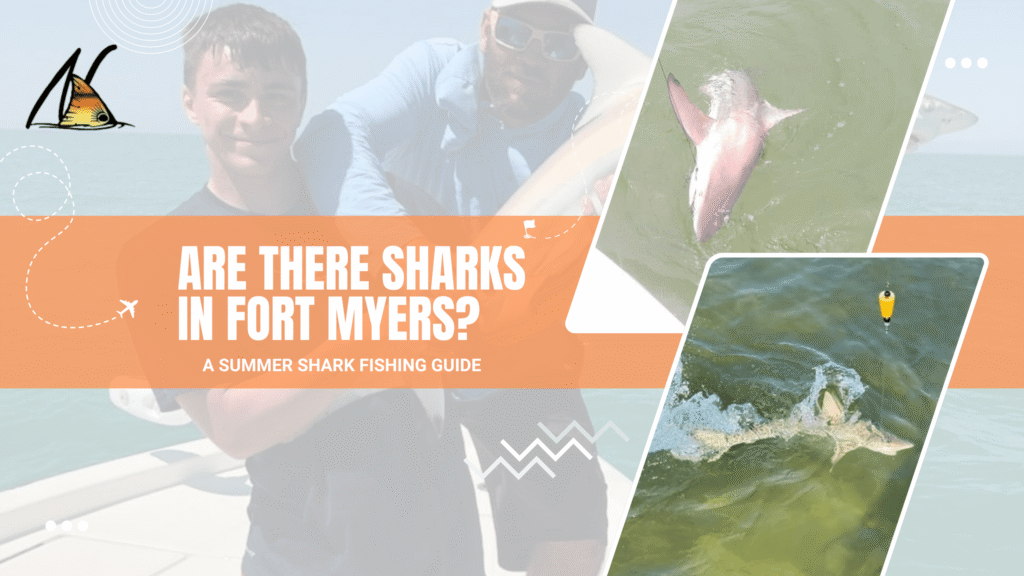
Yes, there are sharks in Fort Myers. Plenty of them. The warm Gulf waters, abundant baitfish, and diverse habitat around Fort Myers Beach, Sanibel Island, Pine Island Sound, and the Caloosahatchee River support a healthy and thriving shark population that includes at least eight regularly encountered species. Are there sharks in Fort Myers is probably the most common question visitors ask, and the answer matters for two very different reasons. Swimmers and beachgoers want to know the risk (it is extremely low). Anglers want to know where to find them (everywhere, but especially in summer). Summer is the peak window for shark fishing in Southwest Florida. Rising water temperatures push massive schools of baitfish toward the coast, and the sharks follow. From late May through September, you can find blacktip sharks spinning through the air 100 yards from the beach, bull sharks cruising the river mouth at dawn, bonnetheads tailing across shallow grass flats, and nurse sharks resting on nearshore reef structure. The variety is exceptional, and the fights are some of the most powerful and explosive action available anywhere on the Gulf coast. Local captains at operations like Sea N Red Charters target these species year-round across the Fort Myers, Sanibel, and Pine Island waters. This guide covers every species you are likely to encounter, the exact locations where they concentrate, the tackle and bait that produce, the strict Florida regulations you must follow, and the safety information that swimmers and anglers both need to understand. What Sharks Are in Southwest Florida? Fort Myers waters hold a diverse population of shark species year-round, with the highest concentrations during the warmer months. Here is what you are likely to encounter on any given summer trip. Blacktip Shark Blacktip sharks are the most commonly caught species in Fort Myers waters. They are fast, aggressive, and famous for spectacular aerial spins when hooked. A 4-foot blacktip clearing the water and spinning three times before crashing back is one of the most exciting sights in inshore fishing. Size: Average 3 to 5 feet, with larger specimens reaching 6 feet. Typically 30 to 80 pounds. Where to find them: Nearshore passes, beach troughs behind the first sandbar, and around bait schools in the open flats. They patrol the surf zone aggressively during summer. Season: Present year-round, with the strongest numbers from March through October. Summer is peak. Fight characteristics: Fast initial runs and multiple jumps. The aerial display is their signature. Bull Shark Bull sharks are the heavyweights of the Fort Myers inshore shark fishery. Stocky, powerful, and genuinely aggressive, they are built for short, explosive bursts of speed. Bull sharks tolerate brackish and even freshwater, which means they push far upriver into the Caloosahatchee and residential canal systems. Size: Average 6 to 8 feet, with large females exceeding 9 feet. Fish over 200 pounds are landed regularly in Fort Myers waters. Where to find them: Shallow grass flats, estuaries, river mouths, canal systems, and nearshore passes. The Caloosahatchee River mouth and San Carlos Bay are prime bull shark territory. Season: Late spring through early fall is peak. They are present year-round in some capacity. Fight characteristics: Brute strength. No finesse, just raw power. The initial run is shorter than a blacktip but far more violent. Bull sharks do not jump; they pull. Bonnethead Shark Bonnetheads are the little cousins of the hammerhead family. They have a distinctive shovel-shaped head and typically weigh under 15 pounds, but they fight surprisingly hard for their size and are the most commonly encountered shark on shallow-water flats. Size: Average 2 to 4 feet, with occasional specimens reaching 5 feet. Where to find them: Shallow grass flats, mangrove shorelines, and oyster bar edges. They hunt crustaceans (crabs and shrimp) along the bottom, making them extremely common in the back bays around Sanibel, Pine Island Sound, and Estero Bay. Season: Strong year-round, with the best inshore action from spring through fall. Fight characteristics: Fast and zippy. They pull hard for their size and make quick runs. Kids love catching them because the fight is manageable and the shark’s unique head shape makes for great photos. Spinner Shark Spinner sharks are named for their tendency to launch out of the water and spin rapidly along their axis. They look similar to blacktips but are generally larger and even more acrobatic. Size: Average 5 to 7 feet, with fish exceeding 150 pounds. Where to find them: Nearshore waters, beach zones, and around bait schools. They often mix with blacktip schools during summer. Season: Most common from spring through fall in Fort Myers waters. Fight characteristics: Long, fast runs and extraordinary aerial displays. One of the most visually exciting sharks to catch. Nurse Shark Nurse sharks are bottom-dwelling, slow-moving sharks found around reef structure, bridge pilings, deep channels, and artificial reefs. They are docile compared to other species but immensely powerful once hooked. Size: Average 5 to 8 feet, with large specimens exceeding 9 feet. Where to find them: Resting on the bottom near bridges, deep channels, nearshore reefs, and artificial reef structures. Season: Year-round. They do not migrate significantly. Fight characteristics: No runs, no jumps. Pure deadweight pulling power. A large nurse shark on bottom structure can wear out experienced anglers through sheer stamina. Lemon Shark Lemon sharks are recognizable by their yellowish-brown coloring. They frequent shallow inshore waters and are commonly encountered around mangrove shorelines and sand flats. Size: Average 5 to 8 feet, occasionally larger. Where to find them: Inshore flats, mangrove edges, and nearshore reefs. Common around Sanibel and Pine Island Sound. Season: Year-round, with stronger inshore presence in warmer months. Important note: Lemon sharks are a prohibited species in Florida. They must be released immediately and cannot be removed from the water. If you hook one, cut the leader as close to the hook as possible and release without delay. Hammerhead Sharks Great hammerheads, scalloped hammerheads, and smooth hammerheads all patrol deeper passes and nearshore waters around Fort Myers. The great hammerhead is the trophy of

Fishing Charters in Fort Myers

What Fish Species Can You Catch in Fort Myers, Florida? Complete Species Guide

Fort Myers, Florida, is home to one of the most diverse fisheries in the entire United States. The fish species Fort Myers Florida produces range from hard-fighting inshore gamefish like snook and redfish to heavyweight reef dwellers like grouper and snapper, seasonal migrants like tarpon and cobia, and everything in between. Over 50 catchable species swim these waters at any given time. That variety exists because Southwest Florida sits at the intersection of multiple ecosystems: the freshwater Caloosahatchee River, the brackish estuaries of Pine Island Sound and Estero Bay, the shallow grass flats and mangrove shorelines of the back bays, the nearshore reefs and wrecks of the Gulf of Mexico, and the deeper offshore waters beyond. Each habitat supports a different community of fish, and the warm subtropical climate keeps them active twelve months a year. Whether you are chasing a bucket-list tarpon, filling a cooler with snapper for dinner, or putting a kid on their first redfish, this complete species guide covers every major fish you can catch in Fort Myers, organized by habitat, with the season, size, bait, technique, and regulation details you need to plan a productive trip. Most Fort Myers fishing charters target a combination of these species depending on the season, tides, and their clients’ goals. The Inshore “Big Three”: Snook, Redfish, and Spotted Seatrout These three species are the foundation of Fort Myers inshore fishing. They live year-round in the back bays, flats, and mangrove systems, and they are the primary targets on the majority of inshore fishing charters running out of Fort Myers. Snook Snook are the most sought-after inshore fish in all of Florida, and Fort Myers sits in the heart of their range. Sleek, silver, and built for speed, they have a distinctive black lateral line running from gill to tail. Anglers often compare them to largemouth bass on steroids because of their similar ambush-style feeding and explosive topwater strikes. Where to find them: Mangrove shorelines, dock pilings, bridge shadow lines, seawalls, residential canals, and passes. Snook are structure-oriented fish. They sit in ambush positions and wait for bait to wash past on the tide. When they bite: Year-round, with peak action from March through November. Summer produces the most aggressive surface feeding, especially at dawn and dusk. Winter pushes snook into deeper canals and warm-water refuges, where they become more sluggish but still catchable on slower presentations. Size: Average inshore snook run 5 to 15 pounds. Fish in the 20 to 30-pound range are common enough to keep things exciting. The state record exceeds 44 pounds. Best bait and techniques: Live pilchards and whitebait free-lined along mangrove edges are the top presentation. Live shrimp works well around docks and bridges. Topwater plugs at first light produce explosive strikes. Soft plastic jigs bounced along bottom structure are effective year-round. Regulations: Snook have specific slot limits and closed seasons that vary by region in Southwest Florida. Always check current FWC regulations before targeting them. In most years, the Gulf coast season has closed periods in winter and summer to protect spawning and cold-weather vulnerability. Snook fishing in Fort Myers is productive from January through December, though tactics shift dramatically between seasons. The same fish that smashes a topwater plug in July will barely nose a slowly drifted shrimp in January. Redfish (Red Drum) Redfish are the workhorse of the Southwest Florida inshore fishery. Bronze-bodied with one or more signature black spots near the tail, they are strong, stubborn fighters that make powerful runs and rarely give up easily. They are also one of the most accessible species for anglers of all skill levels. Where to find them: Oyster bars, grass flats, mangrove edges, dock shade, and sandy potholes. Redfish are famous for “tailing” in extremely shallow water while they root for crabs and shrimp on the bottom. Sight-casting to tailing reds on a low tide is one of the most exciting experiences in inshore fishing. When they bite: Year-round, with the absolute peak from September through November when they school on flats in pods of 20 to 100+ fish. Spring produces strong action around oyster bars and mangrove edges. Winter fish hold deeper around structure. Size: Average fish run 5 to 15 pounds. Slot-size reds (18 to 27 inches in Florida’s Gulf waters) are common. Bull reds exceeding 30 pounds show up in passes and along beaches during fall and winter. Best bait and techniques: Gold spoons and soft plastic jigs (3-inch paddle tails on 1/4-ounce jig heads) are the standard artificials. Live shrimp fished under a popping cork is deadly on grass flats. Cut mullet or crab works well around structure. For sight fishing, a well-placed gold spoon landing 3 feet ahead of a tailing red is as good as it gets. Regulations: Florida has a slot limit for redfish (currently 18 to 27 inches, one per person per day in most Gulf waters). Over-slot and under-slot fish must be released. Check current FWC regulations for the most up-to-date limits. Redfish fishing charters are among the most popular trips in Fort Myers because the fish are cooperative, fight hard, and deliver consistently regardless of experience level. Spotted Seatrout Spotted seatrout are the most abundant and consistently catchable inshore species in Fort Myers. Silver with dark spots across the upper body and a pair of prominent canine teeth, they are aggressive feeders that strike hard and provide steady action on light tackle. Where to find them: Grass flats, sandy potholes, and deeper cuts adjacent to shallow water. Trout orient to bottom structure where they ambush shrimp and small baitfish. They are found in nearly every bay and estuary in the Fort Myers area. When they bite: Year-round, with the strongest action from October through April. The largest “gator trout” (5 to 10 pounds) typically appear during cooler months when they concentrate in deeper potholes and channels. The May-through-July window also produces excellent numbers. Size: Average trout run 1 to 3 pounds. Fish over 5 pounds are considered quality. Gator trout exceeding

Inshore vs Nearshore Fishing in Fort Myers
Fishing Charters in Fort Myers

Inshore vs Nearshore Fishing in Fort Myers: Which Charter Should You Book?

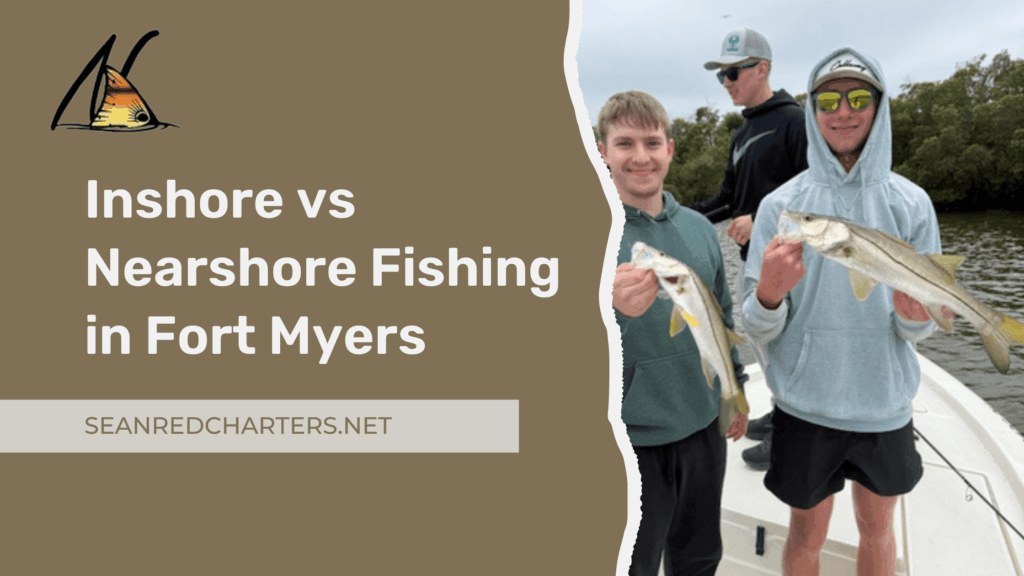
Understanding the difference between inshore and nearshore fishing is the single most important decision you will make when booking a Fort Myers charter. Both put fish on the line. Both create memories. But the experience, the species, the water conditions, and the physical demands are completely different. Picking the wrong one for your group means a frustrating day instead of an unforgettable one. Inshore vs nearshore fishing comes down to a simple question: do you want calm, protected backwater fishing for snook, redfish, and trout, or do you want to push out a few miles into the Gulf to battle bigger fish like grouper, snapper, and king mackerel over reefs and wrecks? This guide breaks it all down from a captain’s perspective so you can book the right trip the first time. What Is Inshore Fishing? Inshore fishing takes place in protected shallow waters close to land. In Fort Myers, that means the back bays, mangrove shorelines, grass flats, oyster bars, residential canals, passes, and estuaries that make up the vast network of sheltered waterways surrounding the coast. You are rarely more than a few hundred yards from land. The water is typically one to six feet deep, often clear enough to see the bottom, and almost always calm. Pine Island Sound, Estero Bay, the Caloosahatchee River, Matlacha Pass, and the backwaters around Sanibel and Captiva are the primary inshore territories that Fort Myers captains fish. The boat ride from the marina to your first fishing spot usually takes 5 to 15 minutes. That means more of your charter time is spent actually fishing instead of running to distant spots. On a 4-hour trip, you might fish three or four different locations without spending more than a few minutes transitioning between them. Inshore fishing is fundamentally a sight-fishing and structure-fishing game. You are casting to visible fish tailing on flats, working live bait alongside mangrove roots, dropping shrimp next to dock pilings, or throwing topwater plugs across grass flat potholes. The fishing is visual, interactive, and hands-on from the first cast. Fort Myers inshore fishing charters typically run on shallow-draft flats boats or bay boats that can access water as thin as 10 inches. These smaller, more nimble vessels are designed specifically for the tight quarters and shallow environments where inshore species live. What Is Nearshore Fishing? Nearshore fishing moves beyond the protected bays and into the open Gulf of Mexico, typically 3 to 10 miles from shore. You are fishing over structure: artificial reefs, natural rock ledges, wrecks, hard bottom, and sand patches where bottom-dwelling and pelagic species congregate. Water depth ranges from 15 to 50 feet or more. The bottom structure is where the action happens. Grouper, snapper, sheepshead, and other reef species hold tight to rocks, ledges, and wrecks, while pelagic species like king mackerel, Spanish mackerel, and cobia cruise the water column above. The boat ride to nearshore spots runs 20 to 45 minutes depending on your departure point and the specific reefs your captain targets. Nearshore fishing charters near Fort Myers run center console boats or larger bay boats with the range, hull design, and horsepower to handle open Gulf conditions comfortably. Nearshore fishing involves a mix of techniques: bottom fishing with live or cut bait for grouper and snapper, slow-trolling live baits for king mackerel, sight-casting to cobia near buoys and rays, and jigging over structure for a mixed bag. The pace varies, but when the fish are on the bite, nearshore action can be fast and furious. For a detailed look at exactly how far out these trips run, How Far Out Is Nearshore Fishing in Fort Myers covers the distances, depths, and logistics. Inshore vs Nearshore: The Complete Comparison Here is the side-by-side breakdown that helps you decide which trip fits your group. Feature Inshore Fishing Nearshore Fishing Location Bays, flats, mangroves, canals, passes Gulf reefs, wrecks, hard bottom (3 to 10 miles out) Water Depth 1 to 6 feet 15 to 50+ feet Water Conditions Calm, protected, minimal waves Open water, light to moderate swells possible Travel Time to Fish 5 to 15 minutes 20 to 45 minutes Seasickness Risk Extremely low Low to moderate Trip Length 4 to 6 hours typical 4 to 8 hours typical Boat Type Shallow-draft flats boat or bay boat Center console or larger bay boat Tackle Light to medium spinning (8 to 20 lb) Medium to heavy spinning or conventional (15 to 50 lb) Fishing Style Sight fishing, casting to structure, topwater Bottom fishing, trolling, jigging, structure fishing Scenery Mangroves, islands, dolphins, manatees, birds Open Gulf water, horizon views, occasional dolphins Typical Cost $500 to $800 per half day $700 to $1,200 per half day Best For Families, beginners, short trips, calm conditions Bigger fish, table fare, more adventure, experienced anglers What Can You Catch Inshore vs Nearshore? The species lists are mostly different, with some overlap around the passes and transitional zones. Here is what each environment produces. Inshore Species (Bays, Flats, Mangroves) Snook are the premier inshore gamefish in Fort Myers. Sleek, silver fighters with a distinctive black lateral line, they hang around docks, mangroves, bridge pilings, and seawalls. The strike is explosive, and the fight features acrobatic jumps and hard runs toward structure. Snook are active year-round, with peak action from March through November. Live pilchards and whitebait fished tight to structure are the top presentations. Redfish are the workhorse of the inshore fishery. Bronze-colored with a signature black spot near the tail, they feed on flats, around oyster bars, and along mangrove edges. Redfish are famous for “tailing” in shallow water while feeding on crabs and shrimp, making them a favorite sight-fishing target. Strong fighters that make powerful runs, they are excellent for all skill levels. Peak months are September through November when they school on flats in massive numbers. Spotted seatrout are abundant and cooperative, making them one of the most reliable inshore species for consistent action. Found on grass flats and sandy potholes, they strike aggressively on live

Fishing Charters in Fort Myers

Tarpon Fishing in Fort Myers: Season, Hotspots and Tips From a Local Captain

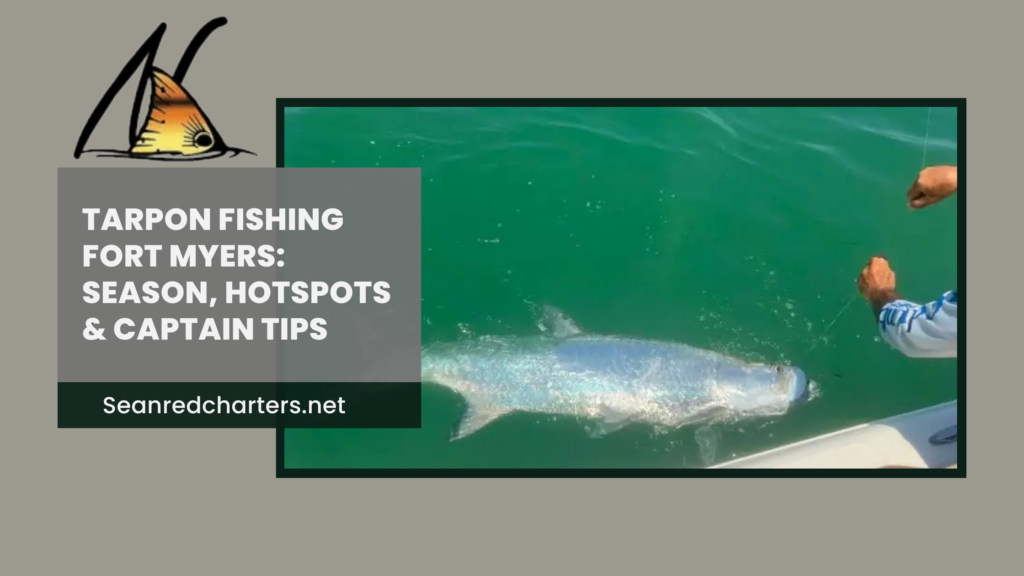
Tarpon season in Florida draws anglers from every corner of the globe, and Fort Myers sits right in the middle of one of the greatest Silver King migrations on the planet. Every spring, thousands of Atlantic tarpon push through Southwest Florida’s warm Gulf passes, beaches, and estuaries on their way north, creating a fishery that rivals anywhere in the world for sheer numbers and trophy potential. Fish averaging 80 to 150 pounds are common. True giants exceeding 200 pounds show up every season, especially around Boca Grande Pass during the peak weeks of May and June. The explosive surface strikes, the aerial acrobatics four feet above the waterline, and the drag-screaming runs that last 30 minutes or more make tarpon the most thrilling gamefish in Southwest Florida waters. This guide breaks down everything you need to plan a successful tarpon trip in Fort Myers: the seasonal timeline, the exact hotspots that produce year after year, the tackle and bait that local captains rely on, and the tide and moon strategies that put you in position to hook the fish of a lifetime. Understanding Tarpon: What Makes the Silver King Special Before you can consistently catch tarpon, it helps to understand what makes them different from every other fish in these waters. Tarpon (Megalops atlanticus) are prehistoric fish that have remained virtually unchanged for over 100 million years. They have a unique swim bladder that functions like a primitive lung, allowing them to gulp air at the surface. That adaptation is what creates the distinctive “rolling” behavior anglers watch for when scanning flats and passes. When you see a tarpon roll, you know exactly where that fish is and which direction it’s moving. Adult tarpon in Fort Myers waters typically range from 80 to 150 pounds, with a body built for power. They have massive bucket-shaped mouths lined with sandpaper-rough plates instead of teeth. Those mouths are hard and bony, which is exactly why hook sets are difficult and why circle hooks have become the standard. Their scales are the size of silver dollars, and when a hooked tarpon launches three or four feet out of the water with the morning sun hitting those scales, you understand why they earned the name Silver King. Tarpon are almost exclusively catch-and-release in Florida. They are not good table fare, and the fishery depends on healthy release practices. Any tarpon over 40 inches must remain in the water at all times. This is not just good practice; it is Florida law. Tarpon Season in Fort Myers: Month-by-Month Breakdown The tarpon season Florida anglers wait for all year follows a predictable pattern tied to water temperature. When coastal waters consistently hit 75°F, the migration switches on. March: Early Arrivals and Resident Fish The first signs of tarpon activity appear in late March during warmer years. Resident tarpon that wintered in deeper channels and the Caloosahatchee River begin feeding more aggressively as water temperatures climb into the low 70s. These early-season fish are hungry, less pressured, and often more willing to eat than the heavily targeted fish of peak season. Look for rolling tarpon around bridges, residential canals, and the deeper holes of Pine Island Sound. The action is not wide open yet, but the fish that are here tend to be cooperative. This is an excellent window for anglers who want quality shots without the boat traffic that comes later. April: The Season Ignites April is when the tarpon fishing Fort Myers is famous for truly begins. Water temperatures push past that critical 75°F threshold, and the first major wave of migratory fish floods into local passes and staging areas. Schools begin appearing along the beaches between Sanibel and Fort Myers Beach, in San Carlos Bay, and around the deeper channels of Pine Island Sound. Pre-spawn tarpon in April are aggressive feeders. They hit live crabs, threadfin herring, and cut mullet with genuine violence. April also offers a significant advantage over peak months: fewer boats. The charter calendar has not yet reached full capacity, which means less competition on the water and more relaxed fishing conditions. For anglers trying to decide the best month to fish in Fort Myers, April balances tarpon opportunity with overall variety better than any other month on the calendar. May and June: The Absolute Peak This is it. May and June represent the pinnacle of tarpon fishing in Southwest Florida. Massive schools, sometimes numbering in the hundreds, stack up in Boca Grande Pass, along Sanibel and Captiva beaches, and throughout the passes and bridge structures of the greater Fort Myers area. The numbers during peak season are staggering. On a good tide during a new or full moon week in late May, experienced captains can put their anglers on double-digit shots per trip. Fish are rolling everywhere, the passes are alive with activity, and the energy on the water is electric. This is also the busiest window for charter bookings. Popular captains at operations like Sea n Red Charters fill their calendars weeks in advance during May and June. If you are planning a peak-season trip, book your guide 6 to 8 weeks ahead to secure your dates. July and August: The Summer Extension Tarpon fishing remains productive through July and into early August, though the character of the fishing changes. The main migratory push begins moving north, but substantial numbers of fish linger in local waters, especially around passes, bridge structures, and the deeper holes of Pine Island Sound and Charlotte Harbor. Summer heat shifts the best bite windows to early morning and late evening. Dawn patrols departing before sunrise are standard operating procedure. Night fishing under lighted bridges and docks also becomes extremely productive for tarpon during the hot months. Afternoon thunderstorms are a daily reality from June through August. They do not ruin the fishing, but they force smart scheduling. Most best fishing charters in Fort Myers run early-morning departures during summer specifically to beat the weather and capitalize on the dawn feed. September through February:

Fishing Charters in Fort Myers, Sanibel Fishing Charters

How Far Out Is Nearshore Fishing in Fort Myers

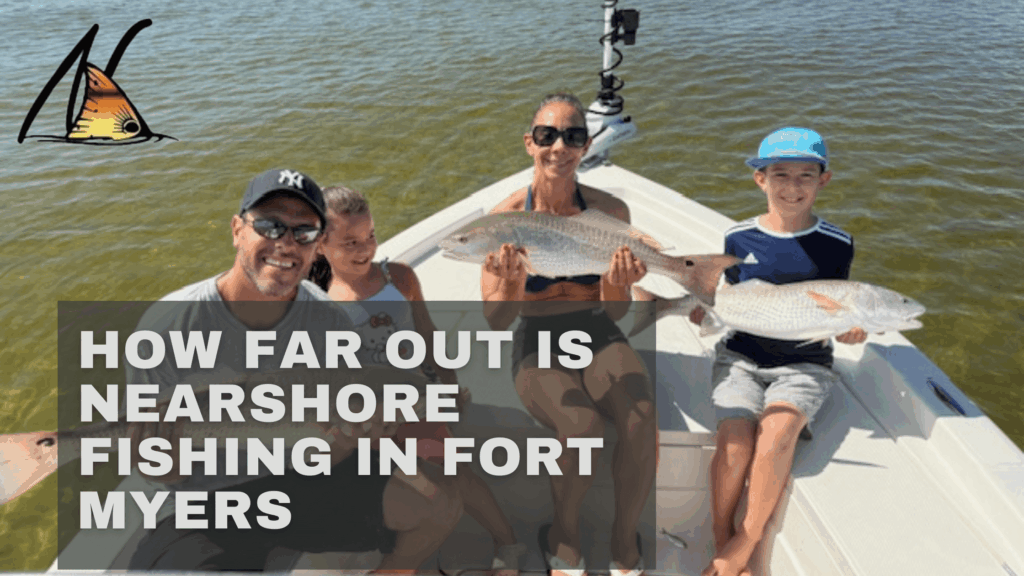
There is a distinct magic to heading out on the Gulf of Mexico. The anticipation builds the moment you step onto the deck, breathing in the fresh salt air and preparing for a day of bent rods and screaming drags. But before we even leave the dock, we need to talk about logistics. If you’re planning a fishing trip in Southwest Florida, one of the most common questions we hear at Sea n Red Charters is: “How far out is nearshore fishing in Fort Myers?” As one of the best fishing charters in fort myers, we know that setting the right expectations is the key to an unforgettable day. The answer isn’t just about miles—it’s about water depth, fishing zones, reef locations, regulations, and what species you want to catch. Nearshore fishing sits perfectly between calm inshore waters and long offshore runs, offering excellent action without the endurance of deep-sea trips. In this comprehensive guide, we’ll clearly explain Fort Myers nearshore fishing boundaries, typical distances from shore, state vs federal waters, GPS-style reference points, and what you can realistically expect to catch so you can plan the perfect trip. What Exactly Does “Nearshore Fishing” Mean in Fort Myers? So, what are we talking about when we say “nearshore”? Nearshore fishing in Fort Myers generally means fishing just outside the beaches, beyond the mangroves and flats, but not far enough offshore to require long runs or deep-water gear. It is the absolute sweet spot for anglers who want the thrill of open water without losing hours of their day just driving the boat. When we look at the typical nearshore distance range, the minimum starts right around 3–5 miles from shore. The common range where we spend a lot of our time is 10–20 miles offshore, and the maximum (before you officially enter offshore territory) is about 25 miles. Most Fort Myers nearshore fishing takes place in state waters and the near edge of federal waters, depending on depth and target species. Fort Myers Fishing Zones Explained (Inshore vs Nearshore vs Offshore) Understanding zones helps you know exactly what kind of trip you’re booking. Let’s break down the three main fishing arenas in our region. Inshore Fishing (0–3 miles) keeps you close to land and in relatively calm waters. This includes mangrove shorelines, back bays and passes, grass flats and bridges, as well as the Caloosahatchee River & estuaries. Your common species here are Snook, Redfish, Trout, and Tarpon (seasonal). Nearshore Fishing (3–20 miles) is where things get really exciting for those who want to feel the ocean swell. Out here, we target artificial reefs, natural limestone ledges, wrecks, and beach drop-offs. The common species you’ll encounter include Spanish Mackerel, Cobia, Snapper, Sharks, Tarpon, and Flounder. This is the sweet spot for anglers who want open-water action without deep-sea travel. If you want to see exactly what is biting out there right now, you should check out our recently updated sanibel fishing report. Offshore Fishing (25+ miles) is for the hardcore deep-sea enthusiast. Out here, you’re hitting deep reefs, bluewater ledges, and 200–400+ ft depths. Common species include Grouper, Kingfish, Tuna, and Wahoo. Keep in mind, offshore trips require longer charters, more fuel, and much calmer weather windows. How Far Out Is Nearshore Fishing from Fort Myers Beach & Sanibel? Your travel time and distance will vary slightly depending on where you launch your boat. From Fort Myers Beach: If we are heading out from this area, nearshore begins around 4–6 miles out. Productive reefs and structure are commonly found 10–15 miles offshore, and anything beyond 20–25 miles is officially considered offshore territory. From Sanibel & Captiva: The nearshore zones often start a bit closer here, usually around 3–5 miles. For example, the famous Edison Reef sits roughly 12 miles offshore, providing excellent structure without long runs. Local anglers frequently fish productive reefs within 10–15 miles, making nearshore trips highly efficient. Are There Good Reefs Within 10–15 Miles of Fort Myers? Yes—this is one of the biggest advantages of Fort Myers nearshore fishing! Our Gulf floor is dotted with incredible habitats that act as magnets for marine life. Popular nearshore structures include Edison Reef (≈12 miles off Sanibel), artificial reef systems west of Fort Myers Beach, scattered limestone ledges, and various submerged wrecks. These areas consistently hold fish and are highly reachable on half-day or ¾-day trips in good conditions. You can read all about the incredible catches these local reefs produce in our recent adventures. State Waters vs Federal Waters (Why It Matters) Knowing your boundaries isn’t just about finding fish; it’s about following the law. Florida State Waters extend 9 nautical miles into the Gulf (on the west coast). Most nearshore fishing occurs here, but it is vital to know that there are different size and bag limits for some species in this zone. Federal Waters begin beyond 9 nautical miles. Some nearshore reefs sit near this boundary, and regulations can change drastically by species once you cross that invisible line. At Sea n Red Charters, we plan trips carefully so you stay legal and productive all day long. Nearshore vs Offshore Fishing in Fort Myers: What’s the Real Difference? To help you visualize the differences, here is a quick breakdown of what you can expect: Feature Nearshore Offshore Distance 3–20 miles 25+ miles Water Depth 20–80 ft 100–400+ ft Ride Comfort Smoother Rougher Trip Length 4–8 hrs 8–12+ hrs Fuel Cost Lower Higher Species Mackerel, Cobia, Snapper Grouper, Tuna, Wahoo Ultimately, nearshore fishing is ideal for families, mixed-experience groups, shorter trips, and guests wanting high-energy action without the exhaustion of a deep-sea voyage. What Species Are Common in Fort Myers Nearshore Waters? Nearshore zones offer excellent variety, especially as the seasons change. Frequently caught nearshore fish include hard-fighting Spanish Mackerel, Cobia, Mangrove Snapper, Sharks, Tarpon (seasonal), Flounder, and Jack Crevalle. Because you’re fishing active structures close to shore, the bites are often faster and more consistent than what you might find on deep offshore days. Why Nearshore

Fishing Charters in Fort Myers

The Ultimate Guide to Fort Myers Fishing Charters

Fort Myers is more than just a Gulf Coast getaway, it’s a world-class fishing destination beloved by anglers of all ages and skill levels. As your local captain Captain Erik Johnson, I know these waters like the back of my hand. Between the Gulf’s blue waters and the intricate maze of mangrove-lined back bays and flats, Fort Myers offers endless variety under the Florida sun. Our private charters are all-inclusive – just show up and fish. When you book a charter with us, all gear and licenses are included: rods, reels, tackle, live bait – even the Florida saltwater licenses. Every Sea N Red charter is private and flexible, so you won’t be on a crowded party boat. You’ll enjoy a private, stress-free experience on a trip customized to your goals. Want a calm inshore trip for trout and snook? Done. Prefer offshore for grouper or sharks? We can do that too. Fort Myers fishes year-round. In spring, migrating snook and tarpon flood in; summer brings mackerel and snapper; fall ignites schools of redfish on the flats; even winter can surprise you with big trout and sheepshead. I’ll help plan your trip in any season so you can enjoy the best action. In the following guide, I’ll walk you through the top charter options, prime fishing locations, target species and seasons, pricing, and insider tips I’ve learned from years on the water. Think of this as your captain’s handbook to the perfect Fort Myers fishing trip – whether you’re a complete beginner or an old salt. So grab a cold drink, cast off your worries, and get ready to discover why fishing Fort Myers with Sea N Red Charters is as easy and fun as it gets. Your Fort Myers fishing adventure starts here! Top Fishing Charter Options & Locations Inshore & Backwater Fishing: These trips keep you close to land in calm, shallow waters like back bays, estuaries, and flats—ideal for families, kids, and beginners. Our inshore charters explore mangrove shorelines and grass flats around Fort Myers Beach, Estero Bay, and Pine Island. Here, catchable fish like snook, redfish, spotted seatrout and mangrove snapper are abundant. We’ll drift over oyster bars and cast along mangroves; kids often hook eager snapper and trout under docks. In winter, sheepshead and black drum move onto shell-covered flats and bridges. Estero Bay is also great for wildlife – watch for dolphins, manatees and herons while you fish. We provide light tackle, live bait, and expert guidance so even first-timers have great success. For more detail, see our Inshore Charters. Offshore & Deep Sea Charters: These trips head beyond the backwaters into the nearshore reefs and Gulf of Mexico. On an offshore charter you can target larger gamefish: grouper, snapper, amberjack, king mackerel, cobia, sharks and more. The water is deeper and the bite often slower (but the fish are bigger). We usually fish reefs and wrecks just a few miles offshore, staying within sight of land. For example, nearshore reefs can hold grouper and snapper, and Spanish mackerel and kingfish chase baitfish along the drop-offs. These trips require longer rides and heavier tackle, but the thrill of landing a trophy grouper or cobia is worth it. On calm days we’ll even run farther (10+ miles) for bluewater action. Sea N Red specializes in inshore trips, but we’re happy to tailor an offshore trip for experienced anglers craving big-fish excitement. Tarpon-Specific Charters: Fort Myers is famous for tarpon, especially in late spring and summer. Tarpon are the “Silver King” – huge, acrobatic fish that make spectacular leaps. We run dedicated tarpon charters from May through July, timing trips to the tidal windows in passes and bays. You’ll need heavy rods, stainless steel leaders, and patience – tarpon fishing often means big, long fights with very strong fish. But even first-timers love it with our guidance: there’s nothing like the pull of a 100+ lb tarpon on line. Many trips head to Boca Grande Pass or local passes in the evening tide, where tarpon school by the hundreds. If battling a Silver King is your dream, we can make it happen. Learn more on our Tarpon Fishing Charters page. In short, Fort Myers has something for every angler: calm flats for easy reds and trout, fast passes for tarpon and snook, and reefs for big snapper and grouper. Match your trip type to the target species, and you’ll be in for a fantastic day on the water. Next, let’s look at the prime fishing spots around Fort Myers so you know exactly where to drop a line. Where to Fish – Key Locations Around Fort Myers Estero Bay & Back Bays: A large shallow bay just off Fort Myers Beach. Think oyster bars, grassy flats and mangrove shorelines. Fish here for snook, redfish and speckled trout year-round. We often drift the oyster bars at low tide and cast into mangrove creeks, even sight-fish for tailing reds in the flats. Summer afternoons and cooler mornings are prime. In winter, sheepshead and black drum move in on shell bars and bridge pilings. Inshore-friendly and usually calm, it’s perfect for families. Watch for dolphins and manatees as you fish. Sanibel & Captiva Passes: Between Sanibel and Captiva Islands are deep channels Big Captiva Pass and Blind Pass that connect the bay to the Gulf. These tidal passes concentrate bait and attract big fish. In summer and early fall, migrating tarpon and Spanish mackerel flood these passes on the tides. Snook hang on the edges in warm months, and schools of redfish often stack up just inside the passes in fall. We fish the drop-offs and bridge pilings along the passes for fast action. These spots are also scenic, you see open gulf water and mangrove islands at once. Pine Island Sound & San Carlos Bay: North of Captiva, this large estuary has winding creeks and vast flats behind North Captiva and Pine Island. It produces redfish year-round and snook in warm months. Large schools of reds roam

Fishing Charters in Fort Myers

Family-Friendly Fishing: Creating Memories in Southwest Florida

Nothing beats the thrill of a child’s first fish tugging on the line, the whole family cheering as dolphins leap nearby, or collecting shells on a secluded Sanibel beach after a morning of catches. Here in Southwest Florida, family-friendly fishing isn’t just an activity—it’s a tradition that builds bonds and sparks lifelong love for the outdoors. As Captain Erik Johnson of Sea N Red Charters, I’ve guided countless families through the calm bays and flats around Fort Myers, watching wide-eyed kids reel in their first redfish while parents relax knowing everything’s handled. If you’re wondering what to expect on a family charter or searching for tips for families planning a trip, you’re in the right place. At Sea n Red Charters, our family fishing charters focus on fun, safety, and success for all ages. Whether it’s a half-day inshore adventure or a combo with shelling, we tailor every outing to your crew. From the mangroves of Pine Island to the passes near Captiva, Southwest Florida’s waters offer the perfect backdrop for creating memories. Let’s dive into why this is the ultimate family destination—and how to make your trip unforgettable. Why Southwest Florida Shines for Family-Friendly Fishing Southwest Florida’s inshore waters are a family’s dream: calm, clear, and teeming with life. Unlike choppy open-ocean trips, our bays and estuaries stay protected, minimizing seasickness and maximizing smiles. Species like redfish, snook, and trout bite readily, giving kids quick action to stay engaged. Wildlife sightings add magic—dolphins often bow-ride the boat, manatees glide underneath, and birds dive for baitfish. It’s not just fishing; it’s an eco-adventure where everyone learns about the ecosystem. Locations like Pine Island Sound and the Caloosahatchee River provide sheltered spots ideal for beginners. As a kids welcome inshore specialist, I love introducing families to these areas. The variety keeps things exciting: Cast for trout one moment, spot a manatee the next. Top Reasons Families Love Southwest Florida Waters: This region’s natural playground turns a simple outing into Captain Erik’s fishing adventures your family will talk about for years. Popular Family Fishing Locations in the Fort Myers Area From our Punta Rassa launch, the options feel endless—and all family-accessible. Fort Myers serves as the gateway to some of Florida’s best kid-friendly fishing. Pine Island Sound tops the list: Vast grass flats and mangroves shelter redfish and trout, with short runs from dock keeping little ones happy. Sanibel and Captiva offer family fun on Captiva with combo trips—fish the passes in the morning, then beachcomb world-famous shells in the afternoon. Cape Coral’s canals and the Caloosahatchee River provide freshwater fishing charters for non-stop panfish action when saltwater feels intimidating. Nearshore reefs stay within sight of land for bigger catches without long rides. Family Favorite Spots Table: Location Why Great for Families Top Catches & Sightings Trip Type Best Suited Pine Island Sound Sheltered flats, short boat rides Redfish, trout, dolphins Inshore half-day Sanibel/Captiva Passes Combo fishing + shelling beaches Snook, snapper, manatees Full-day adventure Caloosahatchee River Calm freshwater, easy access Bass, panfish, birds Freshwater or mixed Fort Myers Back Bays Close to town, variety of spots Trout, ladyfish, turtles Beginner-friendly Punta Rassa Area Quick launches, mangrove tunnels Juvenile snook, herons Short family trips These spots deliver consistent action while keeping things relaxed and safe. What Is a Family Charter—and How Can It Help Your Family? A family charter (in our world) means a private fishing trip designed around your group’s needs—especially with kids in mind. It’s not a big party boat; it’s your family, my boat, and a custom plan for maximum fun. At Sea N Red Charters, every family-friendly saltwater charters trip becomes a shared adventure that strengthens bonds. Kids learn patience and excitement, parents unwind, and everyone leaves with stories (and photos!). What Every Family Should Know About a Family Charter: It helps families disconnect from screens, connect with nature, and create traditions. Many guests return annually—watching kids grow into confident anglers. What to Expect on a Family Charter with Sea n Red Charters A family charter is designed to be easy, safe, and stress-free from start to finish. Wondering what to expect on a family charter? Trips begin at Punta Rassa with a short safety briefing, followed by a smooth ride aboard a stable, shaded 22-foot Skeeter bay boat. Life jackets are available in all sizes, and the boat layout allows kids to move comfortably and safely. Instruction is patient and hands-on. Kids are often encouraged to fish first to build confidence, and we focus on calm, productive areas with easy-to-catch inshore species like redfish, snook, and trout. If the action slows, we move—keeping the experience engaging. Wildlife encounters happen naturally along the way. Dolphins often surface nearby, manatees glide through warm water, and seabirds dive for bait—adding excitement even between bites. It’s straightforward and stress-free. We start at Punta Rassa with a safety briefing, then head out on my 22-foot Skeeter bay boat—stable, shaded, and equipped with life jackets for all sizes. I’ll teach casting, baiting, and reeling patiently—kids often catch first to build confidence. We target easy species in calm spots, moving if needed for action. Wildlife pops up naturally: Dolphins chasing bait, manatees munching seagrass. Everything you need is included: fishing gear, bait, licenses, water, ice, and fish cleaning. Families only need to bring snacks, drinks, sun protection, and a camera for photos. Typical Family Charter Flow: Half-day (4 hours) works best for younger kids; full days allow more exploration. What Makes a Family Charter Different Many families return annually, watching kids grow from first-timers into confident young anglers—creating memories that last far beyond the vacation. Tips for Families: Making Your Trip Perfect Booking the right charter sets the tone. Here are tips for families from years guiding: Essential Family Fishing Tips List: What to Look for When Booking (From PAA Insights): At Sea n Red Charters, we check every box. What to Pack for a Family Trip: No bananas (old superstition!)—but plenty of laughs allowed. Kid-Friendly Species and Wildlife Encounters Southwest Florida’s inshore

Fishing Charters in Fort Myers

Meet Captain Erik Johnson: Passion, Experience & Local Knowledge

If you’re searching for the heart behind the best Fort Myers fishing charters, you’ve found him: Captain Erik Johnson, owner and operator of Sea N Red Charters. With decades of experience navigating the bays, flats, and nearshore waters of Southwest Florida, Captain Erik isn’t just a guide—he’s a true local who lives and breathes these waters. Whether you’re a first-timer dreaming of that inaugural snag or a seasoned angler chasing trophy snook, his passion turns every trip into an unforgettable story. At Sea N Red Charters, we believe the best fishing experiences come from guides who know every mangrove tunnel, tide shift, and hidden hotspot. That’s Captain Erik: a USCG-certified guide with an infectious love for sharing the thrill of the bite. From family outings in calm backwaters to adrenaline-pumping tarpon battles, he tailors each charter to your group. Ready to meet the man making waves in Fort Myers fishing charters? Let’s dive into his story. Early Years: Roots in Freshwater and a Lifelong Passion Captain Erik Johnson’s fishing journey began far from Florida’s salty shores—in Erie, Pennsylvania, along the banks of Lake Erie. As a kid, he spent countless hours with his dad—his greatest mentor—targeting walleye, bass, and perch. Those chilly mornings on the bayfront instilled a deep respect for the water and the patience it demands. “Fishing was more than a hobby; it was family time,” Captain Erik often shares. Those early days taught him fundamentals: reading water, understanding fish behavior, and the quiet joy of a bent rod. Little did he know these freshwater lessons would lay the foundation for a career in one of America’s top fishing destinations. At just 9 years old, everything changed. In 1994, his family relocated to Fort Myers, Florida—a move that swapped Great Lakes waves for Gulf Coast mangroves. Suddenly, the young angler traded perch for redfish and bass for snook. It was love at first cast. Fort Myers became home, and the surrounding waters—Pine Island Sound, Estero Bay, the Caloosahatchee River—became his classroom. Discovering Southwest Florida: From Newcomer to Local Expert Arriving in Fort Myers opened a new world. The shallow flats, winding creeks, and abundant estuaries were a far cry from Lake Erie’s depths, but Captain Erik adapted fast. He explored every inch: poling through Sanibel’s grass flats, drifting passes near Captiva, and probing mangrove edges around Pine Island. Over the years, he’s built unmatched local knowledge. Moving here in the ’90s gave him a front-row seat to seasonal patterns—summer tarpon migrations, winter sheepshead schools, spring trout spawns. Today, with over 30 years in these waters (and counting into 2026), he’s the experienced saltwater captain families and pros trust for reliable action. That insider edge sets Sea N Red Charters apart. Captain Erik knows when reds tail in skinny water off Punta Rassa or when grouper stack on nearshore wrecks. His roots in Pennsylvania freshwater even shine through—he offers Caloosahatchee River bass trips that feel like home. Tournament Circuit: Honing Skills Under Pressure Before guiding full-time, Captain Erik spent 15 years on the tournament circuit. Competing sharpened his techniques and deepened his understanding of fish behavior under varying conditions. “Tournaments teach you to think like the fish,” he says. Long days, tough weather, and high stakes built resilience and precision. He learned to adapt quickly—switching from live shrimp for trout to cut bait for bulls in the same afternoon. Those competitive years paid off. They transformed him into a versatile angler ready for anything the Gulf throws. Now, he brings that expertise to every charter, helping guests land personal bests without the pressure. Starting Sea N Red Charters: Sharing the Passion After years of tournament success, Captain Erik felt the call to give back. He launched Sea N Red Charters to share his knowledge and create memories for others. “There’s nothing better than seeing someone’s face when they catch their first fish—especially kids,” he beams. As a friendly charter guide, he specializes in family-friendly trips. No yelling or intimidation—just patient instruction, laughs, and plenty of action. Whether teaching a child to cast or putting an expert on slot snook, his goal is the same: fun, safe, rewarding days. Sea N Red reflects his personality: approachable, professional, all-inclusive. All gear, bait, tackle, licenses, and fish cleaning are provided. You show up ready to fish—that’s it. Why Guests Love Captain Erik’s Approach: Fishing Philosophy and Techniques: Back Bays to Blue Water Captain Erik is a back bay specialist at heart. Most trips target shallows less than 5 feet deep—flats, mangroves, oyster bars—where sight-fishing rules. He mixes it up: live bait (shrimp, pinfish) for picky eaters, cut bait for predators, artificial lures for active fish. “It depends on the species and conditions,” he explains. For trout, a popping cork and shrimp does the trick; for reds, a gold spoon through grass. During tarpon season (May–July), he’s happy venturing deeper—beaches, passes—for those silver kings. Nearshore wrecks for grouper or reefs for snapper? He’s game. His style is versatile yet relaxed. Light tackle for inshore fights keeps it exciting; heavier setups for nearshore ensure hookups. Captain Erik’s Go-To Techniques Table: Technique Best For Pro Tip from Captain Erik Live Bait (Shrimp/Pinfish) Snook, Trout, Redfish Free-line in current for natural presentation Cut Bait Sharks, Big Reds Fresh mullet chunks on bottom for scent trail Artificial Lures Aggressive Fish Soft plastics on jigheads—match the hatch Sight Fishing Flats Tailing Reds Polarized glasses essential; quiet approach Drifting Passes Tarpon, Mackerel Bowed rod ready for explosive strikes Meet the Boat: Built for Southwest Florida Waters Captain Erik runs a 22-foot Skeeter SX220 Bay Boat—perfect for skinny water access and dry, comfortable rides. Features include: It’s nimble enough for mangrove tunnels yet stable for nearshore runs. Families love the shade and seating; pros appreciate the performance. Locations and Hotspots: Captain Erik’s Favorite Haunts From the Punta Rassa launch, options abound: His local knowledge shines in picking spots based on tides, wind, and season. Prime Species by Location Table: Location Top Targets Best Season Pine Island Sound Redfish, Snook,

Fishing Charters in Fort Myers

Inshore vs. Offshore Fishing: Key Differences for Fort Myers Anglers

Hey there, fellow angler—whether you’re casting your first line or chasing that trophy catch, there’s nothing quite like the pull of the Gulf waters here in Fort Myers. I’m Captain Erik from Sea N Red Charters, and after decades guiding trips across Sanibel, Captiva, Pine Island, and beyond, I’ve seen it all: wide-eyed kids hooking their first snook in the mangroves, and hardened pros battling mahi-mahi miles from shore. Today, we’re diving deep into inshore vs. offshore fishing—or as locals call it, the laid-back bay hop versus the adrenaline-fueled deep-sea run. If you’re googling key differences between inshore and offshore fishing, you’re in the right spot. We’ll break it down: the calm, accessible vibes of inshore fishing Fort Myers versus the raw power of saltwater fishing charters that take you far out. Whether you’re after a relaxed half-day on the flats or a full-throttle Fort Myers sportfishing quest, your choice boils down to your adventure style, budget, and what kind of catch lights you up. Stick with me—I’ll walk you through the gear, species, spots, and insider tips to help you decide which fits your style. What Is Inshore Fishing? Your Gateway to Fort Myers’ Backwaters Picture this: You’re gliding through glassy bays at dawn, the sun peeking over Sanibel Island, with nothing but the splash of mullet and the occasional dolphin pod breaking the silence. That’s inshore fishing in a nutshell—fishing in protected waters close to shore, typically within 10–15 miles of the shoreline. Here in Fort Myers, it’s all about those shallow bays, estuaries, mangroves, and flats that hug the coast like a natural playground. Inshore trips are the perfect intro for newcomers. They’re shorter—often just 4 hours—and keep you within easy reach of land, so seasickness isn’t the boss of your day. As your guide on a inshore fishing Fort Myers charter, I’ve watched families bond over speckled trout pulls, while solo anglers unwind with a cold one post-catch. It’s not just fishing; it’s therapy on the water. Why Inshore Shines for Fort Myers Locals and Visitors Fort Myers’ inshore scene is a biodiversity hotspot, thanks to the Caloosahatchee River feeding into the Gulf and those nutrient-rich mangroves. You’re targeting feisty fighters like redfish (aka reds), snook, and trout that school up in the shallows. No need for a massive vessel—a 20- to 25-foot center console does the trick, nimble enough to weave through grass flats without a ripple. From my trips out of Punta Rassa, I’ve learned inshore’s magic lies in its rhythm: pole into a skinny water flat at low tide, sight-fish for tailing reds, and let the fight unfold right under your nose. It’s accessible, affordable (starting around $400 for a half-day), and forgiving—ideal if you’re easing kids or grandparents into the sport. Quick Inshore Perks List: If you’re new to this, don’t sweat it—our Fort Myers fishing charters come with all the know-how. Last week, a group from Cape Coral nailed a 30-inch snook on light tackle; stories like that keep me hooked. Offshore Fishing: The Thrill of Deep-Sea Saltwater Charters Now, flip the script. Offshore—or deep-sea saltwater fishing—is where the Gulf opens up like a blue highway to adventure. We’re talking waters beyond that 10–15 mile mark, plunging to 100+ feet, where the horizon swallows the shore. Trips here are all-day epics (8+ hours), launching from spots like Fort Myers Beach or Sanibel’s ding darling bridge for a straight shot to the bluewater edge. This is Fort Myers sportfishing at its pulse-pounding best: chasing pelagic beasts like king mackerel, grouper, or even sailfish on a good day. Bigger boats—think 30- to 40-foot sportfishers—are the norm, rigged with outriggers, live wells, and fighting chairs for those marathon battles. As a trusted local captain, I’ve guided everything from corporate retreats hooking tuna to buddies celebrating life milestones with a marlin mount. Offshore demands respect: choppier seas, stronger currents, and the thrill of the unknown. But man, the payoff? A 50-pound wahoo on the line feels like wrestling a freight train. Budget-wise, expect $800–$1,200 for a full day, but that includes premium gear and a cooler full of fillets. The Allure of Offshore in Southwest Florida Our Gulf currents here pull in migratory monsters seasonally—grouper holes off Pine Island in winter, sailfish runs near Captiva in spring. It’s technical: Trolling lures at 7 knots, bottom-rigging for snapper, or drifting live baits for amberjack. I’ve lost count of the “holy cow” moments when a school of mahi crashes the spread. Offshore Highlights Bullet Points: For those craving challenge, offshore’s your arena. Just pack Dramamine and a sense of humor for the rogue wave stories. Key Differences Between Inshore and Offshore Fishing: A Side-by-Side Breakdown So, what’s the real divide? Let’s cut through the waves with a clear comparison. Drawing from years of running both saltwater fishing charters, here’s how they stack up—your ultimate cheat sheet for deciding. Aspect Inshore Fishing Offshore Fishing Distance from Shore Within 10–15 miles (bays, flats, passes) Beyond 15 miles (open Gulf, 50+ ft depths) Trip Length 4–6 hours (half-day friendly) 8–12 hours (full commitment) Water Conditions Calm, protected; minimal swells Choppy, exposed; wind/waves up to 4 ft Boat Size 20–25 ft center consoles 30–40 ft sportfishers with amenities Target Species Redfish, snook, trout, sheepshead Grouper, kingfish, tuna, mahi-mahi Skill Level Beginner-friendly; light tackle basics Intermediate+; heavy gear, navigation Cost Range $400–$700 (gear often included) $800–$1,500 (fuel, bait add-ons) Best For Families, relaxation, quick outings Thrill-seekers, trophies, group adventures This table isn’t just numbers—it’s real talk from the helm. Inshore keeps you close to Sanibel’s shelling beaches for a post-fish picnic; offshore drops you in the middle of a bait ball frenzy. Neither’s “better”—it hinges on your vibe. Gear Essentials: Equipping for Inshore vs. Offshore Success Gear can make or break your day, and there’s a world of difference between setups. Forget one-size-fits-all; match your rod to the realm. For inshore fishing Fort Myers, think light and agile—rods measuring 7 feet and up, with medium-light power for finesse casts into mangroves.

Scroll to Top